
The Neurocritical Care team provides intensive care in our ICUs at Boston Medical Center, including the Neurosciences ICU. Our expert neurointensivists and specialty-trained nurse practitioners deliver cutting-edge emergency neurological care, with 24/7 inpatient hospital coverage.
Related Departments and Clinics
Trauma and Acute Care Surgery
Interventional Neuroradiology
Interventional neuroradiology treatment for aneurysms, stroke, and other conditions using minimally invasive, imaging-guided techniques.
Neurology
A department providing evaluation and treatment for brain and nerve conditions, including stroke, Parkinson’s, epilepsy, and headaches.
Neurosurgery
A department providing neurosurgical surgery and care for conditions affecting the brain and nervous system.
Stroke and Cerebrovascular Center
A comprehensive stroke center providing advanced stroke treatment for ischemic and hemorrhagic stroke with expert cerebrovascular care.
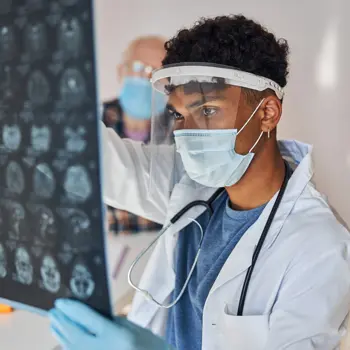
Neurocritical Care Fellowship
Our neurocritical care fellowship is a United Council for Neurologic Subspecialties and ACGME-accredited two-year program. In addition, the neurocritical care division faculty participate in the education and training of residents as they complete their required clinical rotations in the neurocritical care unit. Medical students may apply for a two-week neurocritical care elective. Trainees are invited to participate in neurocritical care case conferences and morbidity and mortality conferences.
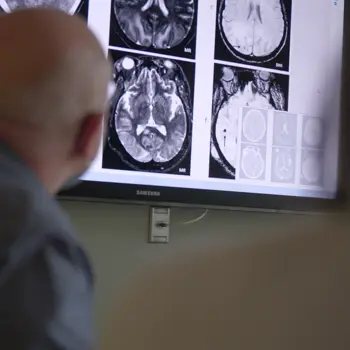
Neurocritical Care Research
Our specialists are investigators in several key areas in neurocritical care, including neuroprognostication after critical injury, neurologic infections including complications of infectious endocarditis, temperature management following severe stroke, the use of pupillometry and other technology to detect and predict neuroworsening in critically ill patients, sequelae of traumatic brain injury, nuanced effects of neurosurgical interventions, and neurocritical care education. Our specialists are funded by national awards, including the prestigious career development K award.