
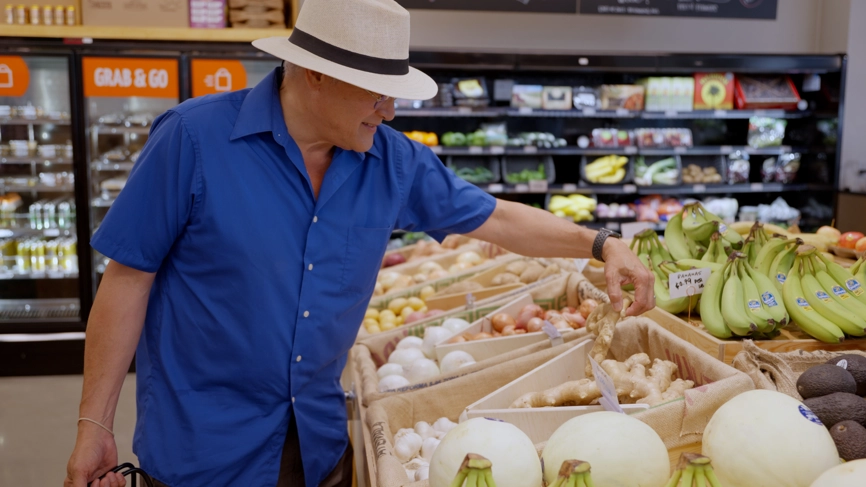
Start Building Healthy Eating Habits
Eating a healthy diet is an important part of managing your diabetes. A registered dietitian can help you create a plan tailored to your needs and preferences.

Quick Changes for a Healthier Diet
- Limit sugar-sweetened beverages: choose calorie-free, unsweetened options.
- Include at least one vegetable at lunch and at dinner, every day.
- Eat smaller servings of your usual foods.
- Share meals at restaurants or save half for later.
- Choose cooking methods like roasting, broiling, or steaming instead of frying.
- Choose lean protein sources with less saturated fat, like chicken, fish, or low-fat dairy.
- Limit processed meats.
If you are feeling unsure of what in your diet is causing blood sugar spikes, try to write down what and how much you eat and drink for a few days. Journaling food, drink, and blood sugar can help you see patterns and motivate change.

Healthy Building Blocks
Focus on fiber and lean protein, keep your plate colorful, and drink water.
The “Plate Method”
The “diabetes plate” balances out foods that raise blood sugars. This helps you continue eating foods you enjoy while keeping your blood sugar in check. The goal is to fill half of your plate with fiber-rich vegetables, ¼ with a lean protein, and ¼ with carbohydrates.
At BMC, we encourage using this method as a way to eat more healthy foods and fewer unhealthy foods without sacrificing tradition and taste. The result is flavorful meals that are healthy, energy boosting, and satisfying.
Why Is the Plate Method Important?
The plate method helps patients portion out starchy, carbohydrate-containing foods that have the most impact on blood glucose levels. It also helps us to remember to eat a variety of food groups, like fruits, non-starchy vegetables, whole grains, proteins, dairy, and healthy fats.
What Do Carbohydrates Have to Do with Blood Glucose?
Carbohydrates (like bread, grains, starchy vegetables, fruit and fruit juices, milk, sweetened yogurt, sweets/desserts) are digested into glucose, which causes blood sugar to increase. It’s important to keep blood glucose in a healthy range in order to stay healthy and feel energized. “Carb counting” can be helpful in managing blood glucose levels. It is not a diet, but rather a flexible meal planning tool. It’s important to make healthy carb choices that contain fiber, and choose foods like beans, whole grains, and whole fruits.
Our video on the Plate Method is currently available in English and Spanish.
Managing Your Diabetes: The Plate Method (English)
Managing Your Diabetes: The Plate Method (Spanish/Español)
Additional Reading

Best Protein Choices for Diabetes

Get to Know Grains: Why You Need Them

Read Before You Eat
Reading food labels can help you make choices that support your blood sugar goals. Here’s what to look for:
Serving Size
Check the serving size and compare it to how much you actually plan to eat. If you eat more or less than the listed amount, adjust the nutrition information accordingly.
Total Carbohydrate
This number has the biggest impact on your blood sugar. It includes fiber, sugars, and starches. Focus on the total carbohydrate amount rather than just the sugars.
Dietary Fiber
Fiber has no calories and can help stabilize blood sugar. You may subtract the fiber grams from total carbohydrates to calculate net carbs. Look for foods with at least three grams of fiber per serving.
Fat
Keep an eye on fat content to support weight and heart health. Trans fats are particularly unhealthy. Try to shoot for:
- Low fat overall: 3g or less of fat (all types) per serving
- Saturated fat: Less than 1g per serving
- Trans fat: 0g per serving
How to Read Nutrition Labels
They say “you are what you eat,” so what are you made of? Making healthy food choices helps keep your body fit and strong, so learning how to read nutrition labels is the first step to making sure your body gets the proper nourishment.
The nutrition label is typically located on the back or side of most food products. However, some foods, like fresh fruits, vegetables, animal proteins, and alcohol are not required to have nutrition labels.
How to Read Nutrition Labels (English)
How to Read Nutrition Labels (Spanish/Español)
How to Read Nutrition Labels (Haitian Creole/Kreyòl Ayisyen)
How to Read Nutrition Labels (Cape Verdean Creole/Kriolu)
Carbohydrate Counting
Understanding Carbohydrate Portions
Carbohydrate (carb) counting is a meal planning strategy that helps you manage your blood sugar by eating a set amount of carbs at each meal or snack. A dietitian or diabetes educator can help you tailor your carb intake to fit your lifestyle, food preferences, and medication needs.
This video covers the basics, including how to read nutrition labels, estimate portions, and match carbs to insulin doses. Whether you’re managing diabetes or simply want to understand carbs better, these tips will help you feel more confident at mealtime.
How to Count Carbohydrates (English)
How to Count Carbohydrates (Spanish/Español)
How to Count Carbohydrates (Haitian Creole/Kreyòl Ayisyen)
How to Count Carbohydrates (Portuguese/Português)

The Teaching Kitchen
Offering in-person or virtual classes, The Teaching Kitchen hosts an average of 25 medically tailored cooking classes every month. At BMC, we understand that food is medicine, and our mission is to support the prevention and management of chronic conditions like diabetes.
With guidance from our certified diabetes educators, you’ll enjoy an engaging and interactive experience designed to help you build the skills needed to balance your diet, exercise, and medications effectively.
Diabetes-Friendly Recipes

Chicken Fajita Sheet Pan Dinner

Rice and Beans

Quinoa Chickpea Salad

Roasted Potatoes

Super Simple Sautéed Greens

Mixed Berry Smoothie

Where Health Meets Harvest
At BMC we believe access to healthy food is essential to good health. Through our Nourishing Our Community programs, we unite services, partnerships, and research to reduce food insecurity and advance health equity across Boston — setting a national example for hospitals.
Our Rooftop Farm is a vibrant part of this work, growing over 5,000 pounds of fresh produce valued at more than $18,000 annually. This food is used in patient meals and distributed through our food programs and onsite farmers market.
The farm also welcomes more than 1,000 visitors each year, offering unique opportunities to engage with sustainable, community-focused care.

Energy to Fuel Your Day
Snacking can help keep your energy up and prevent you from feeling tired or shaky, especially when there’s a long gap between meals.
However, not everyone needs to snack. If your blood sugar stays within your target range between meals, and you’re not hungry, you may not need one.
You may benefit from a snack if:
- You take insulin, or a diabetes medication that can cause low blood sugar
- You’re more physically active than usual and need extra fuel
- You tend to overeat at meals—planned snacks can help manage appetite
Some people may also need additional insulin for snacks. Talk to your diabetes care team for personalized guidance.
Creating a Well-Balanced Snack
A snack that combines a carbohydrates (fruits, vegetables, or grains) with protein is an excellent choice for maintaining stable blood glucose levels. Here are examples of foods that you can pair together for a balanced snack:

No Patient Should Go Hungry
Boston Medical Center is dedicated to ensuring that every patient has access to nutritious food and the resources needed to make lasting, positive changes in their daily eating habits.
BMC’s efforts to combat food insecurity and promote nutrition for all include a food pantry that provides free groceries to patients and families, a teaching kitchen where patients and community members can watch live cooking demos and take-home recipes for healthy meals, and a rooftop farm that supplies the hospital with healthy fruits and vegetables.
Additional Programs and Services

Nutrition and Weight Management

Nutrition and Fitness for Children

Regional Food Assistance: GBFB

Women, Infants, and Children (WIC)

Healthy Hints
- Eat regular meals every three to four hours. Skipping meals can lead to overeating and craving sugary food.
- Eat a variety of foods and colors to consume different vitamins and nutrients.
- Stay hydrated. Drink water and other low-sugar beverages throughout the day.
- Pay attention to your hunger cues. Eat slowly and allow your stomach enough time to signal your brain that you are full (about 20 minutes).
Explore the Resource Center
Diabetes information found on these pages should not replace education or instruction from your healthcare provider or certified diabetes educator. We encourage all patients to personalize their diabetes management in collaboration with their healthcare team.