Caring for Your Late Preterm Baby

What Is a Late Preterm Baby?
A late preterm baby is a baby born between 35 weeks and 36 weeks + 6 days of pregnancy (almost, but not quite, 37 weeks).
Many late preterm babies look healthy and are close to full term. But they still need extra time to grow and develop. They may need more help in the first days and weeks of life.
What Can I Do to Help My Late Preterm Baby?
Keep Your Baby Warm
- Hold your baby skin-to-skin as much as possible.
- Cover your baby’s back with a blanket during skin-to-skin.
- Dress your baby in one more layer than you are wearing.
- Keep your baby’s head covered with a hat if recommended by your care team.
Late preterm babies get cold more easily because they have less body fat.
When babies get cold, they use extra energy to stay warm. This can make it harder for them to grow and feed well.
Feed Your Baby Often
Your baby needs to eat 8 to 12 times every 24 hours:
- Breastfeed at least every 2 to 3 hours.
- Bottle-feed at least every 3 hours.
Late preterm babies are often sleepy and may not wake up when it is time to eat. They may not have the strength to feed well at the breast or bottle. If they do not eat enough, they may lose too much weight or become dehydrated.
If it has been too long between feeds, do not wait for your baby to wake up. Your nurse or lactation consultant can help show you how to wake your baby so you can feed them.
Some late preterm babies need extra milk after breastfeeding. Ask your care team about:
- Hand-expressing milk
- Feeding with an oral syringe
- Using a breast pump
- Feeding donated human milk
Watch your baby’s wet and dirty diapers. Regularly wet or soiled diapers are a good sign that your baby is getting enough milk.
Learn More about Breastfeeding a Premature Baby
Resources from AWHONN
The Association of Women’s Health, Obstetric, and Neonatal Nurses (AWHONN) provides helpful resources for parenting a “late preterm” infant, which means a baby who is born after between 34 and 37 weeks of gestation.
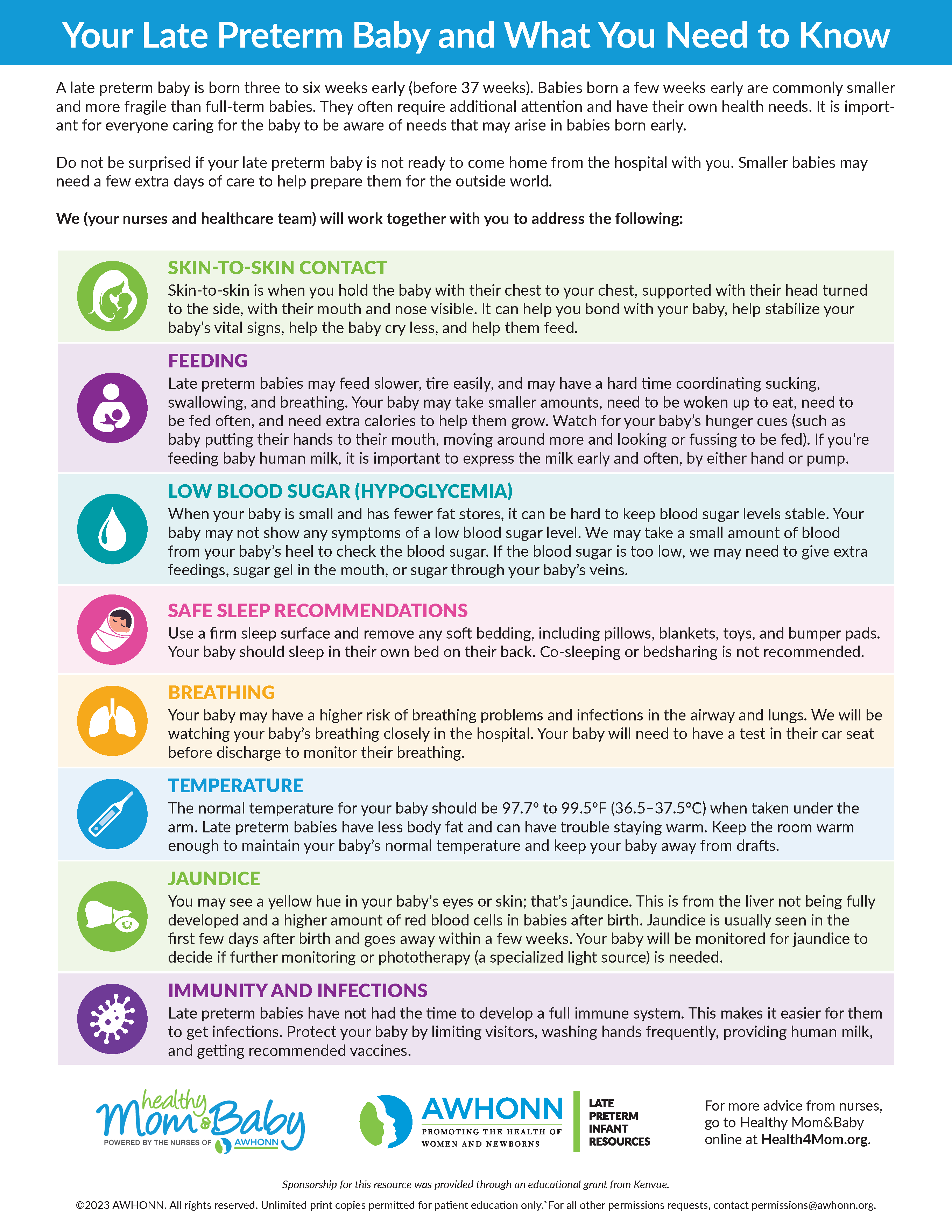
Descarga Este Recurso en Español (PDF)
Telechaje Resous Sa a an Franse (PDF)
This information is also available on the AWHONN website in additional languages, including Chinese, Somali, Tagalog, and Vietnamese.
What Are the Risks for Late Preterm Babies?
- Breathing. Your baby’s lungs may still be developing. Some late preterm babies have trouble breathing after birth.
- Infection. Late preterm babies can get sick more easily than full-term babies because their bodies are still learning to fight infection.
- Jaundice. Late preterm babies are more likely to develop jaundice, especially if they are not feeding well. Jaundice makes the skin and eyes look yellow.
When Should I Get Help?
Call your baby’s healthcare provider right away if your baby shows any of these warning signs:
- Has trouble breathing
- Breathes fast (more than 60 breaths in one minute)
- Makes grunting, wheezing, or whistling sounds
- Has nostrils that flare open when breathing
- Has the skin pulling in around the ribs or chest while breathing
- Has blue lips, pale skin, or skin that looks blotchy
- Is too sleepy
- Is very hard to wake
- Is too sleepy to eat
- Sleeps through feedings
- Is not feeding well
- Will not eat
- Eats much less than usual
- Has fewer wet or dirty diapers than expected
- Has signs of jaundice
- Yellow skin or yellow eyes
- A high-pitched cry
- Poor feeding
- Has a temperature problem
- Temperature above 100.4°F (38°C)
- Temperature below 97.7°F (36.5°C)
Call 911 or go to the nearest emergency department if your baby:
- Has trouble breathing
- Stops breathing (even if just briefly)
- Has blue lips or face
- Is difficult to wake and will not feed
- Will not wake up
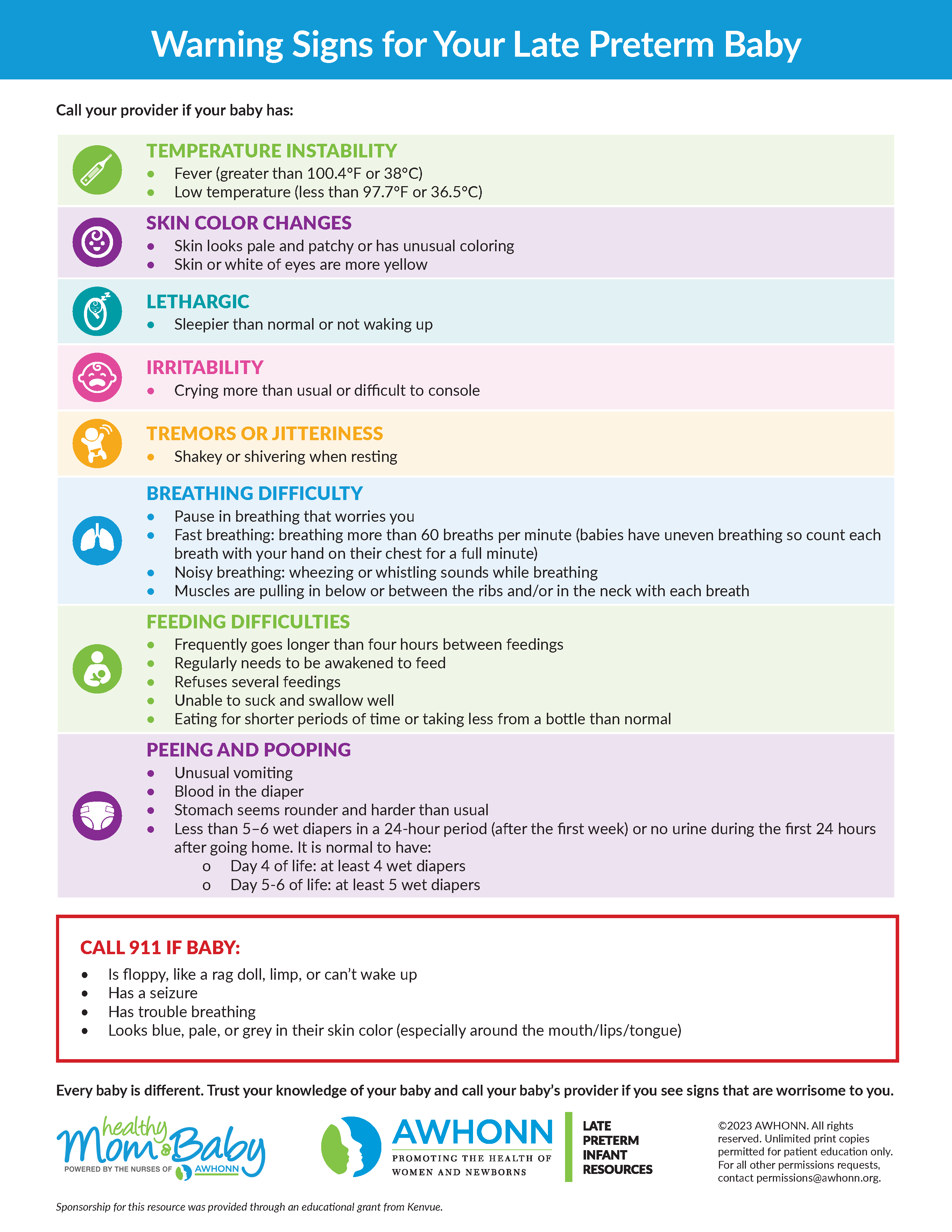
Descarga Este Recurso en Español (PDF)
Telechaje Resous Sa a an Franse (PDF)
This information is also available on the AWHONN website in additional languages, including Chinese, Somali, Tagalog, and Vietnamese.
Keep in Mind
Most late preterm babies do very well. With warmth, frequent feeding, and close follow-up, your baby can grow and thrive.
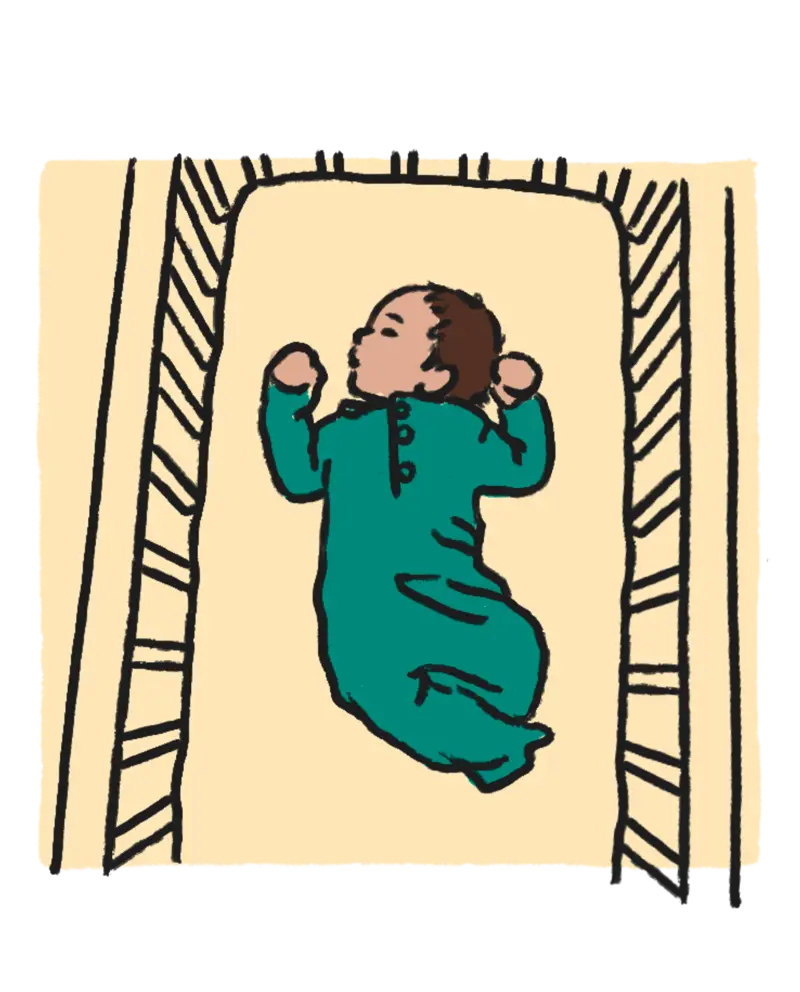
 Getting To Know Your Baby