Postpartum Preeclampsia and High Blood Pressure

Postpartum high blood pressure and preeclampsia are serious health problems. High blood pressure and preeclampsia can happen during pregnancy and after birth.
Of the people who get high blood pressure or preeclampsia, about 1 to 3 out of 10 people will develop it after their baby is born.
It usually starts between 2 and 7 days after birth, but can happen any time in the first 6 weeks postpartum.
Blood pressure above 140/90 can be dangerous.
Blood pressure above 160/110 is an emergency.
The Preeclampsia Foundation offers resources in English and Spanish for learning about postpartum preeclampsia:
What Are the Symptoms?
Sometimes you may have symptoms, but sometimes you may not.
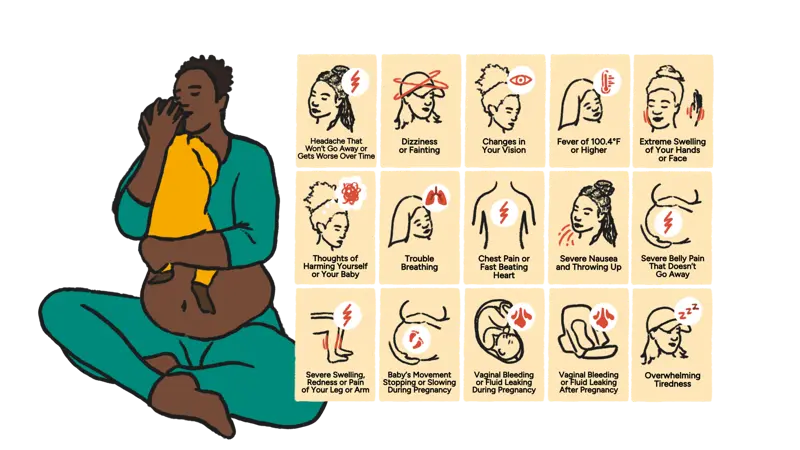
Contact your clinic or come to the hospital right away if you notice any of these signs:
- Bad headaches that don’t get better when you take pain medicine, like Tylenol (acetaminophen) or Advil (ibuprofen)
- Changes in your vision, like seeing dark spots or bright flashes
- Pain in the upper right side of your belly
- Trouble breathing or shortness of breath
- Pain in your chest
- New feelings of being sick to your stomach or throwing up
What Can Be Done About High Blood Pressure or Preeclampsia?
You can check your blood pressure at home to make sure it stays in a safe range.
Your provider may prescribe medicine to help lower your blood pressure. These medicines are often used for a short time. They are safe if you are breastfeeding your baby. Only stop your medicine if your healthcare provider says it is safe.
Learn the Best Way to Check Your Blood Pressure
What Should I Do in the Future?
Having preeclampsia can raise your risk of high blood pressure and heart disease later in life. There are steps you can take to stay healthy.
- Tell your healthcare provider that you had high blood pressure of pregnancy or preeclampsia.
- Get a heart health check every year. This includes checking your blood pressure and talking about your heart health.
- If you get pregnant again, talk with your provider about taking low-dose aspirin each day, starting between 12 and 20 weeks of pregnancy. This can help lower your risk of getting preeclampsia again.
- Eat healthy foods and stay active. Regular exercise and healthy meals can help keep your heart healthy.
 Physical Health