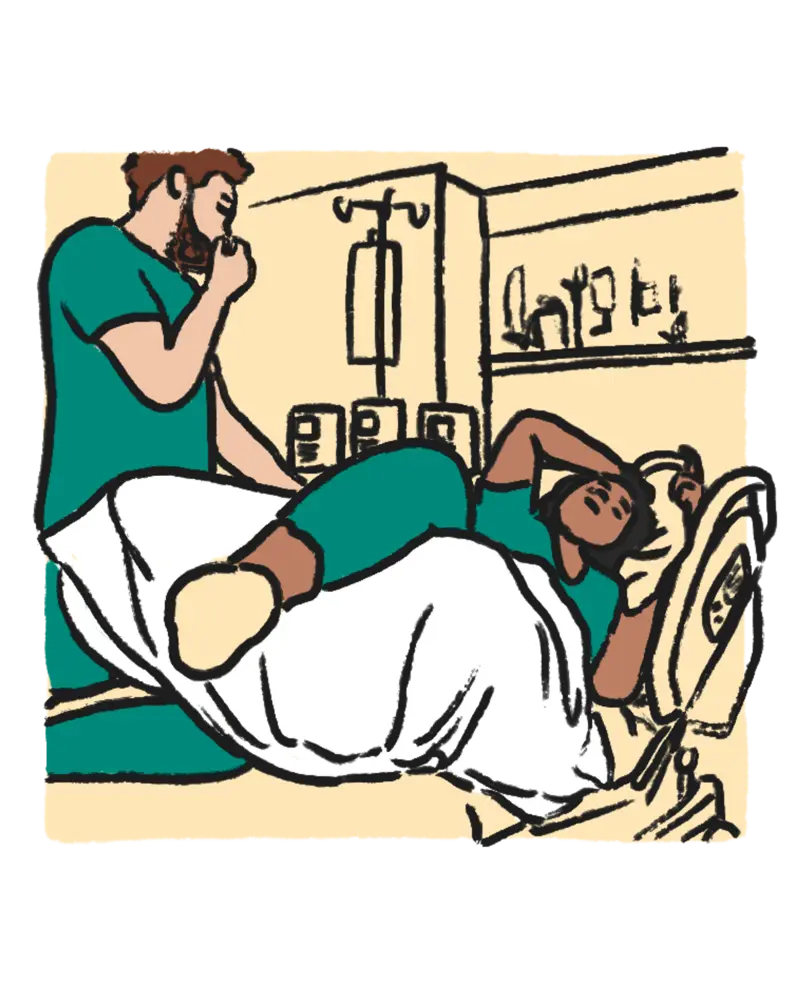
Support During Your Labor and Birth

Having support can be very helpful during labor and birth. Your support person may be your partner, a friend, a family member, or the father of the baby. In addition to your support person, you can also have a doula present at your delivery. The choice is yours—but make sure to plan ahead of time for the support you need.
Ask yourself:
- What does support look like for me, and what might I need?
- Who can provide me with support before, during, and after birth?
- Are there important people in my life? What will their roles be?
- What makes me feel good?
- What helps me relax and de-stress?
- What is something I can do for myself every day, even if it’s just for a few minutes?
- What help will I need to make sure this regular self-care can happen after the birth?
What Does Support Look Like During Labor and Birth?
Think about making a birth plan with your support people. A birth plan talks about your choices during labor and birth and helps you decide what you want. Your birth plan could range from general, like whether or not you want to take pain medication or try breastfeeding, to very specific, like a playlist of songs to listen to during labor.
If your support people know what you want, they can help communicate with your healthcare team and advocate for you, and then you can feel more prepared and relaxed during your labor, birth, and recovery.
Support Person: What Can You Do?
- Know the plan. Make sure you understand the kind of birth your pregnant person wants and what alternatives they might choose if something unexpected happens.
- Listen. Plans can change. Ask what feels better.
- Encourage. Say kind words, like “You’re doing great.”
- Be the DJ. Help your laboring person with their playlist and physically support them if they need help moving to music.
- Comfort. Offer water, snacks, massage, and deep breaths.
- Massage. Help your laboring person figure out what kind of physical touch feels relaxing or gives them relief.
- Hip squeeze. Support their lower back.
- Support their movement. Help them move and change positions.
- Take care of yourself. Eat, breathe, and take breaks yourself to stay strong and calm for them.
- Be patient. Labor takes time.
What if I Want More Support?
You’re not alone. Talk to your healthcare team—they can help connect you with caring people and helpful programs at BMC and in the community, including:
- CenteringPregnancy, a BMC prenatal care program that offers both individual time with your healthcare provider and group activities with other pregnant people sharing the same experiences
- In addition to getting your routine check-ups and care, you can make friends and build a community.
- Doulas, people trained to give both physical help and emotional support during pregnancy, labor, and postpartum recovery, and with infant care
- BMC’s doula program is called Birth Sisters.
- MassHealth can also connect you with a doula—doula support is covered by MassHealth insurance.
- You can also hire a doula separately.
- Curbside Care, a BMC program that offers postpartum care and support for you and your baby at your doorstep
- Parenting groups, like First Connections
- Postpartum meals and food
- Help with rent, childcare, and bills through United Way’s Mass211 program, which is available 24/7 in Massachusetts by calling 211
Stressed or Depressed and Need Help?
Make sure your healthcare provider knows, so they can support you and connect you to resources.

 What To Expect During Labor