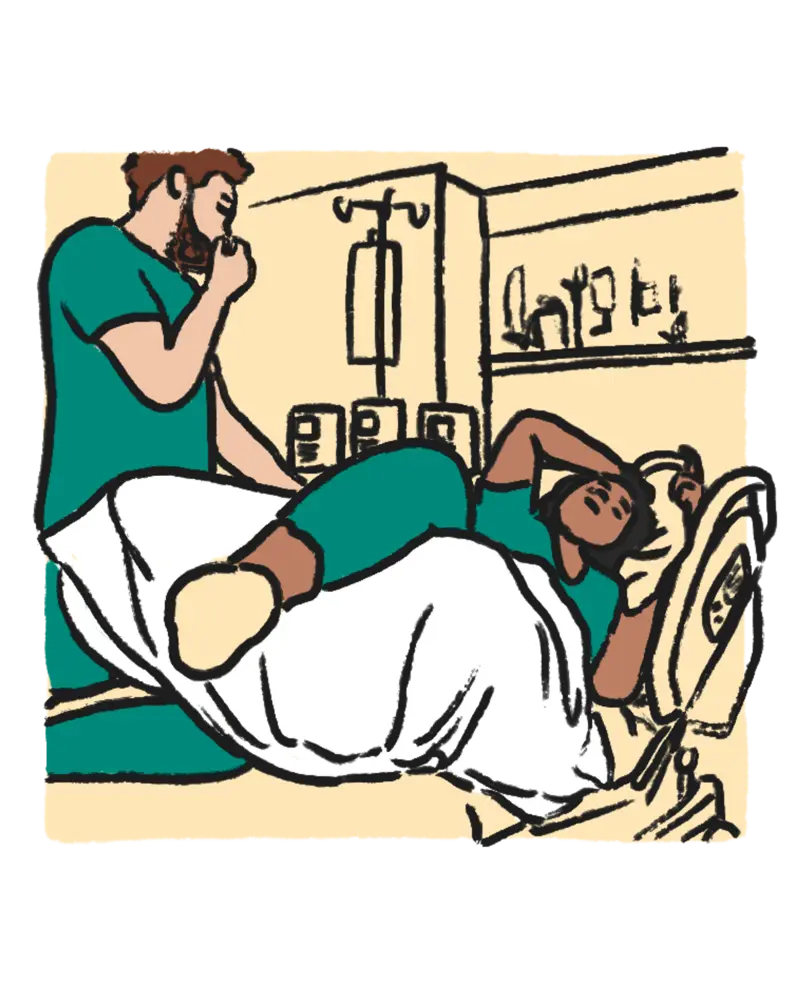
How to Prepare for Labor and Birth

Most people who want to have a vaginal birth will have a vaginal birth! But about one out of four pregnant people will have a Cesarean birth, or C-section, even though that was not their plan. These tips may increase your chances of having the vaginal birth you want.
The nonprofit National Partnership for Women & Families (NPWF) works to make high-quality, accurate information available so that pregnant people can make informed decisions about their medical care. Their flowchart, “Pathway to a Healthy Birth,” shows the steps from early pregnancy to holding your newborn, and supplies advice for how to stay “on the path.”
View the NPWF’s Pathway to a Healthy Birth Flowchart (PDF)
Educate Yourself About the Possibilities
Asking questions and talking to your healthcare team can help you make informed decisions before and during your labor and birth.
What Can I Do During My Pregnancy?
There are steps you can take during your pregnancy to make it more likely you’ll have a vaginal birth. These include:
- Take a childbirth class. People who take classes learn what to expect and feel more ready for labor and birth.
- Use a midwife. If you are healthy, with a low-risk pregnancy, consider using a midwife as your prenatal and labor healthcare provider. In 2024, 79 percent of pregnant people cared for in labor by a BMC midwife had a vaginal birth.
- Stay active! Get regular exercise throughout your pregnancy to keep your body strong.
- Eat a healthy diet and gain the recommended amount of weight during pregnancy.
- Learn relaxation techniques and ways to manage stress.
- Get a doula. A doula is a person whose job is to offer you emotional and physical support during labor.
- You can have a doula present at your labor along with your primary support person.
- Having a doula with you as an extra support can help you feel more relaxed and empowered. This can help labor go faster, making vaginal birth more likely!
- Try exercises like The Miles Circuit or Spinning Babies to help your baby move into a good position for birth.
- Let labor start on its own. If you don’t have any health problems, let labor happen naturally instead of asking for an induction
- Use self-help tips to get ready for labor. If you are past 39 weeks of pregnancy and your labor hasn’t started, try self-help methods like nipple stimulation, acupuncture, or membrane sweeping.
- If these work, you can avoid interventions like induction, which often involves getting an IV drip of medicine to give you contractions.
What Can I Do During Labor and Birth?
During Early Labor
Drink fluids such as sports drinks, coconut water, juice, and water, and eat snacks or small meals to keep your energy.
Wait to go to the hospital until active labor. Active labor is usually when your cervix is four to five cm open. It typically starts when you have strong, regular contractions every four to five minutes for at least one hour. People who come to the hospital already in active labor are more likely to have a vaginal birth and need fewer medical procedures.
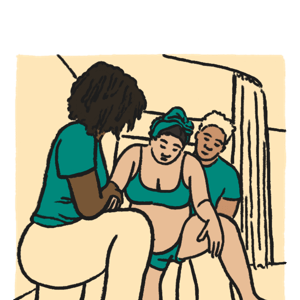
During Active Labor
Walk and stay upright while you are laboring. It may help labor go faster—about one hour and 22 minutes faster, according to evidence!
If your provider says it’s safe, ask your care team if they can do intermittent checks of the baby’s heartbeat instead of wearing a continuous fetal monitor. However, depending on your situation, you may be advised that continuous monitoring is safer for you and your baby.
What if I Need an Induction?
It’s possible you may need to have your labor induced (started artificially at the hospital) because of health problems for you or your baby that would make continuing the pregnancy unsafe, or because it is past the baby’s due date.
Cervical ripening is the first step in an induction. If you have cervical ripening, you are more likely to have a vaginal birth. Some people can start cervical ripening at the hospital and go home and rest.
What if the Birth Doesn’t Go as Planned?
Sometimes unexpected issues can come up during labor and birth. Talking with your care team and support people during pregnancy about your plans and wishes can help everyone prepare for different situations. That way, your team can support your preferences as much as possible, even if plans need to change.
A C-section may be the safest birth for you and your baby.
After an unplanned C-section, it is normal to have many feelings. Some people may feel happy or relieved, while others may feel sad or disappointed. Caring for your mental health is just as important as healing your body.
Ask for help if you are feeling sad, numb, or if you need help talking about what happened during your birth.

 Preparing For Birth