Cholestasis: When to Be Concerned About Itching During Pregnancy

During pregnancy, your belly and breasts grow larger, which means your skin needs to stretch. This can often cause feelings of itchiness, even sometimes on your nipples. Hormone changes during pregnancy can also cause you to feel more itchy. If you have an autoimmune condition like eczema or psoriasis, sometimes your itchiness will actually ease during pregnancy, though it can also get worse.
In most cases, you can manage itchiness with your regular lotions and moisturizers. However, if you are experiencing severe itching, especially on the palms of your hands and bottoms of your feet, it might be a symptom of a more serious problem.
What Is Cholestasis?
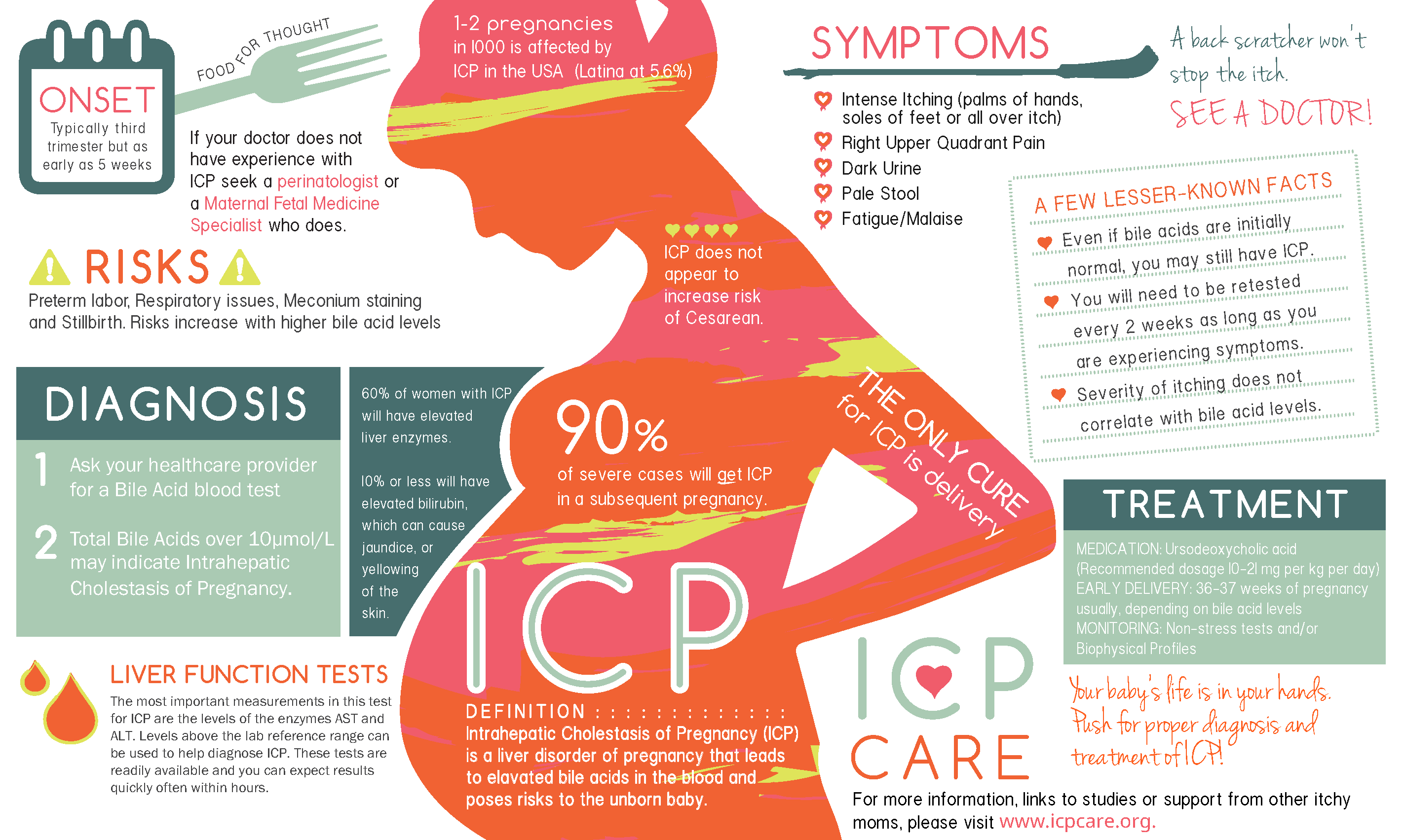
Intrahepatic cholestasis of pregnancy (ICP) is a liver problem that can happen during pregnancy. Your liver normally makes a fluid called bile that helps you digest food. In cholestasis, the bile builds up in your body. Too much bile in your blood can cause itching, and harm your baby.
What Does It Feel Like?
- Often the only symptom is intense itching, especially on the palms of your hands and bottoms of your feet.
- The itching feels worse at night.
- In rare cases, you may have dark urine or light-colored poop.
Cholestasis doesn’t cause a rash.
Learn more about what cholestasis is:
What Are the Risks to Me and My Baby?
The main risk to you is feeling itchy and uncomfortable. But there are more serious risks for your baby:
- Preterm labor happens in 2–4 out of 10 people with cholestasis.
- Getting baby’s meconium (newborn poop) in your uterus happens in about 2 out of 10 people. Newborns who accidentally ingest meconium can have breathing problems when they are born.
- Stillbirth is rare, but the chance goes up, especially if your bile acid level is over 100.
Who Gets Cholestasis?
You may have a higher chance of cholestasis if you have:
- Gestational diabetes
- Preeclampsia or high blood pressure during pregnancy
These two conditions can cause other problems, so your provider will check for them at your prenatal visits.
If I Have Cholestasis, What Happens?
During Your Pregnancy
- At your prenatal visits, you will get:
- Blood tests to check your liver and your bile acid levels
- Extra checks of baby’s heartbeat
- To help with your symptoms, you may be prescribed:
- Ursodiol pills to lower your bile levels
- Creams or pills to help with itching
Your Labor and Birth
You can still plan a vaginal birth if you have cholestasis, but your healthcare provider will recommend inducing labor early, or if you are planning a C-section birth, scheduling it early.
When to give birth depends on your bile acid level:
- Bile acid level of 100 or higher: 36 weeks, sometimes earlier
- Bile acid level of 40–99: 37 to 38 weeks
- Bile acid level under 40: 38 to 39 weeks
After Birth
Giving birth is the cure for cholestasis! The itching usually goes away right after birth or within a few days.
Will It Happen Again?
Yes, cholestasis can come back in your next pregnancy. Be sure to tell your provider if you’ve had it before.
Learn More
ICP Care is a nonprofit that provides patient support and education and supports research and improved health care practices to help people who experience intrahepatic cholestasis of pregnancy and make sure they deliver healthy babies. Learn more with their infographic:
 Medical Care