Prenatal Visits: Monitoring Your Health and Baby’s Growth

Your prenatal visits are a vital part of keeping you and your baby healthy. These regular check-ins help your provider:
- Track your baby’s growth and development
- Monitor your overall health and catch any concerns early, such as high blood pressure, diabetes, infections, or anemia
- Provide screenings or extra tests if needed
- Answer your questions and ease any worries
How Often Will I Have Visits?
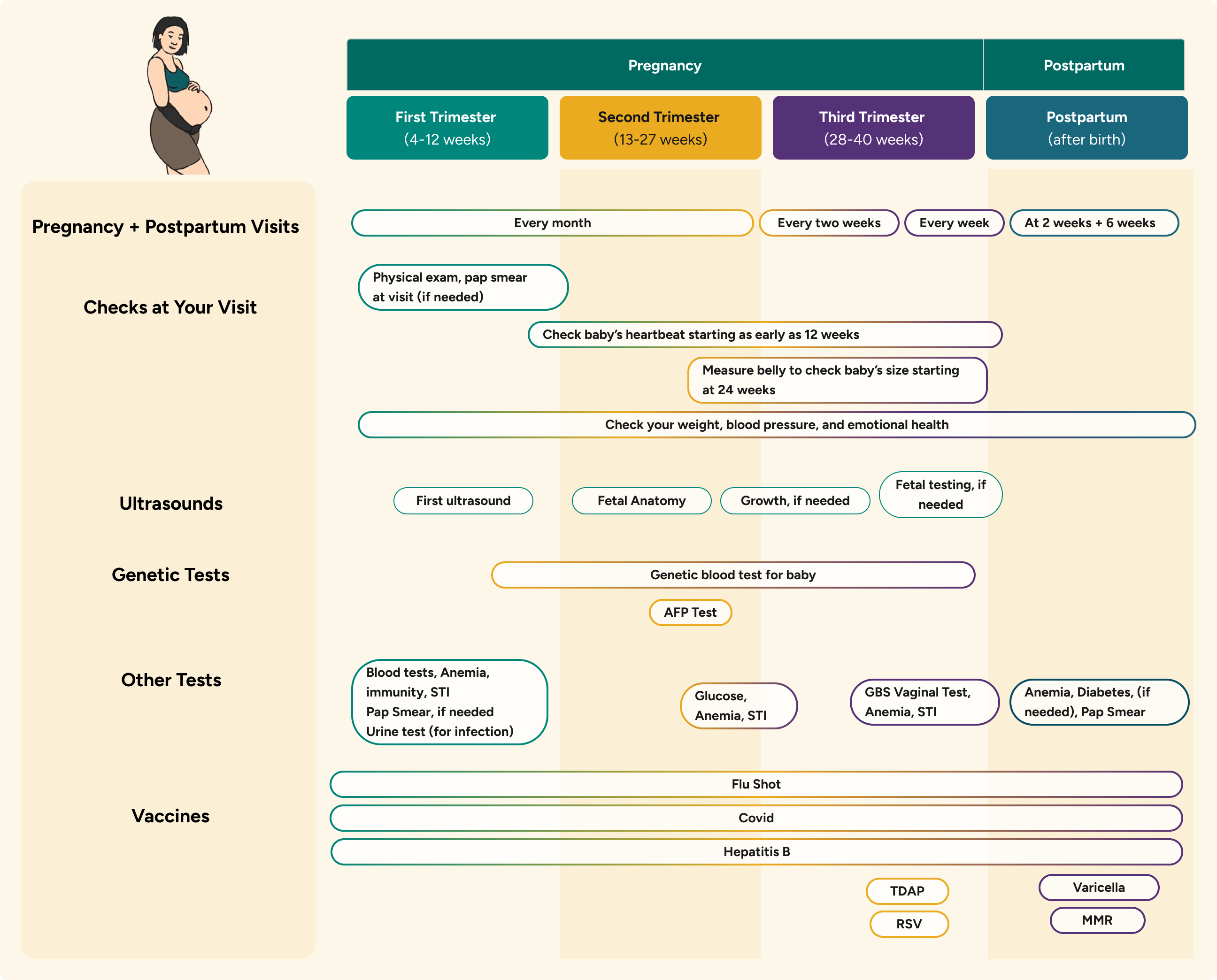
- Once a month until about 28 weeks (seven months)
- Every two weeks until 36 weeks
- Every week until your baby is born
What Happens at a Prenatal Visit?
Each visit may include:
- Checking your weight and blood pressure
- Listening to your baby’s heartbeat
- Measuring your belly to check your baby’s growth
- Talking through any questions or concerns
How Many Ultrasounds Will I Have?
Most patients have two ultrasounds:
- First ultrasound (around 11–13 weeks): Confirms your due date and checks for early signs of genetic conditions.
- Fetal survey (around 20–24 weeks): Looks at your baby’s body and organs. You can also find out your baby’s sex if you choose.
Some people may need extra ultrasounds based on their health. These can
- Check your baby’s growth and weight
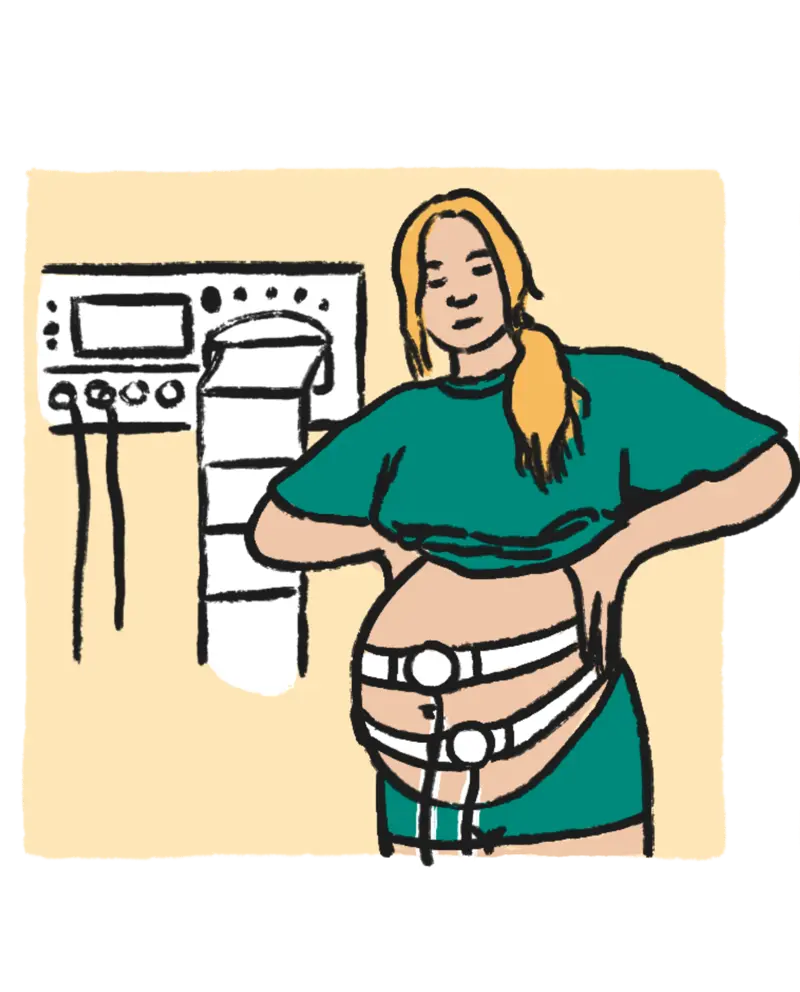
- Monitor your baby’s heartbeat
- Measure the amount of amniotic fluid
How Can I Make the Most of My Visits?
These visits are for you and your baby. You deserve to feel heard, supported, and informed.
Be Prepared
- Write down your questions ahead of time.
- Note any new symptoms or changes you’ve noticed.
Speak Up
- Ask questions—big or small.
- Let your provider know how you’re feeling, both physically and emotionally.
Bring Support
- A partner, friend, or family member can help you remember what was said and provide emotional support.
Know What’s Next
- Ask about any upcoming tests or screenings.
- Talk with your provider about staying healthy between visits—this includes eating well, staying active, and taking prenatal vitamins.
Routine Tests During Pregnancy: A Quick Reference
We recommend many of the tests listed below to help make sure you and your baby are healthy. In some cases, we may recommend other tests for either you or your baby, depending on the results of these below tests and your general health.
Tests to Expect at Your First Prenatal Visit
- Blood draw:
- Check for anemia (low iron in your blood). Anemia can make you feel tired or weak.
- Check your blood type
- Check if you are immune (protected) from diseases like chickenpox and rubella
- Check for infections like HIV, hepatitis, and tuberculosis
- If you want, check to see if you have inherited certain genetic conditions
- Genetic tests for your baby
- Urine sample to test for infection/bacteria
- Vaginal swab to test for infection/bacteria
- If needed, a pap test (cervical swab) to check the health of your cervix
Tests at Six Months
- Diabetes test (one-hour Glucola test): Checks if you have gestational diabetes. You drink a sweet drink, and then we check your blood one hour later.
- Anemia test: Tests again to see if you have low iron. You can sometimes develop anemia later in your pregnancy, even if you didn’t have it before.
- Syphilis test: Looks for an infection called syphilis. It is important to find and treat it early to keep you and your baby healthy.
Tests at Nine Months (Near Your Due Date)
- Group B Strep (GBS) test: GBS is a germ found in your vagina. It can make your baby sick during birth if you have it.
- HIV test: This is another blood test to check for HIV. It helps keep you and your baby healthy by finding the virus early.
 Medical Care