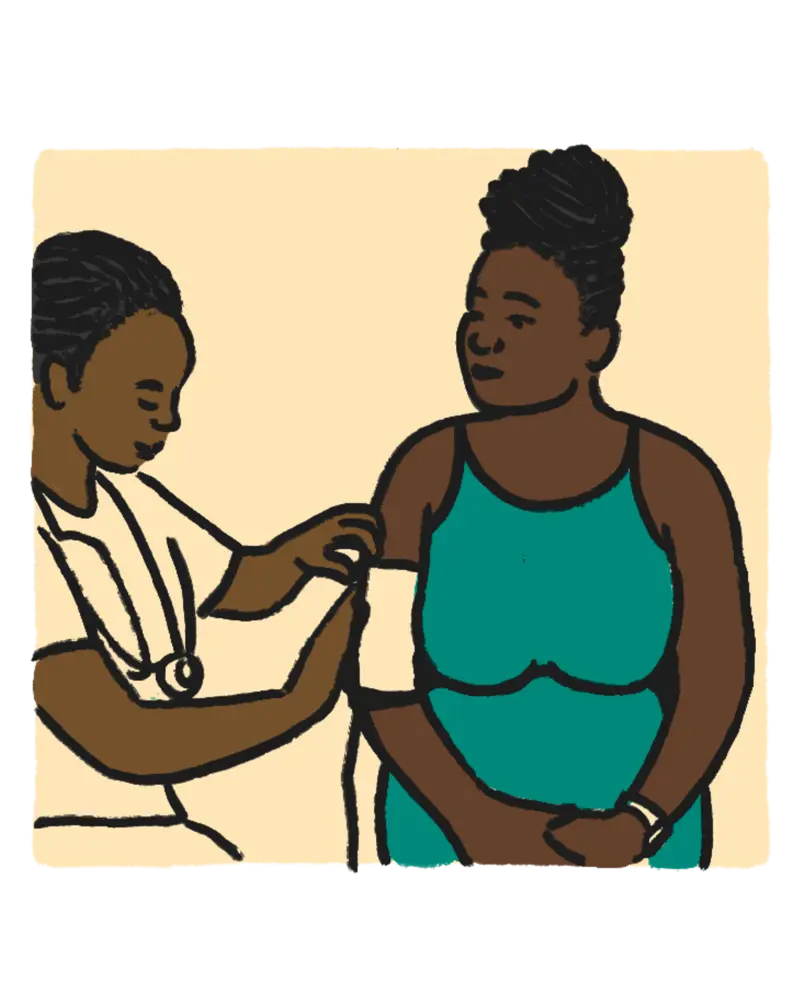
How to Check Your Blood Pressure

Staying Safe During and After Pregnancy
If you have high blood pressure or another health condition, you may need to monitor your blood pressure during pregnancy and after your baby is born. Tracking your numbers at home can help prevent serious problems and catch them early.
How to Check Your Blood Pressure
High blood pressure in pregnancy—including preeclampsia—can be serious. Your healthcare provider may recommend low-dose aspirin and at-home blood pressure checks to protect your health and your baby.
Before You Start:
- Choose a time when you feel calm.
- Plug the cuff into the machine.
- Sit with your back supported, legs uncrossed, and feet flat on the floor.
- Rest your arm on a table or chair arm at heart level.
- Be still and quiet—don’t eat, talk, or text.
Steps:
- Slide your arm through the cloth loop (a bare upper arm works best).
- Make sure the cuff is facing the right way—tubes usually hang from the bottom and point toward the machine.
- Tighten the cuff: Pull the cloth through the metal ring and fasten the Velcro snugly (not too tight).
- Press the Start/Stop button once.
- The cuff will tighten, then loosen—stay still and quiet.
When done, you’ll see three numbers:
- Top = Systolic blood pressure
- Middle = Diastolic blood pressure
- Bottom = Heart rate (pulse)
Important
Follow any instructions that your nurse or provider gave you about when to call the clinic or come in for more help.
If your blood pressure is 140/90 or higher, go to or call Labor & Delivery right away at 617.414.4364.
If your blood pressure is 160/110 or higher it is an emergency.
If you have or are at risk for high blood pressure or preeclampsia, continue checking your blood pressure at home for at least six weeks after birth—even if you feel fine.
Instructional Video
You’ll follow the same steps for checking your blood pressure during pregnancy and after you give birth. These videos will show you what you need to do.
 Medical Care