


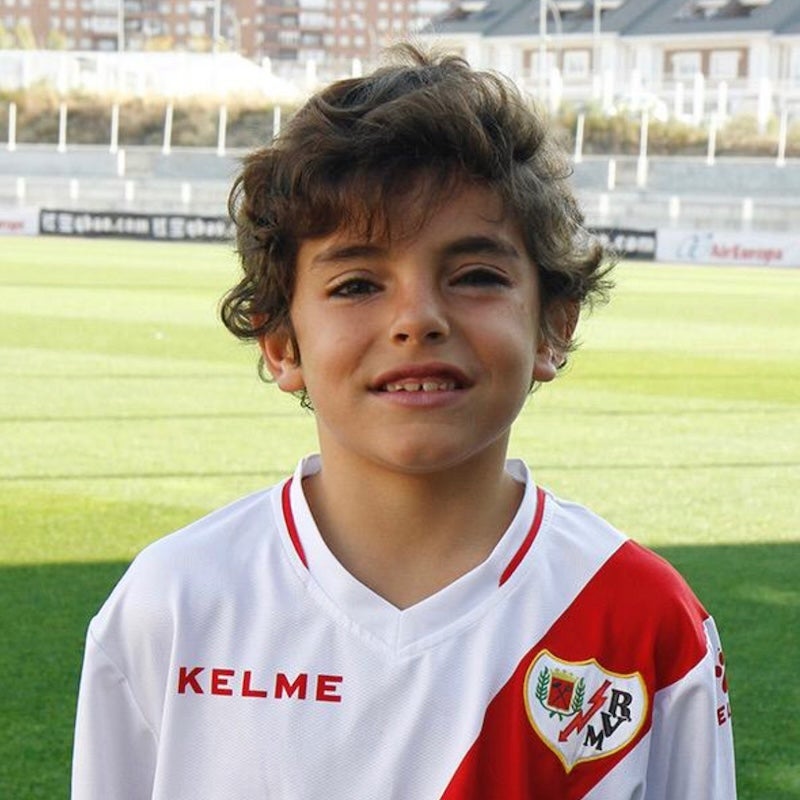
BMC hematology patient Mateo Turletti has loved soccer since he was a child.
Mateo Turletti has been playing soccer for as long as he can remember. His parents, Natalia and Pablo, say he kicked a ball even before he walked. By 2025, Mateo had earned a scholarship to play for Boston University’s Division I soccer team and was preparing to begin his freshman year. It was the opportunity he had been working toward for years.
But in late July, just a few days before preseason, Mateo started having shortness of breath while traveling with friends in Greece. “I’m pretty stubborn, so I just went with it,” he remembers. “And then one day, I couldn’t talk. I couldn’t breathe.” He contacted his mother and immediately flew home to Spain, where doctors discovered he had a life-threatening blood clot in the lungs called a pulmonary embolism.
A Diagnosis That Changed Everything
Mateo had his first pulmonary embolism when he was 14, but this time, the timing was especially devastating. He missed preseason and spent the next couple of weeks in Spain recovering. Regular visits from his cousin, Alvaro, helped distract Mateo. But even then, all he could think about was soccer.
“When everything was happening, I was just worried that I wasn’t going to play again,” he says. “I wasn’t thinking about college, to be honest. Just playing. Those were long nights in the hospital.”

Mateo was crushed by the realization that his condition meant he could not play contact sports.
Over the course of his stay, Mateo learned that because he had experienced more than one pulmonary embolism and had a family history of blood clots, he would need to be on lifelong anticoagulation, or blood-thinning, medication. That meant no contact sports, including soccer. “At the beginning, I was like, ‘Why me?’” he says. But then he thought about his parents; his younger brother, Lucas; and the family and friends who were supporting him. “It was obviously horrible, but I felt like it would be unfair for me to be sad,” he says. “At least it was only contact sports I couldn’t play. I could still play golf and tennis, which I play a lot. And I knew I could be happy without soccer.”
At BU, Mateo found another source of support in head coach Kevin Nylen, who made it clear that he still had a place on the team. “He took me when I was never supposed to play,” Mateo says. “He said, ‘You’re still going to come to trainings, travel with us, and be part of the team.’ That showed me how big his heart is and taught me what it is to be a good person.”
By August, he was finally cleared to fly to Boston, just before the academic year began. Once at BU, Mateo began classes and stayed involved with the soccer team however he could—training, helping the coaches and bringing “good vibes” to the locker room. “I thought, ‘At least I’m here, at BU and on the team,’” he says.
A Safe Return to Play
As a BU Terrier, Mateo receives close, ongoing medical care from a specialized team at Boston Medical Center, which includes Amy E. Sobota, MD, MPH, Chief of Pediatric Hematology/Oncology; Elizabeth S. Klings, MD, a pulmonologist and director of BMC’s Pulmonary Hypertension Center; and Arturo J. Aguilar, MD, Head Team Physician and Medical Director of Sports Medicine at BU.
As unlikely as it seemed that he would play again, Mateo never stopped asking whether there was any safe way back. And his doctors never stopped trying to find a solution. “Dr. Sobota kept researching and coming back with updates,” he says. Eventually, the team identified a possible blood thinner, apixaban, that might allow him to play soccer with careful timing and monitoring. To understand how the medication moved through his body, Mateo spent a full day at BMC undergoing pharmacokinetic testing. The results helped his care team determine when the medication level in his blood was lowest—and therefore safest for sports.
The plan was not about eliminating risk entirely. It was about understanding the risk, building a careful strategy, and making sure Mateo, his family, and his care team were aligned. Slowly, after months away from the game, he was cleared to play. And on April 24, 2026, he played his first game as a Terrier.
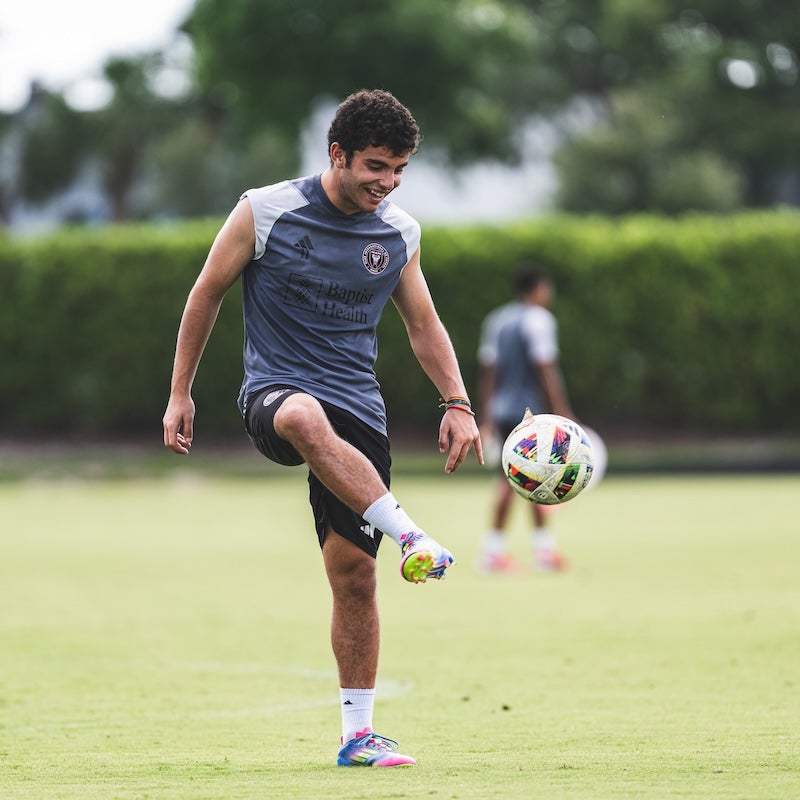
Mateo is grateful to be back on the field with careful planning and tracking from his hematology team at BMC.
Gratitude through Uncertainty
“This Saturday I officially stepped on the field for a game again,” Mateo wrote afterwards in a letter to his care team. “I felt like a five-year-old kid again and I will never forget that. I am so thankful I was able to live that again.” For his father, the moment was just as emotional. “You have helped resuscitate Mateo’s dream, allowing him to return to the field and relive his passion,” Pablo wrote to the team. “As a parent, the suffering and joys of our children get exponentially multiplied in our hearts. Seeing the joy you all brought to him this weekend is a feeling beyond words.”
The BU soccer team won both games Mateo played his freshman year. Today, as he prepares for a second season, Mateo hopes his story helps others facing uncertainty stay positive. “I don’t think there’s space in life to be sad and just thinking about the negative,” he says. “I saw that life is much bigger than soccer and knew that things were going to turn out fine. To be honest, gratitude is what has helped me through this.”
Explore BMC Pediatric Hematology-Oncology
Learn about the BMC Pulmonary Hypertension Center