
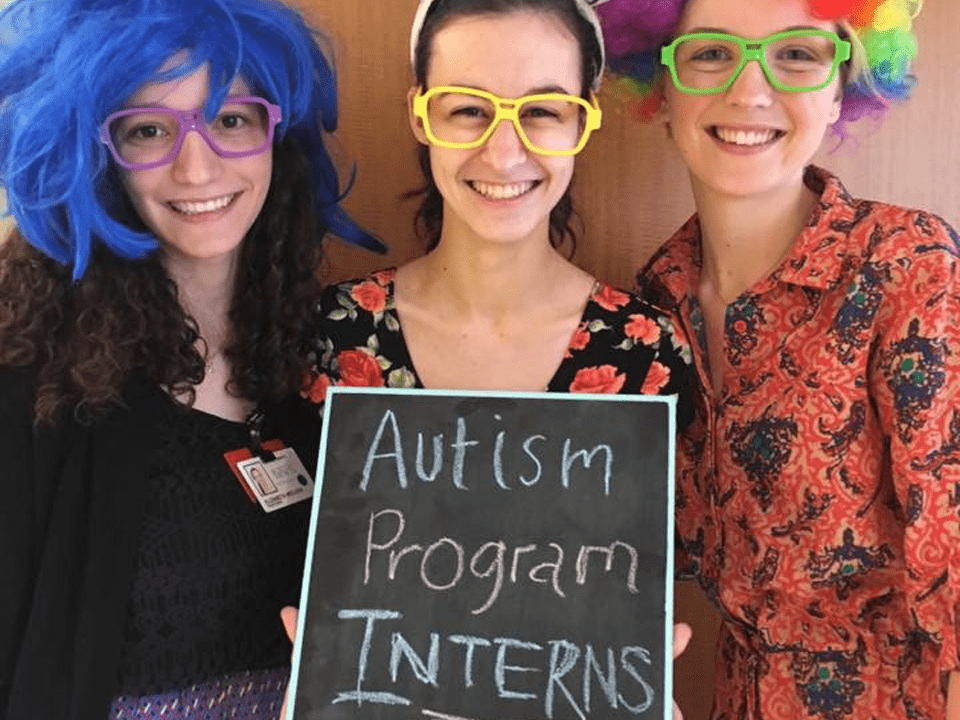
The internship and volunteer placement with the Autism Program at Boston Medical Center provides undergraduate and graduate level students the opportunity to participate in a rich applied hospital based placement supporting children and families. The program relies heavily on the support, creativity, and drive of student interns and volunteers in various capacities based on the program and individual student's needs. The student intern or volunteer works with BMC Autism Program staff in executing many aspects and components of our work, as identified in the project descriptions below. Interns and volunteers also have the opportunity to observe diagnostic and follow-up clinic appointments with Developmental and Behavioral Pediatric clinicians, as well as participate in a plethora of training opportunities.
For more information about the internship program, please contact us at autismprogram@bmc.org or 617.414.3842.
Applications
Please adhere to the application dates below, otherwise your application will be missed.
- For Fall placements, please submit your application between the previous April 1st-June 1st.
- For Spring placements, please submit your application between the previous September 1st-November 1st.
- For Summer placements, please submit your application between the previous February 1st-March 1st.
To apply for a volunteering/internship position, please use this link: https://form.jotform.com/220274203600035
For all other placements including inter-sessions or shorter term placements, or questions regarding the application process, please email Alex.Friedman@bmc.org.
Frequently Asked Questions
Please be advised, the Autism Program is disability inclusive and we value neurodiversity within our workplace and team.
What does the interview process look like?
Applications are reviewed 2 to 3 months prior to the start of the placement (March/Summer, May/Fall, and November/Spring). Once applications are reviewed, chosen candidates will be invited to participate in an individual or group interview as an opportunity to share relevant experience and skills, as well as ask questions. Anywhere from 3-10 interns/volunteers are on-boarded each placement cycle.
Is the internship placement paid?
No, unfortunately, our internships are unpaid and we are unable to provide a housing or transportation stipend.
Is prior direct experience working with someone with autism required?
While we always love to hear about any personal or professional experiences you have working with individuals with ASD, this is not a requirement.
Will there be opportunities to shadow or observe medical appointments for patients?
We try to build in at least one clinical shadowing opportunity throughout your time with our program, though depending on the projects and responsibilities you have throughout your placement there may be other occasions to observe in clinic.
Will there be opportunities to work directly with individuals with ASD and their families?
Our internship placements are rich and dynamic, such that each intern's experience is unique to their interest and the skills they bring forth to the program. There are often tasks and projects that provide interns the opportunity to interact directly with families. Please note, however, that our program does not provide direct therapeutic services to individuals.
Am I expected to be on campus? Do you offer remote opportunities?
We currently offer fully in-person, fully remote, and hybrid internships. We will work to ensure that all internships, regardless of whether you are in-person or remote, will provide similarly robust experiences. However, please note that some opportunities will only be available to those who join us at least partially in-person (e.g., in-person clinic observation opportunities).
Do I need to be enrolled in an academic program to participate in an intern/volunteer opportunity?
You do not need to be enrolled in a college or university program to participate in a placement with our program.
How many hours am I expected to dedicate to this internship/volunteer placement?
This varies. Depending on the duration and nature of the placement, interns may dedicate more hours than others, typically, ranging from 4 to 15 hours per week.
What will my day-to-day as an intern look like?
This varies greatly depending on the project(s) that you are working on. For examples of intern projects and activities, please check out the Project Groups Description tab below.
Who will be my supervisor during my placement? What does the supervision structure look like?
Each intern is typically overseen by one or two staff members who serve as their primary supervisor(s) for the duration of their placement. In some cases, interns work with multiple staff supervisors across the team. The supervisor(s) is assigned based on an interns interest/experience and project areas assigned. In most cases, interns will receive weekly supervision to discuss project goals and provide feedback.
Project Groups Description
General Programmatic Operations
This project groups works under the director and associate director to assist in identifying and writing grants, solicit community partnerships, liaise with stakeholders and support projects not otherwise specified.
Autism-Friendly Initiative
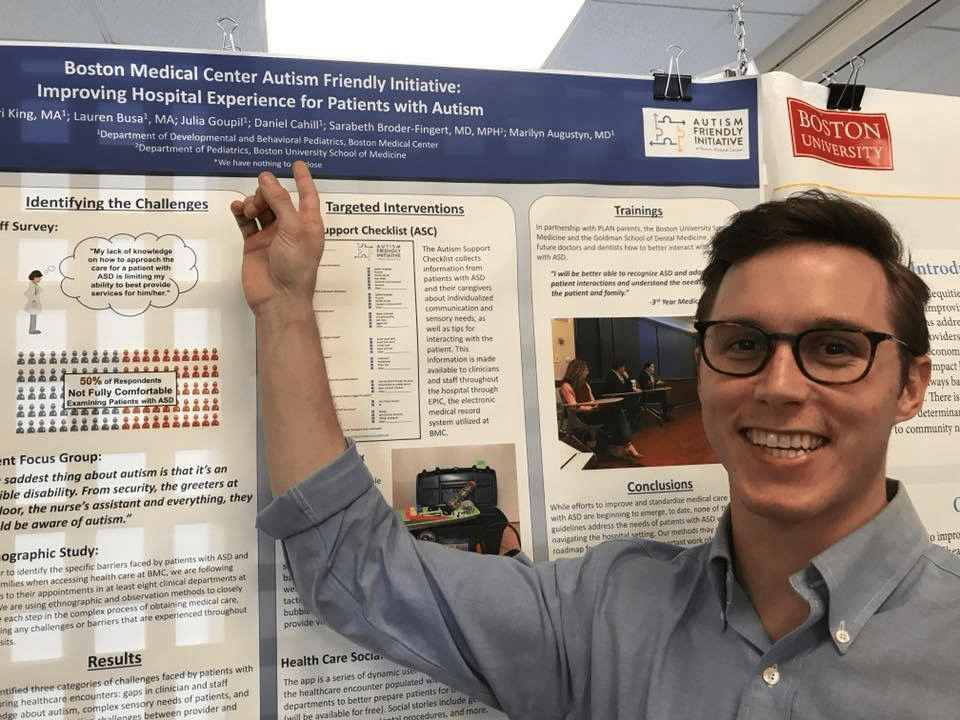
This project group focuses on scaling up autism-friendly interventions, collecting data on intervention effectiveness, tailoring trainings, conducting autism support checklist screeners, disseminating sensory-friendly toolkits, and other efforts to evolve and expand the autism-friendly hospital initiative.
Resource/Family Support
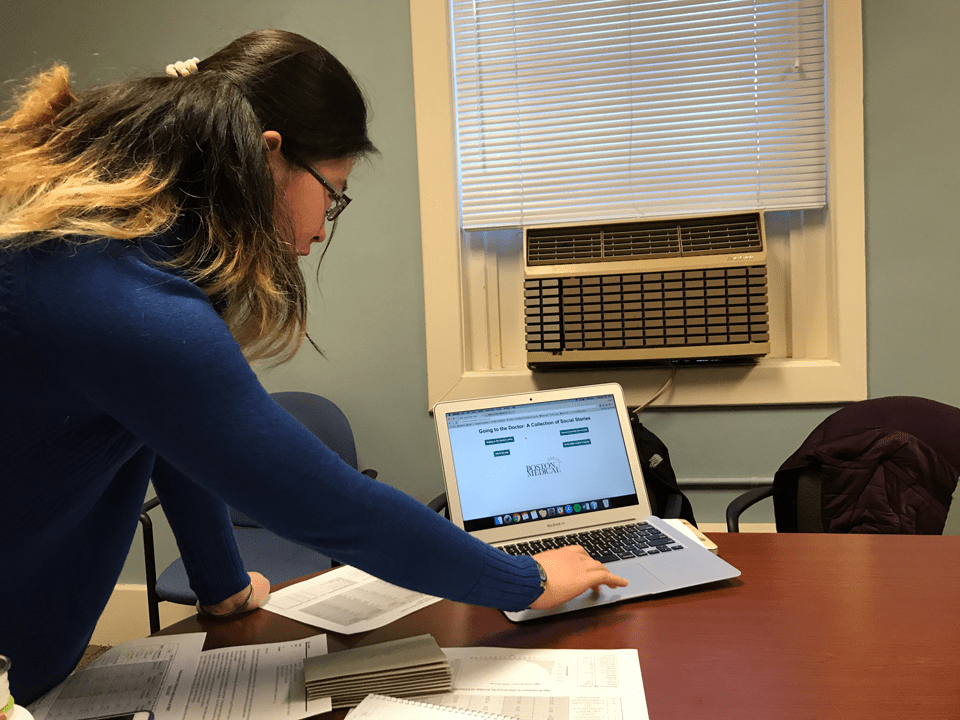
This project groups works under our autism resource specialists to support family support efforts, including identifying resources and programming for families in their local community, processing referrals for outside therapeutic services, developing tailored social stories and visuals, engaging with families over the phone to identify needs, creating new written resources, contributing to our newsletter content, managing social media efforts, and supporting the work of staff in empowering families to follow through on action steps needed.
Research
This project group works under our Research Coordinator, who conducts research efforts within the Autism Program. Tasks include assisting in study protocol development, data collection and analysis, Institutional Review Board (IRB) applications, drafting manuscripts for journal publications, drafting poster/abstracts for conferences, presenting findings, and other research-related tasks.
Teens Engaged as Mentors (TEAM)
TEAM (Teens Engaged as Mentors) empowers diverse children and adolescents in a mentorship model that encourages strong leadership, self-confidence, and positive community relationships.
In this unique program, teens with and without autism spectrum disorder (ASD) work together to mentor younger children on the autism spectrum. This internship is situated under our TEAM Program Coordinator and supports the planning and implementation of monthly TEAM events. Tasks include brainstorming event ideas, identifying and connecting with community partners, supporting event planning and organization, family outreach, data entry, developing visual supports and resources, event facilitation, and support projects not otherwise specified related to the TEAM program.
NOTE: This internship is ONLY offered as a full academic year (September to May). Interested candidates should have general Saturday availability for best-effort attempts to attend TEAM events (usually the first Saturday of each month, but not always).
RBT Internship (for those seeking RBT certification or continued RBT supervision)
- Completion of the 40-hour RBT training course required. You will be responsible for accessing and taking the RBT Certification Exam.
- Our BCBA will oversee and conduct your RBT competency assessment to ensure you meet all required skills.
- Opportunity to gain direct service experience in a novel environment and receive valuable feedback.
- Opportunity to accrue fieldwork hours towards BCBA or BCaBA certification (should you be enrolled in a verified course sequence).
Skills and Abilities of Interns
Required:
- Comfort and/or experience working with individuals and groups from diverse backgrounds, disciplines, and communities
- Excellent analytical, problem-solving, communication, and time management skills
- Ability to effectively contribute within a team setting, in addition to working independently and an ability for self-accountability
- Capacity and willingness to learn about Autism Spectrum Disorder and related issues faced by families navigating the diagnosis, as well as associated community based agencies, programs, resources and supports, under the mentorship of the Program Manager and BMC Autism Program staff
The Autism Program at Boston Medical Center is committed to sharing values of diversity and inclusion in order to achieve and sustain excellence. We actively promote and recognize principles of fairness, equity, and social justice in relation to, and across, intersections of race, age, color, disability, faith, religion, ancestry, national origin, citizenship, sex, sexual orientation, social class, economic class, ethnicity, gender identity, gender expression, and all other identities. By actively fostering an environment and mission of inclusion, we acknowledge the collective and individual talents, skills, and perspectives of all persons collaborating with and supporting our work that productively contribute to accomplishing the goal and mission of our program.
Preferred:
- Prior professional work or personal experience with an individual impacted by Autism Spectrum Disorder
- Proficiency in a language other than English
Current and Past Interns and Volunteers
Fall 2026
Phoebe Grabowski — Mount Holyoke College ’26
Ava Janczak — Tufts University
Kaaya Mehta — Massachusetts Institute of Technology
Isabella Morano — Boston University
Aindri Patra — Cornell University ’25
Sarina Sodha — Boston University
Greta Stanier — Boston University
Vishal Surya — Massachusetts Institute of Technology
Summer 2026
Quinn Binaxas — Boston University
Leah Chili — Boston University
Lauren Farelli — Emmanuel College
Phoebe Grabowski — Mount Holyoke College ’26
Olúwatómi Ìdòwú — Massachusetts Institute of Technology
Alice Ma — Boston University
Kaaya Mehta — Massachusetts Institute of Technology
Isabella Morano — Boston University
Greta Stanier — Boston University
Vishal Surya — Massachusetts Institute of Technology
MIT IAP 2026
Olúwatómi Ìdòwú
Olivia Kim
Tei Kim
Michelle Luo
Kaaya Mehta
Vishal Surya
Hannah Tejada
Vi Trinh
Spring 2026
Abdullah Ahmad — Boston University
Quinn Binaxas — Boston University
Claire Bourett — Boston University
Leah Chili — Boston University
Sarine Cho — Northeastern University
Celia Correia Aguiar — Suffolk University
Ruby Fehm — University of Virginia
Alice Ma — Boston University
Devika Manoj — The University of North Carolina at Chapel Hill
Tyler Mireault — The Carroll Center for the Blind
Isabella Morano — Boston University
Briana Primavera — Emerson College
Sarina Sodha — Boston University
Vishal Surya — Massachusetts Institute of Technology
Carlee Sutton — Boston University
Jia Yao — Boston University
Evie Zhang — Massachusetts Institute of Technology
Fall 2025
Quinn Binaxas - Boston University
Evie Zhang - Massachusetts Institute of Technology
Jia Yao - Boston University
Ruby Fehm - University of Virginia
Devika Manoj - The University of North Carolina at Chapel Hill
Irene Chau - Berklee College of Music
Briana Primavera - Emerson College
Makäla Erickson - Massachusetts College of Pharmacy and Health Sciences
Sarine Cho - Northeastern University
Stephanie Visoso - Boston University
Claire Bourett - Boston University
Carlee Sutton - Boston University
Madison Ly - Boston University
Summer 2025
Kehinde Obidele - Northeastern University
Quinn Binaxas - Boston University
Zachary Pearl - Massachusetts Institute of Technology
Yara Eid - Boston University
Ashleigh Washington - Boston University
Clementina Daboin - Boston University
Emily Yang - Boston University
Carlee Sutton - Boston University
Evie Zhang - Massachusetts Institute of Technology
Jia Yao - Boston University
Dean Hobart
Eva Boucher - Bates College
Phoebe Grabowski - Mount Holyoke College
Ruby Fehm - University of Virginia
Alejandra Mineo-Levitsky - Brown University
Gale Stewart - Keene State College
Desirae Sykes - University of Houston
Willa Kitterman - Georgetown University
Amelia Dasari - Emory University
Emma Cirame - Connecticut College
Spring 2025
Jessica Hwang - Boston College
Kyla Quelle - Boston University
Katelyn Horan - University of Massachusetts Amherst
Izzy Luca - Massachusetts Institute of Technology
Devika Manoj - The University of North Carolina at Chapel Hill
Faith Choe - Massachusetts Institute of Technology
Lauren Okimoto - Boston University
Warishah Qandil - Boston University
Lilian Wasta - Boston University
Kehinde Obidele - Northeastern University
Vivian Nguyen - Emerson College
Julia Crowley - Lesley University
Quinn Binaxas - Boston University
Rovinya Ruhunage - Boston University
Kodhai Duraiarasan - Boston University
Shaina Zaslow - Endicott College
Dana Tessler - Northeastern University
Zachary Pearl - Massachusetts Institute of Technology
Johnnie Jones - Massachusetts Institute of Technology
Nina Petulla - Massachusetts Institute of Technology
Anna Kim - Massachusetts Institute of Technology
Kathy Hu - Massachusetts Institute of Technology
MIT IAP 2025
Zachary Pearl
Johnnie Jones
Nina Petulla
Stella Gassman
Kanna Pichappan
Carlos Nunez-Sosa
Evie Zhang
Anna Kim
Kayoung Kim
Kathy Hu
Fall 2024
Jessica Hwang - Boston College
Maria Sun – Boston University
Olivia Gieg – Lesley University
Kaili Reyes – Boston University
Amanda Soares – Suffolk University
Kyla Quelle - Boston University
Katelyn Horan - University of Massachusetts Amherst
Jackie Wang - Boston University
Izzy Luca - Massachusetts Institute of Technology
Faith Choe - Massachusetts Institute of Technology
Devika Manoj - The University of North Carolina at Chapel Hill
Dana Tessler – Northeastern University
Mmesoma Igwilo – Boston College
Summer 2024
Zachary Barsdale
Katie Edson – Northeastern University
Chloe Shanebrook-Wein – Northeastern University
Dana Tessler – Northeastern University
Brooke Robinson – Boston University
Devika Manoj - The University of North Carolina at Chapel Hill
Faith Choe - Massachusetts Institute of Technology
Caitlyn Rhatigan - Brown University
Jia Yao - Boston University
Amelia Dasari - Emory University
Spring 2024
Diane Suba – Boston University
Zachary Barsdale
Katie Edson – Northeastern University
Chloe Shanebrook-Wein – Northeastern University
Dana Tessler – Northeastern University
Blythe Brenner – Boston University
Mary Ladas – Boston University
Sabrina Meng – Massachusetts Institute of Technology
Brooke Robinson – Boston University
Varshini Sudhakar – Boston University
Faith Choe - Massachusetts Institute of Technology
Sabrina Liu - Massachusetts Institute of Technology
Alexander Freedline - Massachusetts Institute of Technology
Devika Manoj - The University of North Carolina at Chapel Hill
MIT IAP 2024
Faith Choe
Alexander Freedline
Sabrina Liu
Rachel Whyte
Zuri Vallery
Izzy Luca
Anna Hordiychuk
Fall 2023
Samantha Brayton – Boston University
Zachary Barsdale
Srihitha Dasari – Massachusetts Institute of Technology
Diane Suba – Boston University
Katie Edson – Northeastern University
Samantha Ma – Boston University
Keerti Daesety – University of Massachusetts Amherst
Chloe Shanebrook-Wein – Northeastern University
Dana Tessler – Northeastern University
Claire Ammirato – Tufts University
Blythe Brenner – Boston Univeristy
Devika Manoj – The University of North Carolina at Chapel Hill
Mary Ladas – Boston University
Nubaira Milki – Johns Hopkins University
Summer 2023
Srihitha Dasari – Massachusetts Institute of Technology
Diane Suba – Boston University
Katie Edson – Northeastern University
Maja Kalkofen - University of Cologne, Germany
Ariana Wilson Elysee
Samantha Ma - Boston University
Keerti Daesety - University of Massachusetts Amherst
Zachary Barsdale
Samantha Brayton – Boston University
Chelsea Pierce – University of Central Florida
Spring 2023
Keerti Daesety – University of Massachusetts Amherst
Poorvi Sethi – Tufts University
Christina Matta – Boston University
Juju Ha – Boston University
Zachary Barsdale
Mary Ladas – Boston University
Samantha Brayton – Boston University
Jian Yang – Boston University
Yixin Ke – Boston University
Caroline Bao – Massachusetts Institute of Technology
Diane Suba – Boston University
Katie Edson – Northeastern University
Nubaira Milki – Johns Hopkins University
Srihitha Dasari – Massachusetts Institute of Technology
Kian McCabe – Suffolk University
MIT IAP 2023
Katherine Xie
Charvi Sharma
Jeffrey Kwon
Srihitha Dasari
Paridhi Latawa
Sabrina Meng
Fall 2022
Murphy Kaphing – Boston University
Yixin Ke – Boston University
Therese Ancheta – Boston University
Caroline Bao – Massachusetts Institute of Technology
Meryl Tigenoah – Massachusetts Institute of Technology
Nisrine Elmouttaqi – Boston University
Nubaira Milki – Johns Hopkins University
Keerti Daesety – University of Massachusetts Amherst
Edjana Kocollari – Northeastern University
Jian Yang – Boston University
Diane Suba – Boston University
Katie Edson – Northeastern University
Jeffrey Shi – Massachusetts Institute of Technology
Summer 2022
Jeffrey Shi – Massachusetts Institute of Technology
Marisa Gaffney – Bridgewater State University
Abby Vilk
Eren Shin – Massachusetts Institute of Technology
Ainsley Bonin – Colby College
Behterin Rehnuma – Purdue University (West Lafayette)
Leah Kornguth – Suffolk University
Manjary Guha – Texas State University
Katie Edson – Northeastern University
Murphy Kaphing – Boston University
Spring 2022
Amy Ursitti – Emory University
Jeffrey Shi – Massachusetts Institute of Technology
Kylie Graves – Boston University
Chelsea Pierce – University of Central Florida
Caitlin Tannian – Emmanuel College
Claudia Hyman – Tufts University
Sarah Lincoln – Massachusetts Institute of Technology
Sarah Foster – Tufts University
Katie Edson – Northeastern University
Helen Vo – Northeastern University
Eren Shin – Massachusetts Institute of Technology
Jonathan Ham – Boston University
Rameen Awan – Loyola University Chicago
Alana Chandler – Massachusetts Institute of Technology
Maja Kalkofen - University of Cologne, Germany
Emily Kang – Massachusetts Institute of Technology
MIT IAP 2022
Grace Zhang
Rachel Park
Emily Kang
Aaliyah Hussain
Riley Contee
Alana Chandler
Somaia Saba
Sharon Jiang
Eren Shin
Kerri Lu
Julie Tung
Fall 2021
Claudia Hyman, Tufts University (Capstone)
Victoria Oliviera, Lesley University
Saira Saeed, Boston University
Musfika Mishi, Boston University
Rameen Awan, Loyola University
Sarah Foster, Tufts University (Capstone)
Amy Ursitti, Emory University
Sarah Lincoln, Massachusetts Institute of Technology
Jeffrey Shi, Massachusetts Institute of Technology
Chelsea Pierce, University of Central Florida
Kylie Graves, Boston University
Summer 2021
Amy Ursitti, Emory University
Victoria Donaghue, Worcester State University
Sarah Lincoln, Massachusetts Institute of Technology
Jeffrey Shi, Massachusetts Institute of Technology
Pearl Young, Tufts University
Zoe Macy, University of Virginia
Tiffany Tsang, Boston University
Chelsea Pierce, University of Central Florida
Maren Durant, Boston University
Marisa Gaffney, Bridgewater State University
Veda Chikermane, Boston University
Kylie Graves, Boston University
Tobi Abubakare, Harvard University
Spring 2021
Allison Green
Brianne Achin, Southern New Hampshire University
Cindy Luo, Massachusetts Institute of Technology
Elena Bricker, Boston University
Geethika Bodanapu, Boston University
Isabel Jang, Boston University
Jeffrey Shi, Massachusetts Institute of Technology
Madelyn Goskoski, Merrimack, College
Mindy Duggan, Tufts University
Nichole Kyprianou, Boston University
Pooja Sonikar, Boston University (Dual internship with BU CARE)
River Grace, Massachusetts Institute of Technology
Sarah Lincoln, Massachusetts Institute of Technology
Surya Adeleye, Tufts University
Tobi Abubakare, Harvard University
Kylie Graves, Boston University
MIT IAP 2021
Cindy Luo, Massachusetts Institute of Technology
Dasha Castillo, Massachusetts Institute of Technology
Eleane Lema, Massachusetts Institute of Technology
Emily Chen, Massachusetts Institute of Technology
Jeffrey Shi, Massachusetts Institute of Technology
Kaitlyn Pryzdzial, Massachusetts Institute of Technology
Malhaar Agrwal, Massachusetts Institute of Technology
Ria Kolli, Massachusetts Institute of Technology
River Grace, Massachusetts Institute of Technology
Sarah Lincoln, Massachusetts Institute of Technology
Valeria Robayo, Massachusetts Institute of Technology
Veronica Perdomo, Massachusetts Institute of Technology
Fall 2020
Brianne Achin, Southern New Hampshire University
Deryn Fishman, Tufts University
Twinkle Suthar, Tufts University
Elena Bricker, Boston University
Lia Tian, Massachusetts Institute of Technology
Madelyn Goskoski, Merrimack, College
Nichole Kyprianou, Boston University
Pooja Sonikar, Boston University (Dual internship with BU CARE)
Surya Adeleye, Tufts University
Tobi Abubakare, Harvard University
Summer 2020
Aneesh Samineni, Boston University School of Medicine
Annie Dumont, Medway High School '20
Chihchen Huang, Northeastern University (Post-Bacc)
Elena Bricker, Boston University
Jake Merritt, Wellesley High School
Nichole Kyprianou, Boston University
Pooja Sonikar, Boston University (Dual internship with BU CARE)
Tobi Abubakare, Harvard University
Spring 2020
Chihchen Huang, Northeastern University (Post-Bacc)
Deryn Fishman, Tufts University (Graduate Capstone)
Elena Bricker, Boston University
Hannah Riehl, Tufts University (Graduate)
Kiersten Ayoub, Massachusetts College of Pharmacy and Health Science
Laura Silva, Northeastern University
Nichole Kyprianou, Boston University
Pooja Sonikar, Boston University (Dual internship with BU CARE)
Sylvia Zhou, Boston College
Tobi Abubakare, Harvard University
Winter 2020
PKG IAP, Massachusetts Institute of Technology
Cailey Talbot
Caroline Bao
Eleane Lema
Giselle Peng
Hailey Kanoe Evile
Kayla Tabb
Mallika Pajjuri
Mercy Oladipo
Patricia Gao
Roberto Bolli
Sahithi Madireddy
Trevor Ewald
Fall 2019
Chihchen Huang, Northeastern University (Post-Bacc)
Deryn Fishman, Tufts University (Graduate Capstone)
Elena Bricker, Boston University
Hannah Riehl, Tufts University (Graduate)
Nichole Kyprianou, Boston University
Pema Maretich, Massachusetts Institute of Technology
Pooja Sonikar, Boston University (Dual internship with BU CARE)
Samir Ahmad, Boston University
Sylvia Zhou, Boston College
Summer 2019
Annie Dumont, Medway High School
Chihchen Huang, Northeastern University (Post-Bacc)
Christine Huang, Bryn Mawr College
Elena Bricker, Boston University
Katie Lagana-Foley, Quinnipiac University
Maja Kalkofen, University of Twente '19
Mary Morrison, Saint Anselm College
Olivia Gaffney, Lesley University '19
Pema Maretich, Massachusetts Institute of Technology
Pooja Sonikar, Boston University (Dual internship with BU CARE)
Samantha Treff, Penn State University
Zachary Bisconti, Tulane University
Spring 2019
Abigail Kraines, Northeastern University
Amanda Carvalho da Silva, Emerson College
Belinda Tanuwijaya, Tufts University (Graduate Capstone)
Chihchen Huang, Northeastern University (Post-Bacc)
Darcie Lester
Elena Bricker, Boston University
Elizabeth Farber, Boston University
Kate Finegold, Harvard University (Graduate)
Pema Maretich, Massachusetts Institute of Technology
Pooja Sonikar, Boston University (Dual internship with BU CARE)
Roksolana Sikyrynska, Boston University
Sarah Ellenor, Tufts University (Graduate)
Sarah Fahey, Boston University
Sharon Chao, Massachusetts Institute of Technology
Stephanie-Cara Durbano, Boston University
Winter 2019
Amanda Carvalho da Silva, Emerson College
Belinda Tanuwijaya, Tufts University (Graduate Capstone)
Chihchen Huang, Northeastern University (Post-Bacc)
Darcie Lester
Maja Kalkofen, University of Twente
Olivia Gaffney, Lesley University
PKG IAP, Massachusetts Institute of Technology
Amy Liu
Katherine Hahn
Lia Hsu-Rodriguez
Margaret Zhang
Meghan Davis
Meghana Kamineni
Merryn Davis
Nolawit Mulugeta
Ohyoon Kwon
Sarah DiIorio
Shreya Thipireddy
Sharon Chao
Taylor Sorenson
Fall 2018
Amanda Carvalho da Silva, Emerson College
Belinda Tanuwijaya, Tufts University (Graduate Capstone)
Chihchen Huang, Northeastern University (Post-Bacc)
Darcie Lester
Emili Husain, Boston University
Maja Kalkofen, University of Twente
Pooja Sonikar, Boston University
Roksolana Sikyrynska, Boston University
Sharon Chao, Massachusetts Institute of Technology
Stephanie-Cara Durbano, Boston University
Sura Hassoun, Massachusetts College of Pharmacy and Health Science
Tess Jacobson, Tufts University
Summer 2018
Cara Birkby, Boston University
Chihchen Huang, Northeastern University (Post-Bacc)
Christine Huang, Bryn Mawr College
Katherine Lynch, New York University
Maddie Speaker, Penn State University (Dual internship with BU CARE)
Megan Platt, Elon University
Olivia Gaffney, Lesley University
Pooja Sonikar, Boston University
Renee Vogel, Boston University
Sarah Thurlow, College of the Holy Cross
Sophie Rinkoff-Murland, Boston University '18
Spring 2018
Cara Birkby, Boston University
Daniel Cahill, Boston University (Graduate Thesis)
Eri Tomikawa, Boston University
Jacalyn Bedard, Massachusetts Institute of Technology (Graduate)
Jenna Terio, Tufts University
Julia Goupil, Massachusetts Institute of Technology
Kaitlyn McArdle, MS, BCBA, LABA
Kirquenique Rolle, Boston University (Dual internship with BU CARE)
Samson Park, Cornell University '14
Sharon Chao, Massachusetts Institute of Technology
Sophie Rinkoff-Murland, Boston University
Yichen Zhu, Tufts University (Graduate)
Winter 2018
Christine Huang, Bryn Mawr College
Daniel Cahill, Boston University (Graduate Thesis)
Olivia Gaffney, Lesley University
Four Weeks for America, Massachusetts Institute of Technology
Amy Zhang
Anubhav Arora (Graduate)
Claire Nobuhara
Coral Bays-Muchmore
Jacalyn Bedard (Graduate)
Julia Goupil
Kenechukwu Egbuonu
Lia Hsu-Rodriguez
Maedeh Marzoughi
Melody Phu
Philip Tran
Roma Pradhan
Samuel Solomon
Sharon Chao
Fall 2017
Asia Williams, Northeastern University
Courtney Grygiel, Tufts University
Daniel Cahill, Boston University (Graduate Thesis)
Jaanvi Sant, Tufts University
Jenna Terio, Tufts University
Julia Goupil, Massachusetts Institute of Technology
Kirquenique Rolle, Boston University (Dual internship with BU CARE)
Sharon Chao, Massachusetts Institute of Technology
Summer 2017
Andrea Wood, Wheaton College
Christine Huang, Bryn Mawr College (Dual internship with BU CARE)
Hanna Dunsky, University of Connecticut
Jenna Terio, Tufts University
Julia Goupil, Massachusetts Institute of Technology
Spring 2017
Jenna Terio, Tufts University
Julia Goupil, Massachusetts Institute of Technology
Katherine Farnsworth, Harvard University (Graduate)
Nicolle Garcia, Bridgewater State University
Phanirekha Chandra, Boston University (Dual internship with BU CARE)
Sama Halawani, King Saud University '13
Winter 2017
Four Weeks for America, Massachusetts Institute of Technology
Amy Zhang
Andrew Hall
Chittampalli Yashaswini
Helena Ma
Julia Ginder
Julia Goupil
Julie Kim
Luzdary Ruelas
Raymond Liu
Yvette Abadi
Fall 2016
Ana Goodenberger, Northeastern University
Aurora Phillips, Tufts University
Phanirekha Chandra, Boston University (Dual internship with BU CARE)
Summer 2016
Cara Aborn, Trinity College
Rachel Hantman, University of Washington
Shamaila Khan, Brandeis University
Spring 2016
Elizabeth Wolock, Tufts University
Liza Ashley, Northeastern University
Megan Souza, Tufts University
Simone Dufresne, Tufts University (Graduate Capstone)
Fall 2015
Chrissie Massrey, Tufts University '14
Joyce Kao, Social Work Intern
Maddy Kenler, Tufts University
Samantha Fine, Tufts University
Samantha Watts, Boston University
Simone Dufresne, Tufts University (Graduate Capstone)
Summer 2015
Chrissie Massrey, Tufts University '14
Christina Besosa, University of Georgia
Elana Lerner, Alvernia University (Graduate)
Julia Slater, Tufts University
Spring 2015
Chrissie Massrey, Tufts University '14
Lauren Gabriel, Tufts University (Graduate)
Lauren Mattera, Boston University
Lindsay Rosen, Tufts University (Graduate)
Rachel Wright, Tufts University
Fall 2014
Kara Czeczotka, Boston University
Rachel Wright, Tufts University
Sara Taxman, Tufts University
Summer 2014
Alyssa LoGrasso, Clark University
Grace Conway, Wake Forest University
Hayley Grossman, Tufts University
Spring 2014
Gabby Horner, Tufts University
Jillian McDermott, University of Massachusetts Lowell
Shannon McHenry, Tufts University
Fall 2013
Jacquelyn Roche, Northeastern University
Samantha Straitz, Boston University
Sasha Parodi, Boston University
Summer 2013
Dan Vogel, Colby College
Jolie Strauss, Tufts University
Laurie Steiglitz, Boston University