What You Need for Breastfeeding

You don't need any special equipment for breastfeeding. But there are some things that can make breastfeeding easier or more convenient.
This isn’t a checklist of things you “must” buy. These are all things to think about and consider whether you want to have on hand for your breastfeeding journey
Helpful Items to Make Breastfeeding Easier
Breast Pump
Many people who breastfeed use a pump at some point. In the U.S., many parents go back to work soon after birth. A pump helps keep your milk supply and lets your baby drink your milk when you’re away for more than a couple of hours.
Most health insurance plans cover a breast pump—check your plan for details.
Nursing or Pumping Bra
Your breasts change during pregnancy and in the first weeks after birth as they make milk. Your old bras may not fit. A bra isn’t required, but if you like wearing one, you’ll likely need a new size after birth.
You also have options for bras that make it easier to breastfeed or pump:
- Nursing bra: The cups snap down so you can feed quickly and easily.
- Pumping bra: Like a nursing bra, but with openings in the cups for pump flanges so you can pump hands-free.
- Camisole with a shelf bra: Gives light support without worrying about exact sizing, which is nice for the early weeks when your size is changing.
Breastfeeding Pillow or "Boppy"
A breastfeeding pillow can make feeding more comfortable. It lifts your baby to breast height so your back, neck, and arms can relax. The support can help your baby latch and may feel better on your belly after a C-section. If you don’t have a nursing pillow, stack one or two bed pillows for similar support.
Clothes That Are Easy to Breastfeed In
Pick tops and dresses that let you get to your breast quickly. Choose ones you can pull down, to the side, or up:
- V-neck, wrap, or button-down tops are easy to open.
- Stretchy tanks or tees pull down or up.
- Front zippers or snaps help with access.
- Layers (tank under a loose shirt) keep you covered if you want.
One-piece dresses without a front opening can be hard for feeding—skip those.
Try outfits before birth to see what works for you.
Nipple Balm
Nipple pain is not normal, but it can be common in the first weeks while you and baby learn to latch. If you have strong pain, cracks, or bleeding, call your care provider or a lactation counselor. For mild soreness, a nipple balm can help.
Lanolin is a common ingredient but lanolin-free balms are also good, especially if you have a wool allergy. Brands like Earth Mama and Motherlove are popular. Look for calendula, which may help skin heal.
Easy-to-eat Snacks
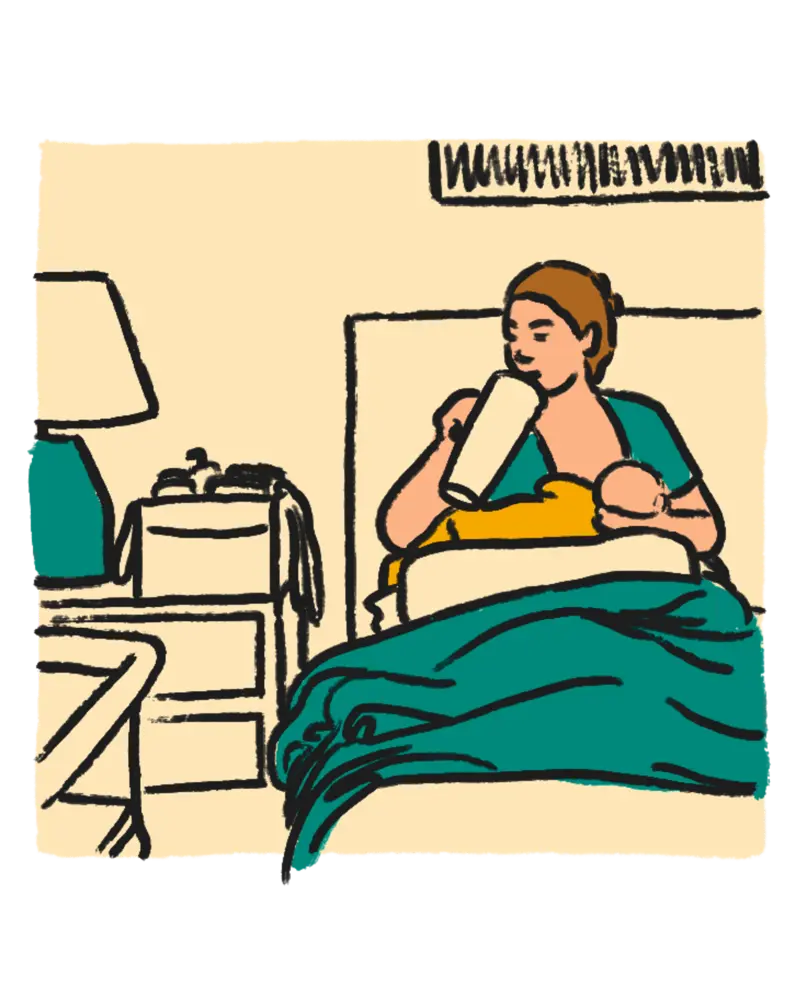
It’s normal to feel hungrier when you’re breastfeeding. Aim for regular, balanced meals with protein, whole grains, fruits, and vegetables. Keep simple, healthy snacks ready for busy times. Stock snacks where you feed the baby. Bonus points if it’s a snack you can easily eat one handed while nursing!
Some quick snack ideas:
- Yogurt cup or pouch
- Cheese stick
- Nuts or trail mix
- Banana or apple with peanut butter
- Hummus with crackers or sliced veggies
- Hard-boiled egg
- Oatmeal bar or “make-ahead” oatmeal
- Breastfeeding cookies
- Avocado toast or turkey-and-cheese roll-ups
- Smoothie in a lidded cup
Reusable Water Bottle/Container
Stay well hydrated while breastfeeding—breast milk is mostly water. You don’t need to drink a lot extra, but sip enough so you’re not thirsty and your pee is pale yellow. Keep a full water bottle nearby, and ask a support person to refill it.
 Feeding Your Baby