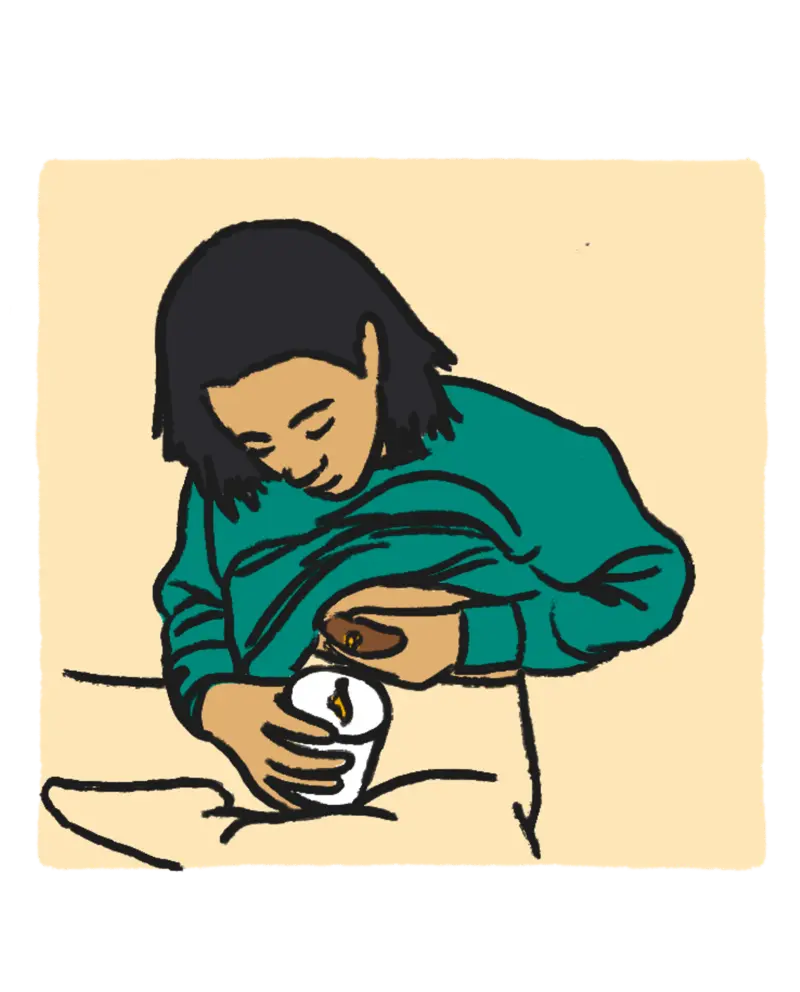
How to Bottlefeed

Feeding Your Baby Safely and Comfortably
Whether you’re using breast milk, formula, or both, bottlefeeding can be a special time to bond with your baby. Learning the right techniques can help keep feeding safe, healthy, and relaxed for you both.
Using a Bottle
If you need to—or choose to—use a bottle, that’s okay! Here’s how to make it work well for your baby.
How Do I Bottlefeed My Baby?
- Wash your hands before each feed.
- Hold your baby upright and close to you.
- Look into your baby’s eyes—feeding is a time to bond.
How Much and How Often Should I Bottlefeed?
In the first days and weeks, most newborns drink one to three ounces per feed. The amount slowly increases as they grow.
Babies do best with small, frequent feeds because their stomachs are small. Watch for your baby’s hunger and fullness cues to know when they need more—or are done. Every baby has their own schedule.
Babies who breastfeed and drink formula will not need as much formula. By four to six weeks, most breastfed babies take about four to five ounces per feed. Babies who drink only formula may take a little more.
Baby’s Age | Feeding Amount (ounces per day) |
|---|---|
0 to one month | 15-27 ounces/day |
Two to three months | 25-37 ounces/day |
Four to five months | 32-42 ounces/day |
Six to eight months | 21-30 ounces/day |
Nine to 12 months | 24-33 ounces/day |
Other Ways to Feed Your Baby
In the first days after birth, you can help your baby feed with spoons, cups, syringes, or tubes. These are good ideas if you plan to breastfeed.
- Small amounts: Use a spoon or oral syringe in the first days
- Cup feeding: A small cup can also work
- At-breast supplementer: A thin tube gives milk while your baby nurses at the breast
If you want to try these, ask your provider to connect you with lactation support.
How to Know Your Baby is Full
When your baby is full, they may:
- Turn away
- Close their lips
- Slow their sucking
- Fall asleep
Because bottles can flow fast, some babies keep sucking even after they’re full. This can lead to overfeeding and weight gain problems.
Paced Bottle Feeding
Try paced bottle feeding—it slows the flow so babies can eat at their own pace and stop when they’re full. It also helps babies who switch between breast and bottle.
Watch a demo to see what paced bottle feeding looks like:
Paced Bottle Feeding: Simple Steps
- Sit your baby upright on your lap with their head near your shoulder. Support their head and neck.
- Touch the lips or cheek with the nipple. When baby opens and turns to it, they’re ready.
- Start slow and hold the bottle so no milk flows at first.
- After a few sucks, tilt the bottle flat (level with the floor) so only a small amount flows. Keep it flat throughout.
- Follow your baby’s pace—tip the bottle down when they pause and tip it up when they start again.
- Burp halfway through and at the end.
- Stop when your baby seems full—don’t push them to finish the bottle.
Do I Need to Warm a Bottle?
Some babies drink cold milk without issue. If you do warm a bottle:
- Place it in hot water or hold it under warm running water.
- Swirl gently to mix.
- Test drops on your wrist—it should feel warm, not hot.
- Do not microwave bottles as it can cause hot spots that burn.
- Avoid overheating breast milk. It can destroy nutrients.
Does My Baby Need Water?
- Under six months: No water—breast milk or formula only.
- Six months and older: Small sips with meals; a little more in hot weather
- If your baby sick: Ask your care team before giving water
Too much water can be unsafe for babies.
Should I Put Anything Else in the Bottle?
If your baby is under six months old, only put breast milk or formula in the bottle.
- Do not mix breast milk and formula in the same bottle.
- Offer breast milk first.
- If your baby is still hungry, give formula in a new bottle. This helps you avoid wasting breast milk.
What Kind of Bottle or Nipple Should I Use?
Flow
- Choose a slow-flow nipple.
- Baby should finish in 15–20 minutes without sucking too hard, and the nipple shouldn’t cave in.
Shape
- A wide base with a smooth slope to the tip often works well, especially for babies who also breastfeed.
- Avoid nipples with a very wide base and a sudden step up to the tip.
Try and See
- Every baby is different—try a few brands or shapes to find the best fit.
- Tip: Do not cut, widen, or add holes to a nipple. This can cause choking, overfeeding, or swallowing air, which leads to gas or colic.
When Should My Baby Stop Using a Bottle?
- Around six months: Offer small sips of pumped breast milk or formula in a cup.
- By 12 months: Baby drinks mostly from a cup
- By 14 months: Stop bottles entirely
Tips: Sit your baby upright, hold the cup for support, and go slow. Small open cups or straw cups work best for learning.
 Feeding Your Baby