Choices of Pain Medication in Labor

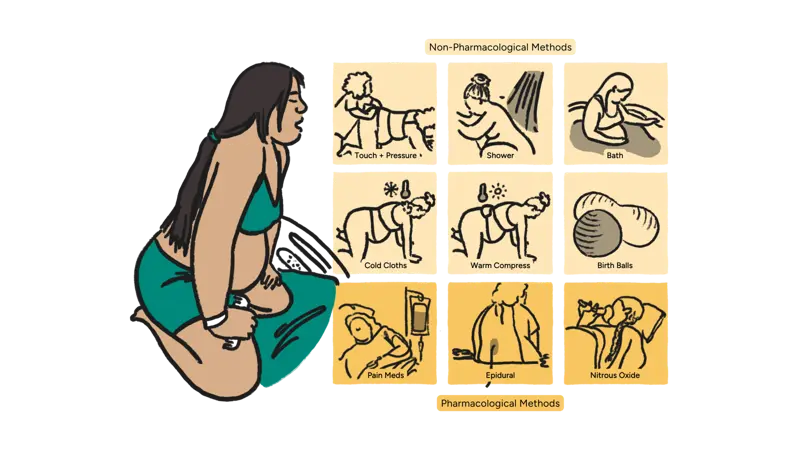
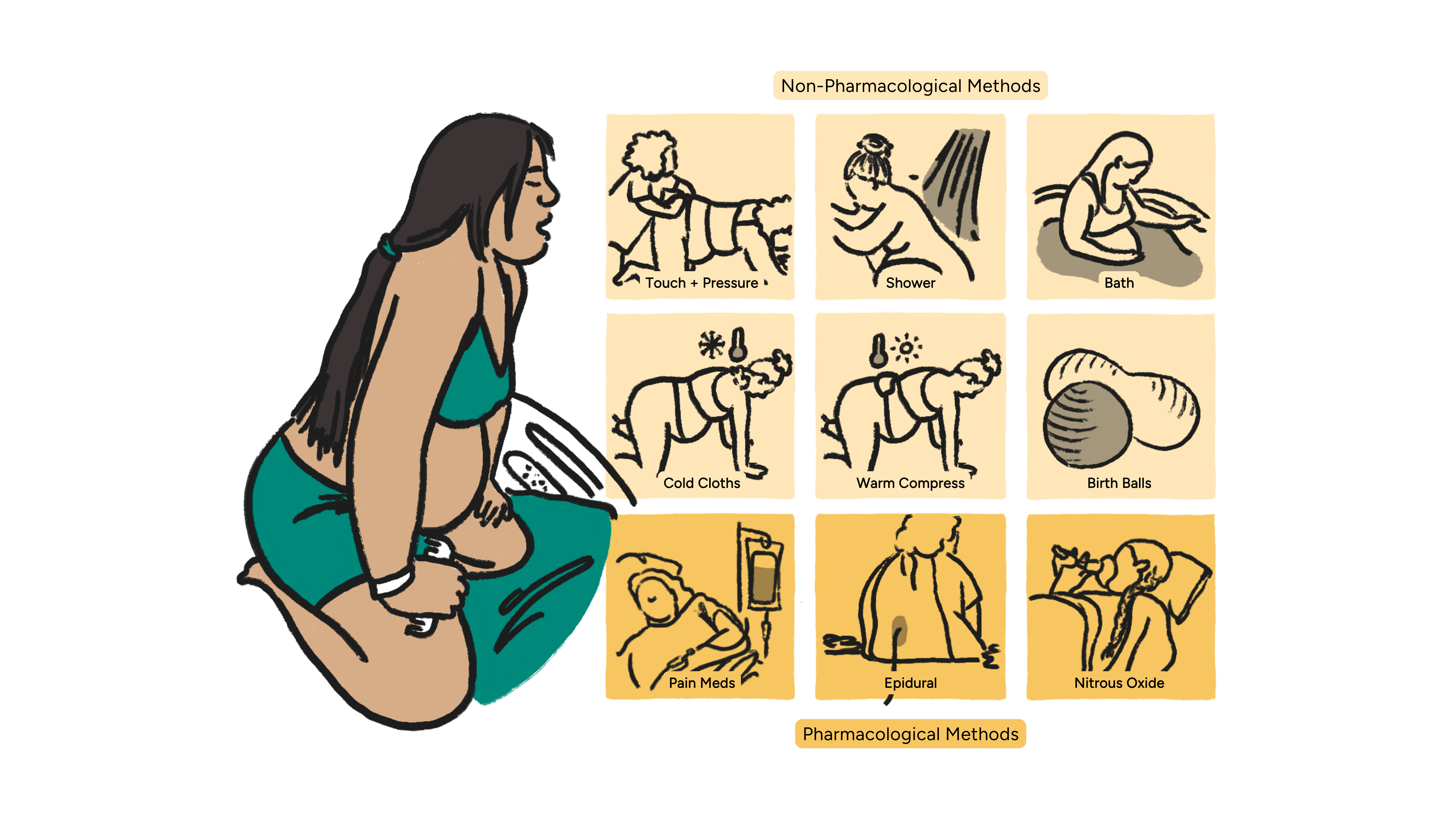
There are different ways to stay comfortable during labor and birth, and you can choose options with or without medication. If you choose medication for pain relief, there are three major types: narcotics, nitrous oxide, and epidural anesthesia.
Narcotics
This type of medicine is given through an IV (usually in your arm or wrist) or as an injection (shot).
Benefits
- May reduce pain and help you relax, which can help labor progress faster
- Can allow you to rest more easily between contractions
Things to Consider
- May not take away all of the pain
- Can cause dizziness or nausea
- May make you feel sleepy or less alert when your baby is born
If they are given too close to birth, narcotic medications can make your baby sleepy and affect their breathing. This means once your labor has advanced past a certain point or if things are moving quickly, it is likely you would not be able to choose this option.
Nitrous Oxide (“Laughing Gas”)
This medicine is breathed in through a mask. It works only while you continue to inhale it, and its effects fade quickly once you stop.
Benefits
- Can help you feel calmer and less anxious
- Can help you relax, which can help labor progress faster
- May make pain easier to tolerate
Things to Consider
- Does not remove all pain
- May cause dizziness or nausea
Epidural Anesthesia
Epidural anesthesia is the most common type of pain medicine used during labor. It’s given by an anesthesiologist, a doctor who has been specially trained in pain medicine.
For an epidural, an IV is placed in the middle of your lower back, and medicine flows through it to numb your body from the waist down. You can receive more medicine as needed, until it’s turned off and the IV is removed.
An epidural takes about 20 minutes to start working. Because it takes time to start working and needs to be done by a specialist, you might not be able to choose this option once your labor has advanced past a certain point or if things are moving quickly.
Benefits
- Usually works very well to greatly reduce or eliminate most labor pain
- Helps you stay relaxed while remaining awake and alert
- Can be adjusted to your comfort level
- It is usually safe to breastfeed immediately after baby is born
Things to Consider
- Causes heavy or numb legs. As a precaution, you will likely need to stay in bed for the rest of your labor and birth. You can still do some breathing and positioning exercises on your back and side, but you are unlikely to be able to walk or engage in upright exercises/laboring positions.
- May not completely remove feelings of pressure in the pelvis or back (for example, in patients whose babies are in the “sunny-side-up” position and are experiencing “back labor”)
- Likely to require multiple IVs, including the IV in your back that is giving you the anesthesia and other IV lines placed (in your arms or wrists) to give you anti-nausea medication, or so that they are ready “just in case” if you need emergency surgery
- Can slow your contractions. Sometimes you need a different medication, usually Pitocin, to strengthen them again. This is also given by IV.
- May cause your baby’s heart rate to drop. You will likely need to wear a continuous fetal monitor around your belly, just in case. The information from the monitor helps your care team decide whether you need additional procedures, such as an emergency C-section.
- Occasionally, needs to be redone by the anesthesiologist if it’s not working well to block your pain
- Rarely, in about one in 144 people, can cause an intense headache/migraine after you give birth
Via BabyCenter, watch a short video showing Jackie, an obstetrician who has delivered hundreds of babies, getting an epidural and giving birth to her own first child:
Watch Video (Contains Medical Situations and Nudity)
Pain Relief During Labor: An Expert Guide
The American Society of Anesthesiologists offers a comprehensive look at the different types of pain medication you could receive during childbirth, including a step-by-step walkthrough of what happens if you choose to get an epidural.
 What To Expect During Labor