Laboring and Pushing Positions

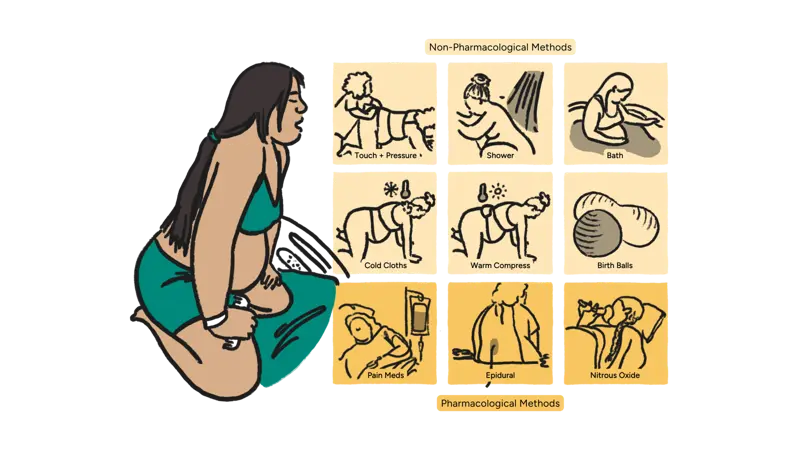
There are lots of different ways to move or position yourself during labor. In general, the best one is whatever feels most comfortable for you, but your care team may suggest certain options.
Here’s what to keep in mind:
- You don’t have to stay in bed, unless you have an epidural. The bed is a tool, not a rule!
- Move your body in ways that feel good. Try walking, swaying, rocking, kneeling, or leaning.
- If you can, try to change positions every 20–30 minutes.
- Try positions from:
Download a Step-by-Step Guide to the Miles Circuit Exercises (PDF)
Support Tools
- Birth ball: Sitting or bouncing on a yoga ball while laboring helps stretch your back, hips, and legs.
- Your support team: Your nurse, support person, or doula can help you with stretches like the side-lying release or steady you during squats or lunges.
- The shower: Hot water relaxes the body.
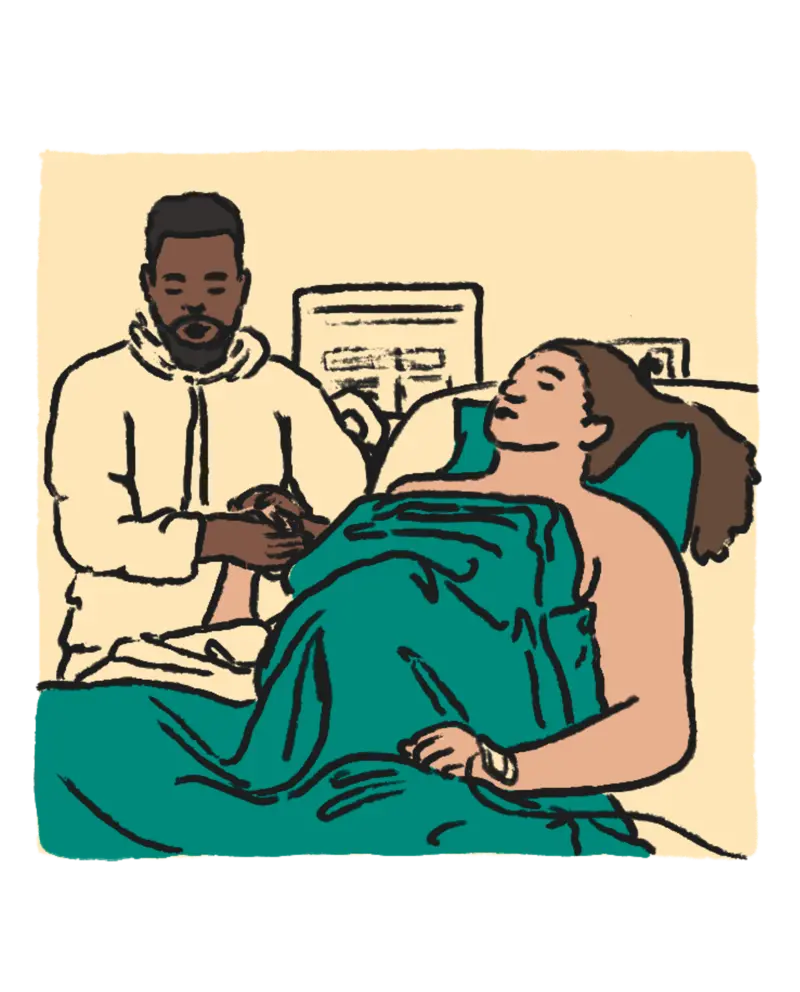
If you are lying down because you have an epidural, for some other reason, or just because you are tired and need to rest, using a peanut ball can help keep your hips open and baby moving down.
Pushing
When it’s time to push you may feel a lot of pressure, a desire to push, an urge to have a bowel movement, or the care team may tell you the cervix is fully dilated and its time! When pushing try to change positions frequently to help the baby move down. You can try:
- Hands and knees
- Knees together
- Pushing bar
- Side-lying
- Squatting
- Standing
- Towel pull
How to Push
- Listen to your body and push when you feel pressure. You may still feel this pressure if you have an epidural. If you don't feel anything the care team will help you know when you have a contraction and its time to push.
- Inhale deeply and push to your own rhythm.
- Counting for six to eight seconds while pushing can help some people.
- Aim for two to four pushes during each contraction.
Support Person: What Can You Do?
- Know the plan. Make sure you understand the kind of birth your pregnant person wants and what alternatives they might choose if something unexpected happens.
- Listen. Plans can change. Ask what feels better.
- Encourage. Say kind words, like “You’re doing great.”
- Be the DJ. Help your laboring person with their playlist and physically support them if they need help moving to music.
- Comfort. Offer water, snacks, massage, and deep breaths.
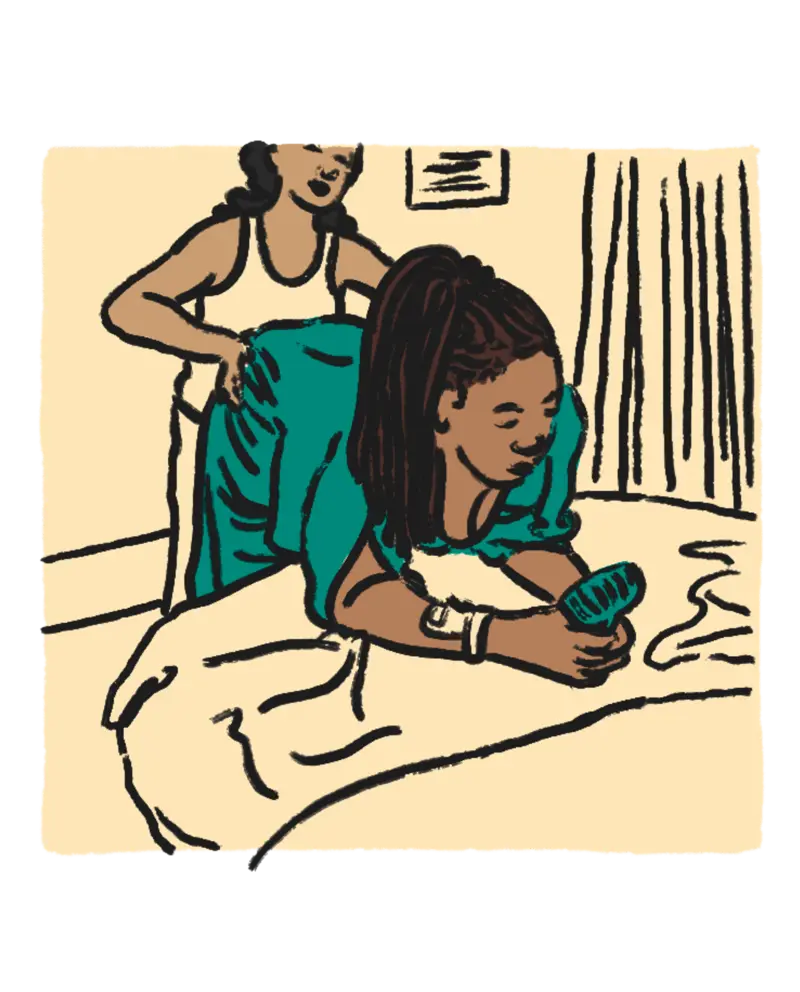
- Massage. Help your laboring person figure out what kind of physical touch feels relaxing or gives them relief.
- Hip squeeze. Support their lower back.
- Support their movement. Help them move and change positions.
- Take care of yourself. Eat, breathe, and take breaks so that you can stay strong and calm for them.
- Be patient. Labor takes time.
 What To Expect During Labor