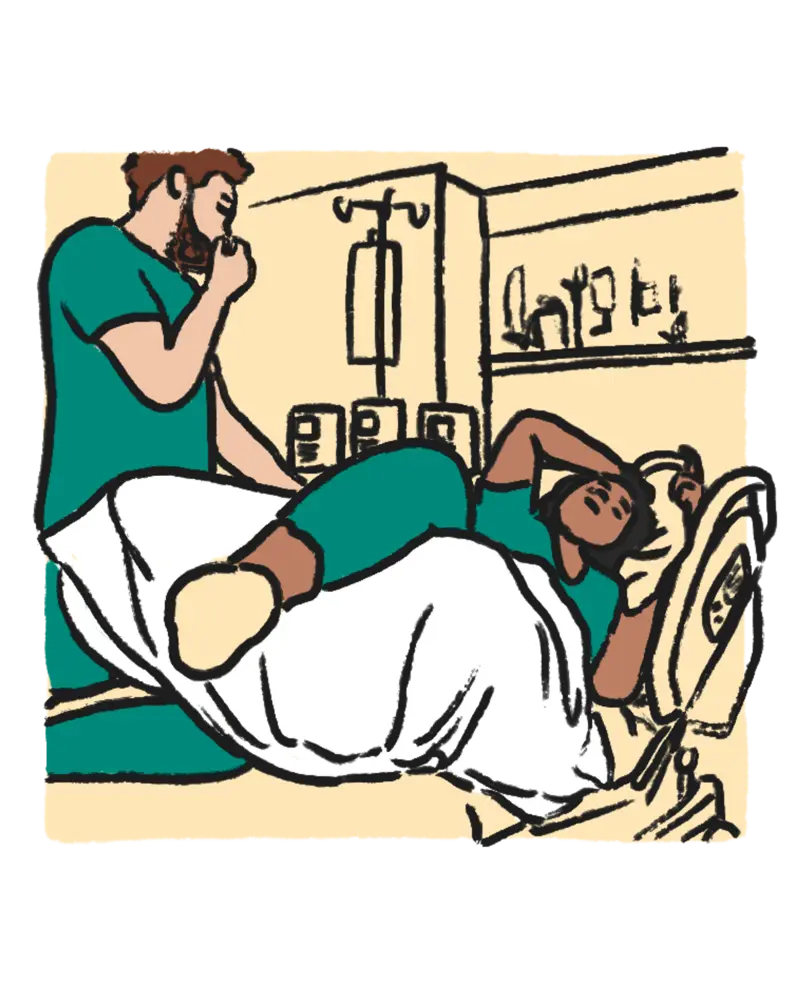
Delayed Cord Clamping

Right after your baby is born, your care team will clamp and cut the umbilical cord that connects your baby to the placenta. In recent years, doctors and midwives have learned that waiting a little longer before clamping the cord—called delayed cord clamping—has important benefits for newborns.
What is Delayed Cord Clamping?
Delayed cord clamping means waiting to clamp and cut the umbilical cord after birth. During this short time, your baby stays connected to the placenta, and blood continues to flow from the placenta to your baby.
For most vaginal and cesarean births, we do delayed cord clamping. Talk to your healthcare team about your vaginal and cesarean birth plan.
How Long Do You Wait?
In most cases, the cord is clamped at least 30 to 60 seconds after birth. Sometimes we may wait up to five minutes.
Why is Delayed Cord Clamping Helpful for My Baby?
Delayed cord clamping has important benefits for newborns:
- Provides more iron, lowering the risk of anemia in the first year
- Gives your baby a little more blood volume, helping support blood pressure and warmth
- For preterm babies, it can reduce the need for blood transfusions and other complications related to early birth
What Happens During the Delay?
After a Vaginal Birth
- Your baby can be placed skin-to-skin on your chest.
- We check your baby’s breathing and help keep them warm.
- After the delay, you or your support person may cut the umbilical cord.
After a Cesarean Birth
- We dry your baby, check their breathing, and help them stay warm.
- You can request to lower the curtain to see your baby right after birth.
- In many cases, you may be able to hold your baby skin-to-skin in the operating room.
Are There Any Risks?
For most families, delayed cord clamping is very safe. For preterm babies, it is especially beneficial.
There may be a small increase in the chance of jaundice, which can be safely treated with light therapy (phototherapy) if needed.
The benefits of delayed cord clamping far outweigh this small risk.
When Is It Not Safe?
Your care team may clamp the cord sooner if:
- Your baby needs help breathing right after birth
- You have heavy bleeding or other urgent health needs
What About Cord Blood Banking?
Delayed cord clamping can reduce the amount of blood that can be collected for cord blood banking. If you plan to bank your baby’s cord blood, tell your healthcare team before delivery so you can decide together what’s best for your family.

 What To Expect During Labor