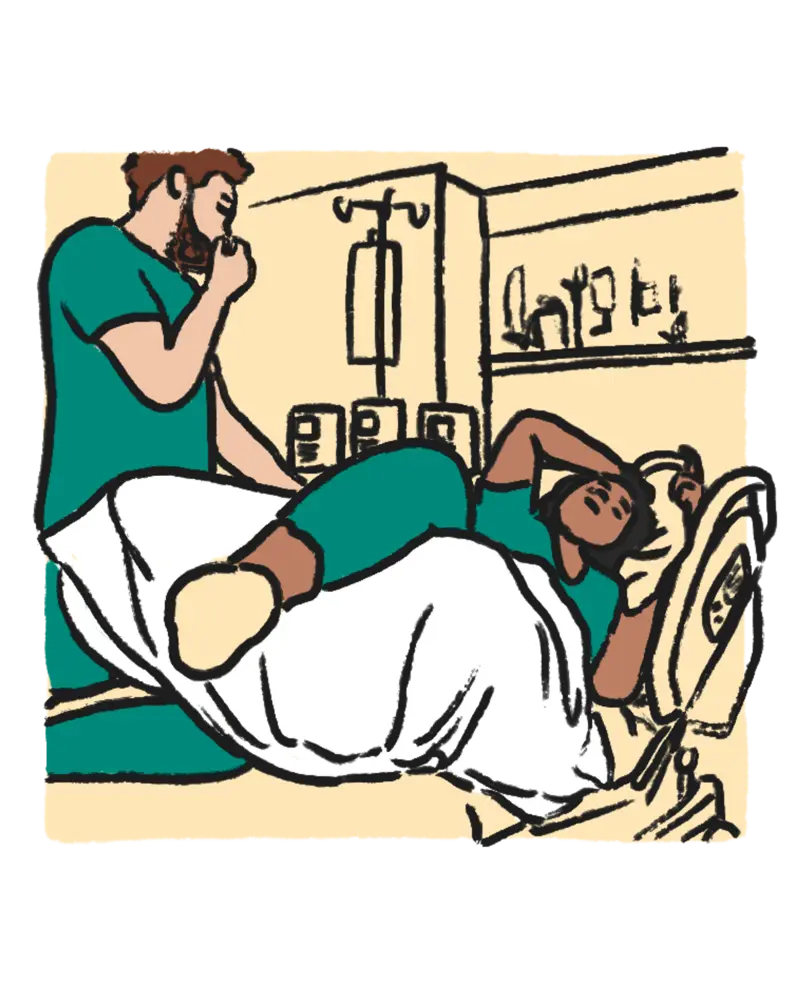
Unmedicated Labor Options and Comfort Techniques

Most people who give birth will need some support to manage the pain of contractions. There are many safe and helpful ways to increase your chances of coping well throughout the process, such as childbirth education, doula support, and hydrotherapy.
Examples of Women Birthing Without Medication
Via BabyCenter, watch a short video showing how, after she got an epidural during her first child’s birth, Samiyyah gives birth to her second child using techniques like breathing, massage, spending time in a hot bath, and changing positions:
Watch Video (Contains Medical Situations and Nudity)
Childbirth Education
Taking a childbirth class can help you get ready for labor. Whether you plan to use pain medication or not, you should learn ways to handle labor pain at home when labor starts.
Make sure your support person comes with you! They will be better able to support you if they also know what to expect.
Find Out More and Register for a Childbirth Class
Support During Labor
In addition to your own support person (such as your spouse or a parent), think about whether you might want a professional birth support person, like a doula. Doulas are trained to help people through labor and childbirth and support their choices through sometimes complicated and fast-moving situations. At BMC, doulas are called Birth Sisters, and you can have one present during your labor and birth if you ask for one during a prenatal visit.
A major thing that can shorten the labor process is if you are able to relax and know someone has your back. Having a doula’s support can help!
Learn More About BMC’s Birth Sisters
Comfort Choices
Everybody deals with labor pain in their own way. Understanding how your body works, and feeling relaxed, loved, and supported will help you to deal with labor. Try the following:
- Plan to make your environment as comfortable as you can, with favorite pillows or a soft robe
- Distract yourself (for example, with music, or by watching a show), especially in early labor
- Share your feelings with your support people
- Keep up your energy. Eat, drink, and rest if you can.
- Move and change your position often
- Ask your support people to help you with massages and relaxing touch
Explore More Activities to Get You Through Early Labor
Deep Breathing and Relaxation
Taking slow, deep breaths can help your body stay calm during labor and birth. Deep breathing helps your muscles relax, brings more oxygen to you and your baby, and can lower pain and stress.
You can practice before labor begins. Try taking a slow breath in through your nose and out through your mouth. Focus on letting your shoulders drop and your body feel loose. You can also add gentle movement, music, or a calming word or phrase to help you relax.
During labor, your support person can remind you to breathe slowly and stay focused. Practicing ahead of time helps make these skills feel natural when you need them most.
Listen to Mindfulness Birthing Meditations to practice deep breathing and relaxation, and practice these breathing techniques.
Hydrotherapy
One popular comfort choice during labor is hydrotherapy: using warm water, such as a hot shower or soaking in a bath, to help ease your pain. At BMC every room has a shower with endless hot water and one room has a labor tub.
Benefits
- Safe for you and baby
- Can relieve some labor pain, so you may be less likely to need pain medicine
- Helps your skin stay stretchy, so there is a lower chance of your perineum tearing or needing an episiotomy (cutting the perineum on purpose) to allow baby’s head to come out
Things to Think About
- Will not take all the pain away (you may still need stronger pain relief)
- Can cause dizziness
- There's a risk of falling in the shower (ask your support person to help you)
Hydrotherapy may not be right for you if you have a fever or infection, heavy bleeding, or a condition that needs close monitoring for you or your baby.
You can use comfort techniques to help you relax and cope with each stage of labor. If you decide you want more pain control think about medications for pain relief. You can choose what feels right for you in the moment. Every labor is different, and it’s okay to change your plan as your needs change.
 What To Expect During Labor