The Low Glycemic Index Diet for Gestational Diabetes

If you have gestational diabetes, it’s important to keep your blood sugar levels in a healthy range. Certain foods raise your blood sugar faster than others, so you’ll need to watch what you eat.
When making meals and snacks that will keep blood sugar steady, it can be helpful to think about three main parts of the plate. The three main groups of food are carbohydrates, non-starchy vegetables, and proteins.
Take a Class at the BMC Teaching Kitchen for Hands-On Learning
Rules for Eating with Gestational Diabetes
- Carbohydrates raise blood sugar the most.
- Pair carbohydrates with veggies or protein to slow down the rise.
- Test and learn which carbohydrate foods work best for you.
Carbohydrates
Carbohydrates, which are in foods like grains and sweets, have the biggest effect on blood sugar. Your body turns carbohydrates into glucose, which gives you and your baby energy.
But too many carbs at once can make your blood sugar go too high. Balance carbs with other foods to keep blood sugar steady.
What Foods Have Carbohydrates?
- Milk and yogurt
- Fruits and juices
- Rice, grains, cereals, and pasta
- Breads, tortillas, crackers, bagels, and rolls
- Beans, split peas, and lentils
- All potatoes, corn, yams, cassava, yucca, peas, and winter squash
What Is a Healthy Serving of Carbohydrates?
- One serving of carbohydrates is about 15 grams. This should take up about one quarter of a 9-inch plate.
- Ask your dietitian how much is right for you, but in general, you should have:
- Meals: 30–60 grams of carbohydrates
- Snacks: 0–30 grams of carbohydrates
These amounts keep you full and help your baby grow in a healthy way.
Watch Video: How to Count Carbohydrates
Examples of High-Carbohydrate Foods
Each example below is one serving, or 15 grams, of carbohydrates.
Breads/Cereals/Grains
- 1 slice bread
- ½ English muffin
- ¼ bagel
- 1 dinner roll
- 1 small muffin
- 1 four-inch pancake
- ¾ cup dry cereal (unsweetened)
- ½ cup cooked cereal (oatmeal or grits)
- ⅓ cup cooked rice, pasta, or couscous
- ½ cup cooked beans
- 1 six-inch tortilla (corn or flour)
- ½ of a six-inch pita
- ¼ cup granola
Fruit
- 1 small fruit
- ½ of a large fruit (or medium banana)
- 15 grapes
- 12 cherries
- ¾ cup berries
- 2 tablespoon raisins, dried cherries, or cranberries
- 1 cup melon
Snack Foods
- 8 animal crackers
- 3 graham cracker squares
- 3 cups low salt/butter popcorn
- 1 small bag of chips
- ½ cup hot cereal cooked with water
- 5 Triscuit® crackers
- 8 Ritz® Crackers
- 8 mini pretzels
- 10 tortilla chips
- 20 Reduced Fat Wheatables®
Starchy Vegetables
- ½ cup cooked corn, peas, or lima beans
- 1 cup mixed vegetables (such as green beans and carrots) with corn and peas
- ½ cup mashed potato, yucca, or cassava
- 1 small potato
- ½ cooked sweet potato or plaintain
Examples of Foods with Low or No Carbohydrates
These foods and beverages have almost no carbohydrates:
- Coffee or tea (unsweetened, or with sugar substitute)
- Diet soda or club soda
- Crystal Light® or other sugar-free flavored water
- Bouillon (fat-free)
- Sugar substitute (Splenda®, Equal®, Sweet and Low®, Stevia)
- 2 tablespoons sugar-free syrup, jam, or jelly
Non-Starchy Vegetables
Vegetables are high in fiber and low in sugar. They help steady blood sugar, not raise it. Veggies have many nutrients that help you and your baby grow healthy.
Aim to fill half your plate with vegetables.
- That means one to two cups raw, or one half to one cup cooked.
- Try to eat at least three portions of vegetables each day.
Examples of Non-Starchy Vegetables
Some vegetables that are particularly good for keeping your blood sugar steady include:
- Artichoke
- Arugula
- Asparagus
- Bean sprouts
- Beets
- Bok choy
- Broccoli
- Brussels sprouts
- Cabbage
- Carrots
- Cauliflower
- Celery
- Chayote
- Cucumber
- Eggplant
- Collard greens
- Green beans
- Jicama
- Kale
- Kohlrabi
- Leeks
- Lettuce
- Mushrooms
- Okra
- Onions
- Pea pods
- Peppers
- Radishes
- Romaine
- Rutabaga
- Sauerkraut
- Scallions
- Spinach
- Swiss chard
- Spaghetti squash
- Summer squash
- Tomatoes
- Turnips
- Zucchini
Proteins
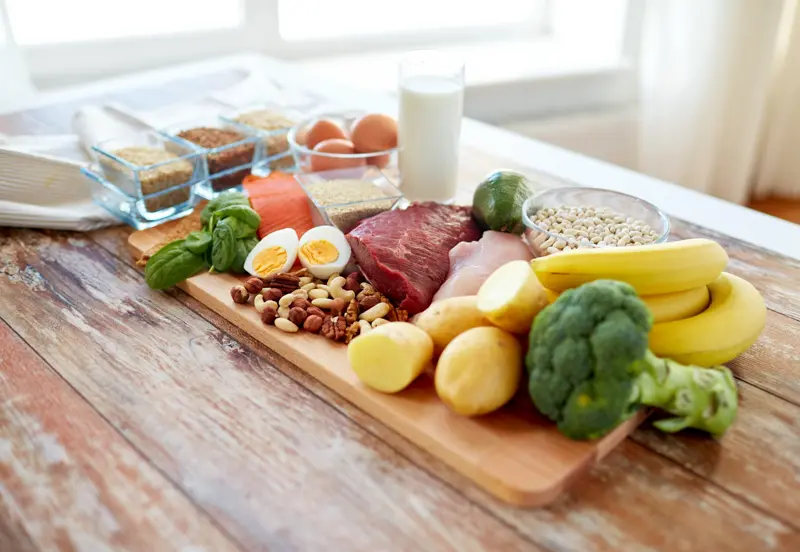
Foods with a lot of protein help keep your blood sugar steady and make you feel full. They are a good source of iron and give you energy.
Examples of High Protein Foods
Your serving size for protein foods should be about the size of your palm, or one quarter of a 9-inch plate.
- Beef or buffalo
- Chicken and turkey
- Eggs or egg whites
- Fish (including canned tuna)
- Goat, lamb, and mutton
- Nuts and nut butters
- Pasteurized cheese
- Pork
- Protein powders
- Seafood
- Tempeh
- Tofu
Beans, lentils, yogurt, and milk have protein, but they also have carbohydrates. It’s important to check how much of these you eat in a meal with other carbohydrates.
How Can I Keep Track of What I Eat?
Smartphone apps can help you track blood sugar, what you eat, and give you tips. Some apps to try:
- Fooducate
- MySugr
- SNAQ
- Undermyfork
Healthy Pregnancy Snack Ideas
Snacks can be helpful for your energy and blood sugar. When snacking, pick a carbohydrate paired with a fat or protein. Also, combine your snack with a large glass of water.
Some snack ideas:
- Six crackers with cheese or nut butter
- A small fruit with a handful of nuts or string cheese
- Avocado toast
- Greek yogurt with berries
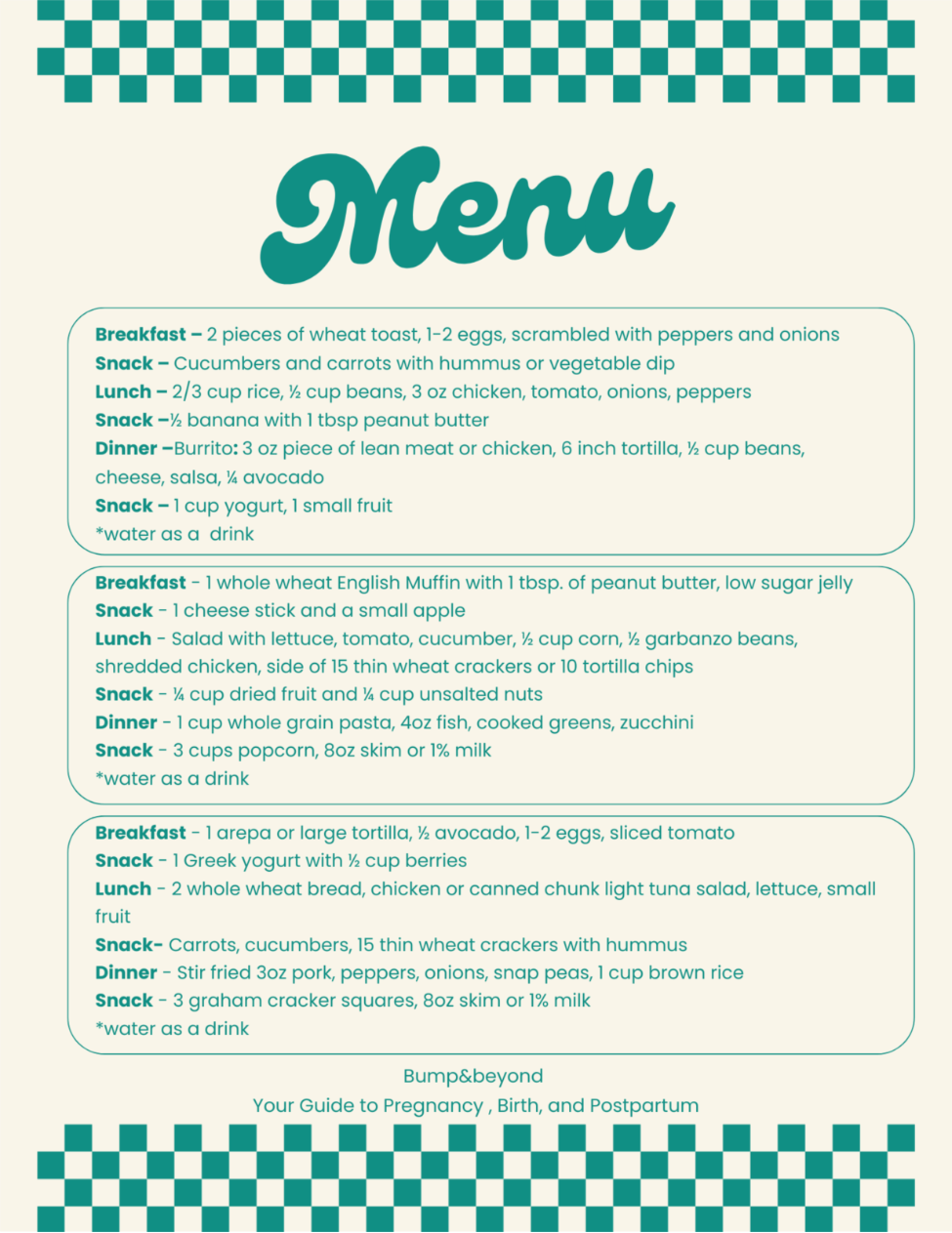
Example Menu
You can print or save this as a reminder or menu inspiration.
 Nutrition & Exercise