Healthy Eating During Pregnancy

During pregnancy, your body changes to help your baby grow. Eating the right foods helps keep you and your baby healthy.
Everyone’s food needs are different, but the information below includes what most people should eat during pregnancy. Talk with your dietitian or healthcare provider for advice that is right for you, and remember to take your prenatal vitamin!
What to Eat
The below foods have vitamins and minerals you need to keep you and your baby healthy. Make sure you’re eating the recommended servings per day to help you grow a healthy baby.
Grains: Bread, Rice, and Cereal
Eat 6 to 8 servings a day. Choose whole grains for at least ½ of your servings. One serving is approximately:
- 1 slice of bread
- 1 small (6-inch) tortilla
- ½ cup cooked pasta, cooked rice, or cooked cereal
- ½ mini bagel or English muffin
- 3 cups popcorn
Protein: Meats, Beans, and Eggs
Eat 5 to 6 servings of lean protein a day to help build your baby’s brain, muscles, heart, lungs, and other organs. One serving is approximately:
- 3 oz beef, poultry, or fish (a piece the size of your palm)
- ½ cup cooked beans (black, kidney, or pinto)
- 1 egg
- 2 tablespoons peanut butter
- ⅓ cup unsalted nuts
Dairy: Milk, Cheese, and Yogurt
Eat 3 servings a day to help build your baby’s bones and teeth. Choose low-fat or reduced fat products. One serving could be:
- 1 cup (8 oz) milk
- 1 cup (8 oz) yogurt
- 1 ½ to 2 oz cheese
Vegetables
Eat at least 2 to 3 servings every day. Try to eat lots of different types of vegetables. One serving could be:
- 1 cup raw vegetables
- ½ cup cooked vegetables
- ¾ cup vegetable juice (like V8)
Fruits
Eat 2 servings a day. Focus on fruits you like! One serving is approximately:
- 1 cup chopped fresh fruit
- 1 small whole fruit (like an apple)
- ¾ cup berries
- ½ cup dried fruit
How to Build a Meal During Pregnancy
To stay full and give your baby what they need, think about the five main food groups when you make a meal:
Grains • Protein • Dairy • Vegetables • Fruits
For a meal, include at least 3 food groups.
For a snack, include at least 2 food groups.
Make your meals and snacks this way to give you energy, keep you satisfied, and help your baby grow!
Tips for Healthy Eating
If creating meals and snacks does not feel as easy as 1-2-3, know that you are not alone. Pregnancy can make eating and cooking more difficult. These tips may help you and your growing family:
- Eat small meals and snacks every 3 to 4 hours during the day.
- Drink water, seltzer, unsweetened water, or diet soda. Water is good for you, so drink 8 or more cups (64 oz) every day.
- Choose high protein and fiber foods like whole wheat, nonfat Greek-style yogurt, unsalted nuts, or reduced-fat cheeses.
- Buy premade proteins, like frozen grilled chicken breasts, rotisserie chicken, canned fish, or canned beans.
- Make big batches of hard-boiled eggs, grains, or soups so you have healthy food ready.
- Buy frozen foods.
- Steam, saute, or stir-fry frozen vegetables. Take out the amount you need instead of cooking the entire bag.
- Evol, Healthy Choice, Lean Cuisine, and SmartOnes are some frozen meal brands that are healthy and low in salt.
- Ask for help. If you have a neighbor, partner, friend, or parent to make you a sandwich or pick up groceries, take advantage! Not everyone has a helper, but sometimes asking is the best way to find out if you do.
Resources for Meal Planning and Food Support
- The BMC Preventive Food Pantry provides free healthy food to BMC patients. Talk to your provider for a referral.
- The BMC Teaching Kitchen has many healthy recipes, including some that are particularly good for pregnancy.
- Community Servings: Apply in English, Español, or Português to receive free home-delivered meals.
- Vital Connections: Up-to-date information in English, Español, Kreyòl Ayisyen, Kriolu Kabuverdianu, and Tiếng Việt about Boston-area locations offering free meals and food.
- Women, Infants, and Children (WIC) Nutrition Program: WIC includes pregnancy! Get help with food, breastfeeding support, and baby formula.
Living without a Kitchen or Reliable Housing?
- Search FindHelp to find community kitchens or food pantries near you.
- Store nuts, crackers with peanut butter, or dried food in a pack for you to eat when meals are unavailable.
- Save fresh fruit from community meals to eat as a snack in between meals.
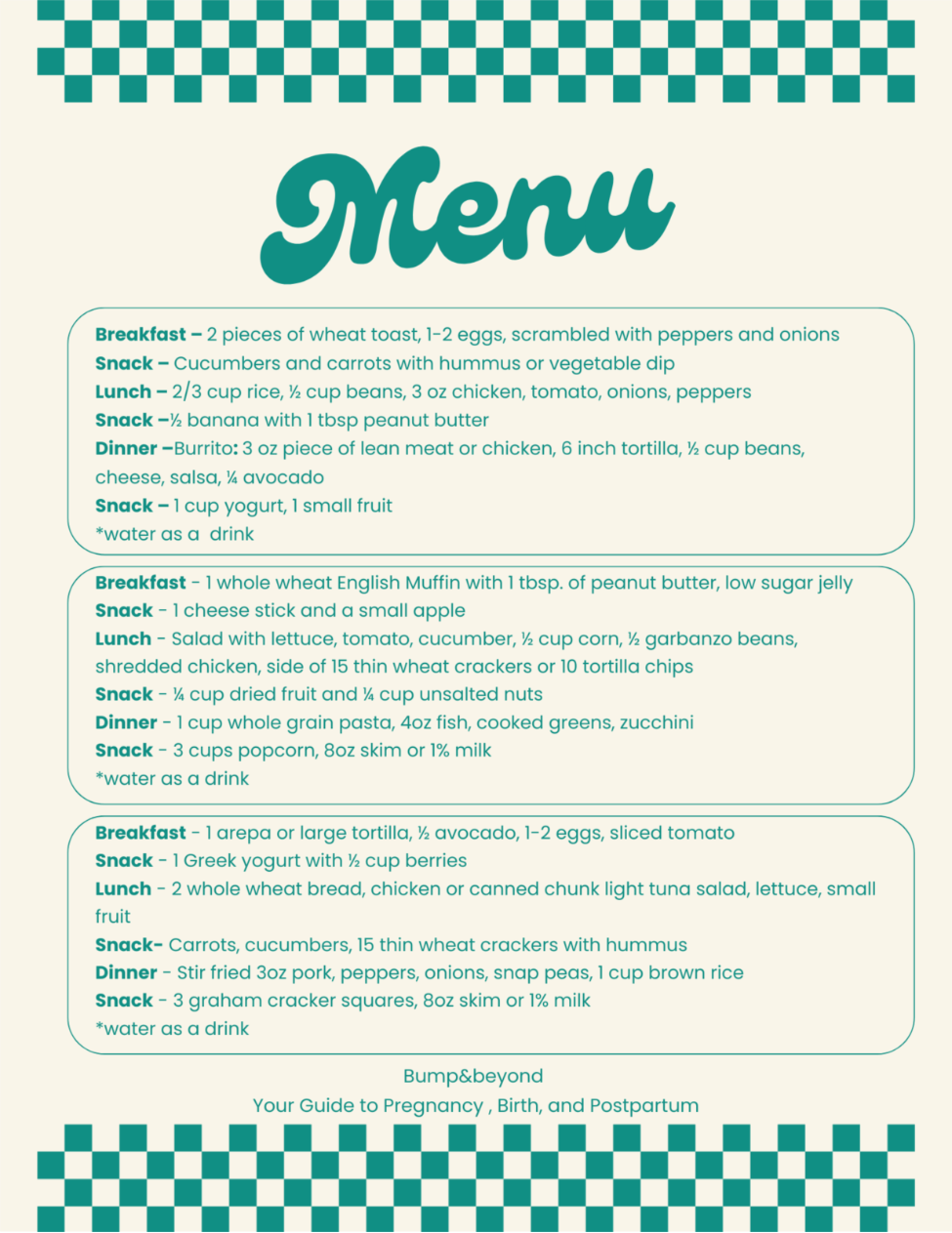
Example Menu
You can print or save this as a reminder or menu inspiration.
 Nutrition & Exercise