Low-Lying Placenta and Placenta Previa

The placenta gives the baby oxygen and nutrition during pregnancy. Sometimes, as the placenta grows, it covers some or all of the cervix (the opening to the uterus). This can cause:
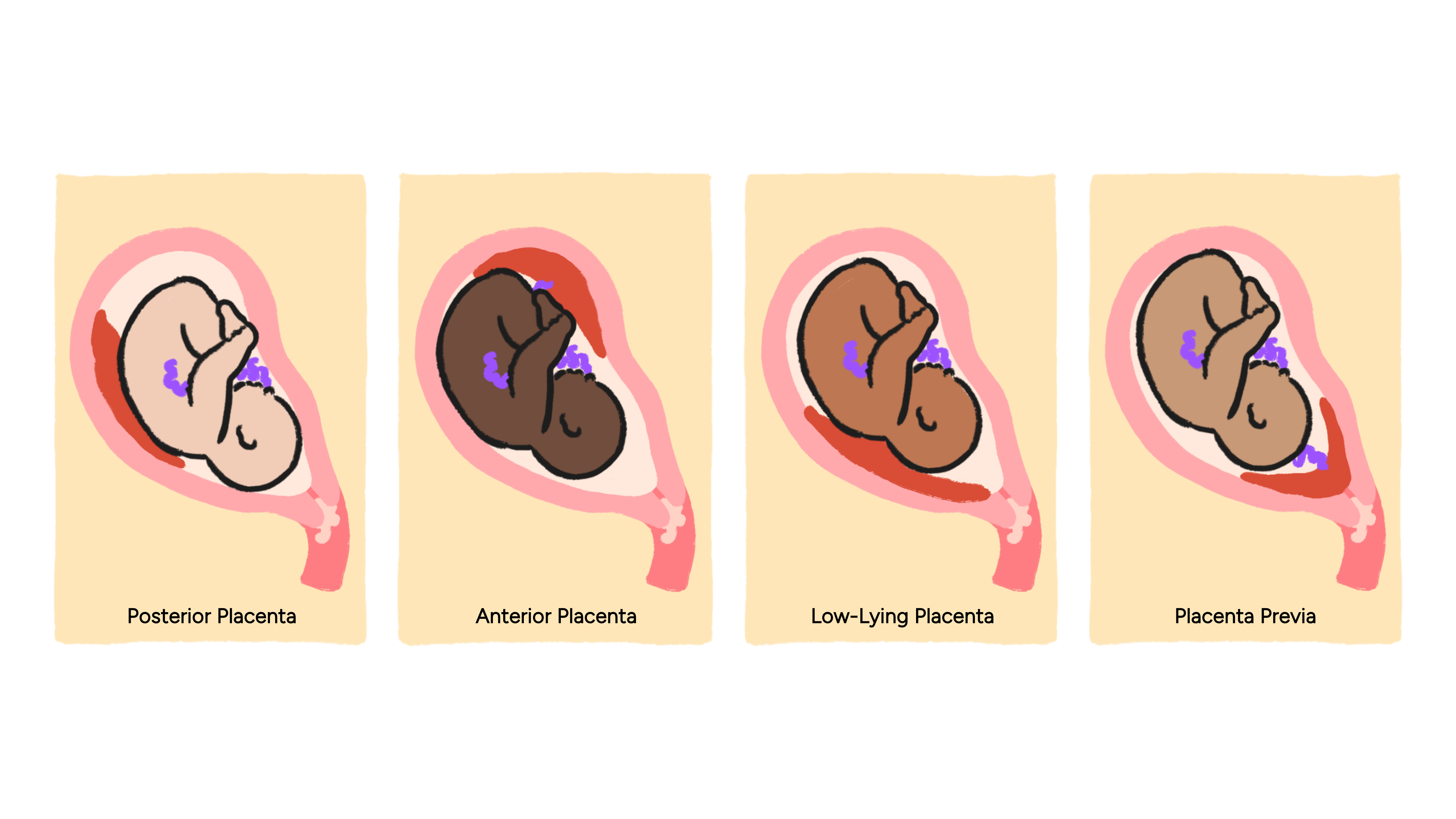
- Low-lying placenta: If you have a low-lying placenta, your placenta is close to the opening of your cervix but doesn’t cover it. Most of the time, the placenta moves away from the cervix as the uterus grows during pregnancy. If the placenta moves fully out of the way of the cervix, it is in a normal position.
- Placenta previa: If you have placenta previa, your placenta covers some or all of the opening of your cervix. The placenta sometimes moves away from the cervix as the uterus grows during pregnancy, but it may stay this way until the end of pregnancy.
If the placenta covers part or all of the cervix at the end of pregnancy, it is not safe to have a vaginal birth.
When Are Low-lying Placenta and Placenta Previa More Common?
Low-lying placenta and placenta previa are more common in people who:
- Have been pregnant before
- Are 35 years old or older
- Have had a C-section or a surgery on their uterus in the past
- Are pregnant with twins or more
- Smoke or use cocaine
How Do I Know if I Have a Low-lying Placenta or Placenta Previa?
Your care team will check the placenta’s position during your scheduled ultrasounds.
How It Feels
- Many people do not feel any symptoms of low-lying placenta or placenta previa.
- However, bleeding can be a serious symptom.
If you have any of the following symptoms, go to the hospital right away:
- Vaginal bleeding
- Contractions
- Strong pain in your belly
- Feeling dizzy or lightheaded
Complications
If you have low-lying placenta or placenta previa, you have a higher chance of:
- Anemia
- Preterm birth (before 37 weeks)
- Hemorrhage (severe bleeding)
- Placental abruption: when the placenta separates from the uterus (uncommon)
- Placenta accreta: when the placenta grows too deep into the uterus (rare)
Next Steps
Low-lying Placenta
Sometimes the placenta moves higher as the uterus grows. This means low-lying placenta may improve on its own. Until it improves (or if it hasn’t improved), you should:
- Keep getting ultrasounds to check the placenta and see if it has moved.
- Avoid sex or putting anything in your vagina.
You can lift things and exercise normally.
Giving Birth
If the placenta has moved far enough away from your cervix, you can safely have a vaginal birth.
If you are later in your pregnancy and the placenta is still low, your care team will recommend scheduling a C-section around 37 weeks.
Placenta Previa
If you have placenta previa, you should:
- Let your care team know you have placenta previa before any vaginal exams.
- Have extra ultrasounds to check the placenta and see if it moves.
- Avoid sex or putting anything in the vagina.
- Limit heavy lifting and intense exercise.
If you have bleeding, go to the hospital.
Giving Birth
If the placenta still covers the cervix near the end of pregnancy, vaginal birth is not safe. Your care team will recommend scheduling a C-section around 37 weeks.
Will I Have Placenta Previa Again?
If you have placenta previa, there is a two percent (two out of 100) chance of having it in a later pregnancy.
The risk of having placenta previa again gets higher with every C-section you have, so you may want to consider whether you want to try for a vaginal birth after a C-section (VBAC) or plan a repeat C-section birth.
A Final Note
Low-lying placenta and placenta previa need extra watching, but with care, most people go on to have a healthy birth. We are here to support you every step of the way.

 Medical Care