What to Expect in Labor and Birth

Every birth is unique, but knowing what typically happens during labor can help you feel more prepared and confident.
Labor happens in stages as your body prepares for birth. Each stage brings new sensations and progress toward welcoming your baby. Here’s what you may experience during early labor, active labor, transition, pushing and birth, and delivery of the placenta.
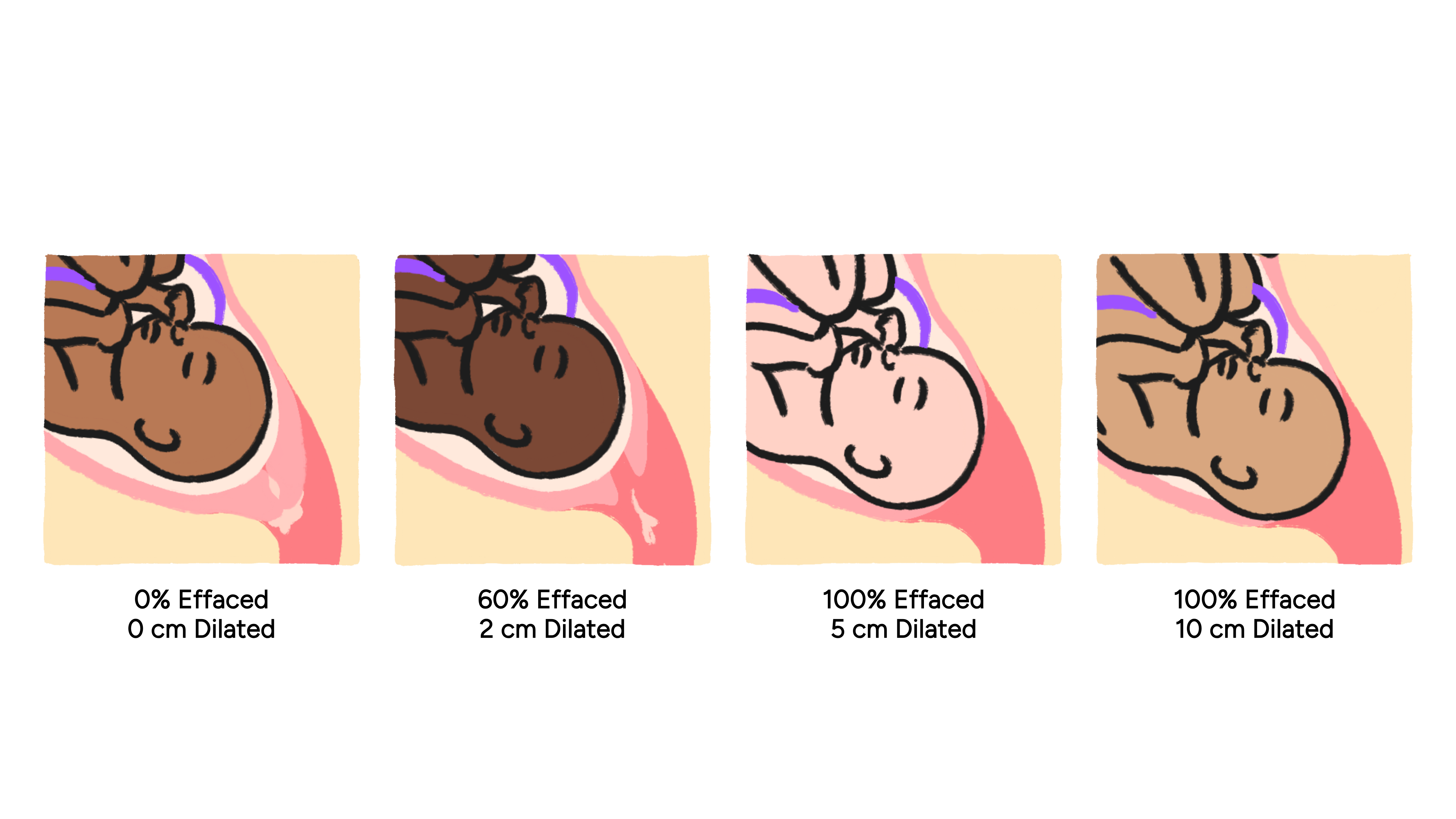
Early Labor (Five to 24 hours)
What Happens
Your cervix opens from 0 (its normal position) to four centimeters.
Contractions are mild and more than five minutes apart.
What You Can Do
- Rest, eat, and drink lightly.
- Breathe slowly through contractions and try to relax.
Active Labor (Three to Six Hours)
What Happens
Your cervix opens from four to eight centimeters.
Contractions are stronger and four to five minutes apart.
This is when we recommend coming to the hospital.
What You Can Do
Change positions to stay more comfortable—try taking a shower, sitting in a chair, or rocking on your hands and knees.
Transition (10 to 60 Minutes)
What Happens
Your cervix opens from eight to 10 centimeters (“fully dilated”).
This is the most intense part of labor, but usually the shortest.
What You Can Do
You may need extra support from your care team or support person.
Pushing and Birth (Five Minutes to Three Hours)
What Happens
Your baby moves out of your uterus, through your vagina, and into the world.
Pushing moves your baby down and out.
If this is your first time giving birth pushing is usually longer than if you have given birth before.
What You Can Do
- If you are having an unmedicated birth, push in whatever position feels comfortable. If you have had an epidural, we will help you change positions and coach you.
- Blowing (exhaling forcefully) or panting while your baby’s head is crowning can help prevent your vaginal and perineum from tearing.
Delivery of the Placenta (Five to 45 Minutes)
What Happens
- The placenta moves out of your uterus, through your vagina, and out of your body.
- Contractions are much milder during this stage, closer in feeling to menstrual cramps.
- Your vagina may feel sore, and you may feel shaky or cold.
What You Can Do
- Welcome your baby! Keep your baby skin-to-skin in the first hour of life. This helps keep them warm, support normal blood sugar and heart rate, and help with breastfeeding.
Additional Resources
Download BMC’s Guide, “Coping with Labor: What Happens to My Body in Labor and Birth” (PDF)
 What To Expect During Labor