How to Tell if You’re in Labor

If you think you’re in labor, call us right away—at any time of day or night!
We can help you decide if you should come to the hospital or wait at home.
If You Are a BMC Obstetrics Patient
- You can call Labor & Delivery at 617.414.2000, 24 hours a day.
If You Have Been Seeing the BMC Midwives
- You can call 617.414.7293 for emergencies, and on nights and weekends.
- You can also call the Labor & Delivery number if you need advice urgently.
Signs Labor May Be Starting
Contractions
Contractions are when the muscles in your uterus and abdomen clench and release. This clenching and releasing moves your baby down towards your birth canal (vagina) so that you can push the baby the rest of the way out.
During a contraction, your belly gets hard, cramps or squeezes, then softens again. Labor contractions can:
- Come and go like waves (build up, peak, fade away)
- Feel like strong period cramps
- Feel like a tight hug around your belly
- Spread into your back
Braxton-Hicks contractions (sometimes called “practice contractions” or “false labor pains”) usually involve a feeling of tightening without the feeling of cramping. Braxton-Hicks contractions can sometimes begin days or even weeks before real labor begins.
Even if they are “true” labor contractions, early labor can last a while. Try resting, walking, or distracting yourself.
What to do: Give us a call. We can help you decide what’s next.
Learn More Strategies for Managing Early Labor
When to Come to the Hospital
When your contractions are strong enough that you can’t talk or laugh through them, start timing them. If your contractions slow or stop when you rest, drink water, or walk, it’s likely not active labor yet.
If this is your first birth, use the 4-1-1 rule to figure out if you might be in active labor:
- A new contraction is starting at least every four minutes.
- Each contraction lasts around one minute.
- This has been happening nonstop for at least one hour.
If this is your second (or later) birth:
- Come to the hospital when your contractions are five to six minutes apart.
At the Hospital
- If your cervix is at least 5–6 cm dilated (open), it’s time to stay to deliver your baby.
- If your cervix is less than 5–6 cm dilated (open), it may still be early labor. You may:
- Take a walk around or near the hospital and be checked again later, or
- Go home to rest, and return to the hospital when your labor is further along.
Learn More about Your Stay at the Hospital
Other Signs to Watch For
Water Breaking
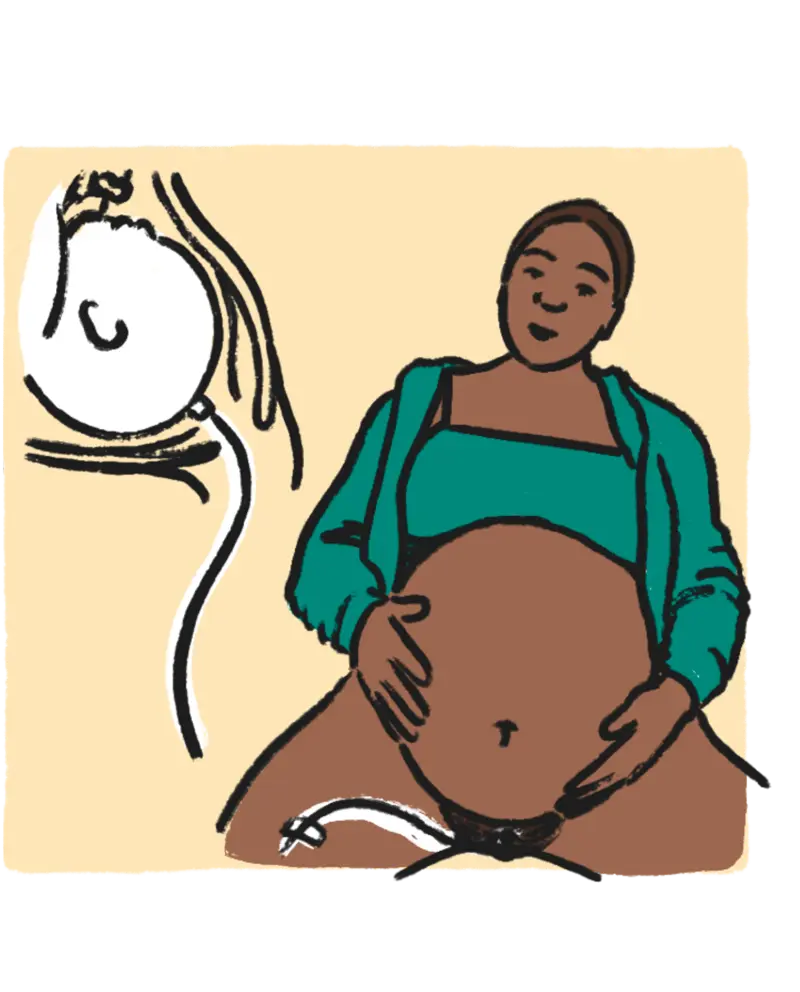
Your “water” is the amniotic fluid that surrounds your baby while they are growing in your uterus. Only about one in 10 people have their water breaking as their first sign of labor. It may happen before or during a contraction. It can even happen while you are asleep. Your body will keep making amniotic fluid, so even after your water breaks there is still some around your baby.
Your water breaking may feel like a gush, or a slow leak of fluid. The fluid should be clear, with no strong smell.
For some people it is obvious the water broke, others may not be sure.
What to do: Call us for guidance. We will probably ask you to come to the hospital so we can check on your baby and discuss next steps.
Come to the hospital right away if your water breaks and the fluid is green, yellow, or brown, or if you’ve been told you have GBS and need antibiotics.
Vaginal Bleeding
- A small amount of pink or brown blood when wiping can be normal.
- Heavy bleeding (like a period, running down your legs, or passing clots) is not normal.
What to do: Call us for guidance.
Come to the hospital right away if your bleeding is heavy.
Mucus Plug
You may notice sticky mucus from your vagina that can be clear, yellow, or tinged with blood. This is a sign your cervix is starting to open. It can happen days before labor begins, and some people don’t notice it at all.
What to do: Wait (ideally at home) until you have other signs of labor.
Baby’s Movements During Early Labor
- Your baby should continue moving regularly, even if contractions may have started.
- Do fetal kick counts to track movements.
What to do: Trust your instincts—you know your baby best. Call us if movements decrease. Come to the hospital if your baby is moving less than usual and you are worried. We can check on your baby and talk about next steps.
Special Situations
Before Your Due Date
If you are less than 37 weeks pregnant (preterm) and notice signs of labor, call us right away to let us know.
Then come to the hospital so we can check on your baby and talk through your options.
Scheduled Induction
If you are scheduled to have your labor started medically, you will still experience early labor—you’ll just be at the hospital already.
If you have signs of labor before your induction appointment:
- Call us to let us know.
- Then come in, so we can check on your baby and review your choices.
 What To Expect During Labor