Pelvic Floor Exercises During Pregnancy

What is the Pelvic Floor?
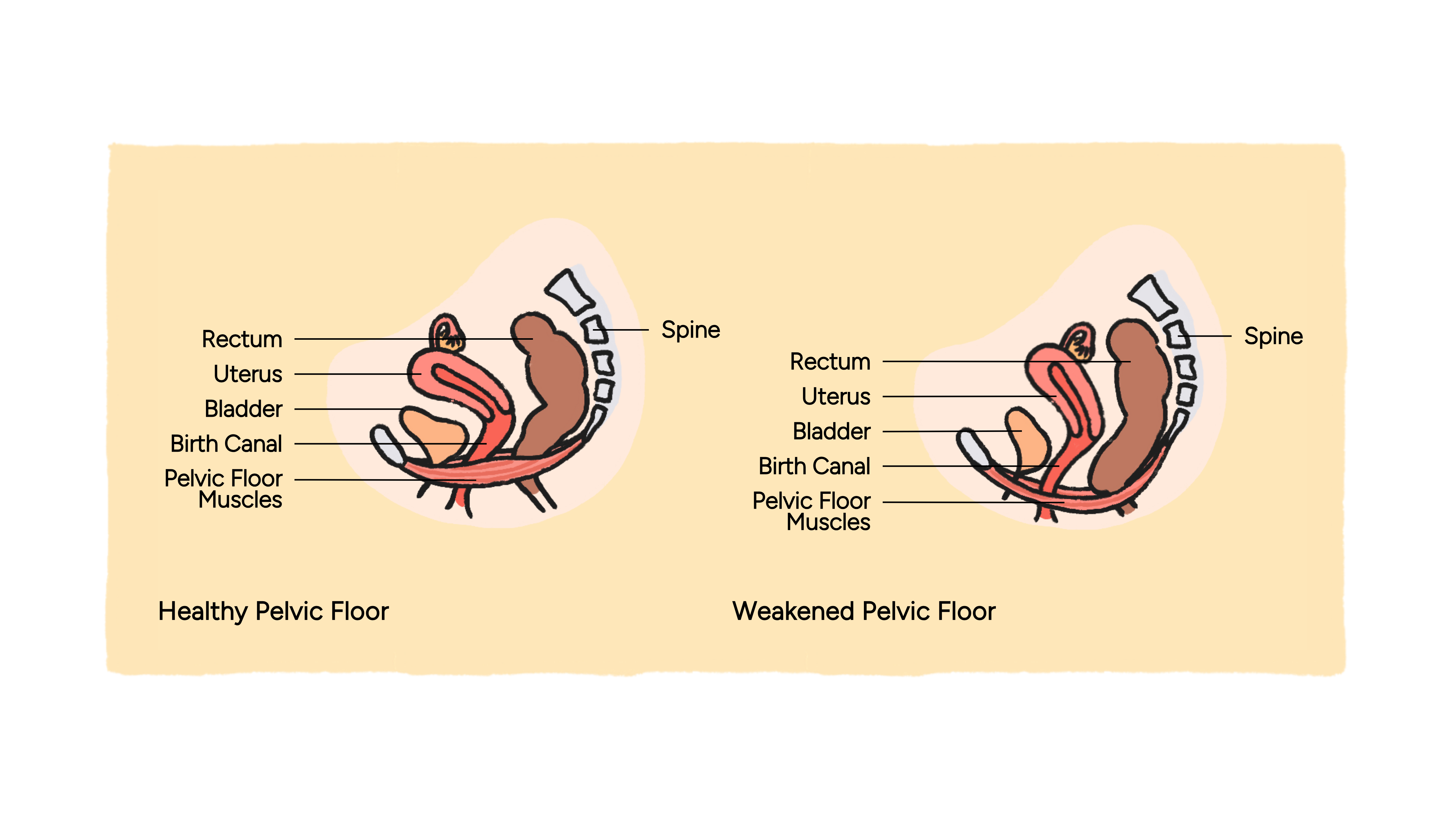
The pelvic floor is a group of muscles inside your pelvis. These muscles help you pee, poop, and enjoy sex. They also support your organs that help control those body functions, like the bladder, uterus, and rectum.
What Does the Pelvic Floor Do During Labor and Delivery?
The pelvic floor’s main job during labor and delivery is to relax and move out of the way. It does not help with pushing.
During pregnancy, it is important to learn how to connect with your pelvic floor and relax these muscles. Having a flexible and relaxed pelvic floor can lower the chance of tearing during delivery.
How Should I Get Ready for Birth?
Here are some tips on how you can make sure your pelvic floor is ready for you to give birth.
Keep Your Exercise Routine
- Keep doing your current exercise routine as long as it feels okay.
- You might need to change some activities to stay comfortable as your pregnancy goes on.
- Don’t try new exercises you haven’t done before pregnancy.
Have Good Bladder and Bowel Habits
- Use a squatty potty or something to raise your feet up when you poop.
- Breathe as you empty your bladder to help get everything out. Try not to push or force your urine out. This can weaken the pelvic floor.
Start Perineal Massage at 34 Weeks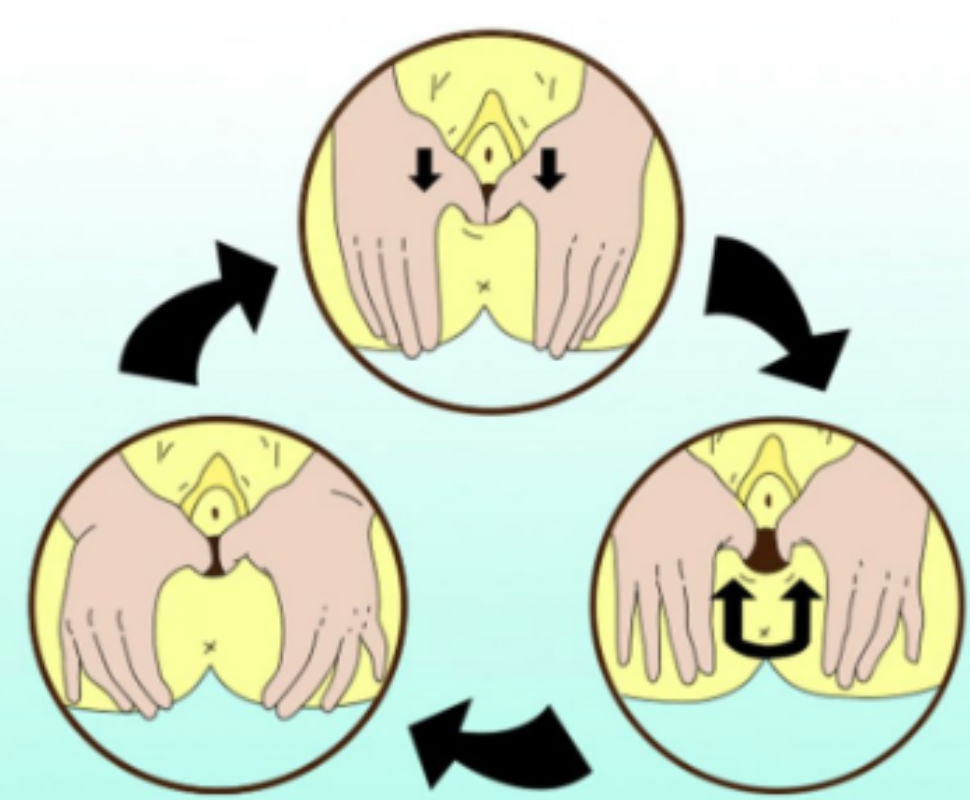
- At 34 weeks, we suggest starting “perineal massage.”
- This helps your muscles get ready to stretch during birth, which can make delivery easier and reduce tearing.
Steps
- Use one or both thumbs to stretch the opening of the vagina
- Press down towards your tailbone and hold for 10 seconds. If it feels okay, you can hold for longer.
- You can also move your thumb in a "U" and massage back and forth.
- Do this massage for five to 10 minutes. You can do it every day.
Try These Pelvic Floor Exercises
- Try these simple exercises to help you connect with your pelvic floor.
- The videos linked below have demonstrations of how to do each stretch.
- Important: If you feel any pain, stop the exercise and talk to your healthcare provider.
Lateral Breathing
Place a cushion between your knees and just relax. Place your hand on your growing belly. Inhale deeply through your nose and focus on expanding your rib cage. Your hand will feel the rise. Exhale through your mouth as you relax.
Repeat up to 10 breathing cycles.
Deep Squat
Deep squats during pregnancy will open and relax your hips and pelvis. You can support your hips and pelvis in this position with pillows, yoga blocks, or a low stool. Practice deep belly breathing while holding a deep squat.
Hold each squat for one minute.
Cat and Camel Stretch
While on your hands and knees in a crawl position, raise up your back and arch it towards the ceiling like an angry cat. Exhale through your mouth. Next, return to a lowered position and arch your back the opposite direction. Inhale through your nose.
Repeat 10 times.

 Nutrition & Exercise