
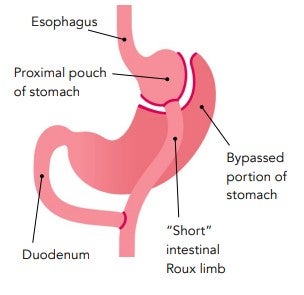
 In this surgery, your surgeon will staple and divide your stomach into two compartments. The smaller portion is about the size of a large egg and is called a pouch. The larger portion is the remnant stomach. After your stomach is divided, the surgeon will dissect your small intestine at the jejunum and connect the bottom section to your new small pouch. The upper part of the intestine is connected to the small intestine about three to four feet down, creating a connection that looks like the letter “Y.”
When you eat food after surgery, it will pass from your esophagus into your pouch, then into your small intestine, BYPASSING your remnant stomach and the upper part of your small intestine.
How the Surgery Helps with Weight Loss
- A smaller stomach means smaller food portions. Your new stomach pouch will only be about the size of an egg and can only fit a small amount of food at a sitting. You will only eat what can fit in your egg-sized pouch, so you will not be able to eat as much food in one sitting as you used to.
- Reduced hunger. You will make less of a hormone called ghrelin that makes you feel hungry. Since you make less of this hormone, you may notice less hunger after surgery or that it takes longer to feel hungry.
- Feel full faster and stay full longer. Hormones like GLP-1 and PYY are produced in your gut and can increase after your surgery. These hormones will slow down digestion, reduce hunger, and increase satiety after meals. They may also improve blood sugar control if you have type 2 diabetes.
Potential Side Effects
- Malabsorption. Since you are bypassing the top of your intestines, you will absorb less of your food, including calories, vitamins, and minerals. This means you may not absorb all the calories you eat.
- Dumping syndrome. Dumping syndrome is a physical reaction you get after eating food high in sugar or fat, which can deter you from eating those types of foods. Symptoms can occur immediately after eating, or up to a few hours after. Symptoms include nausea, vomiting, diarrhea, heart palpitations, sweating, dizziness, and cramping. Examples of foods that can cause dumping syndrome include desserts, candy, sugary beverages, french fries, and fried dough. Not everyone has dumping syndrome after surgery, and for some, it goes away over time.