


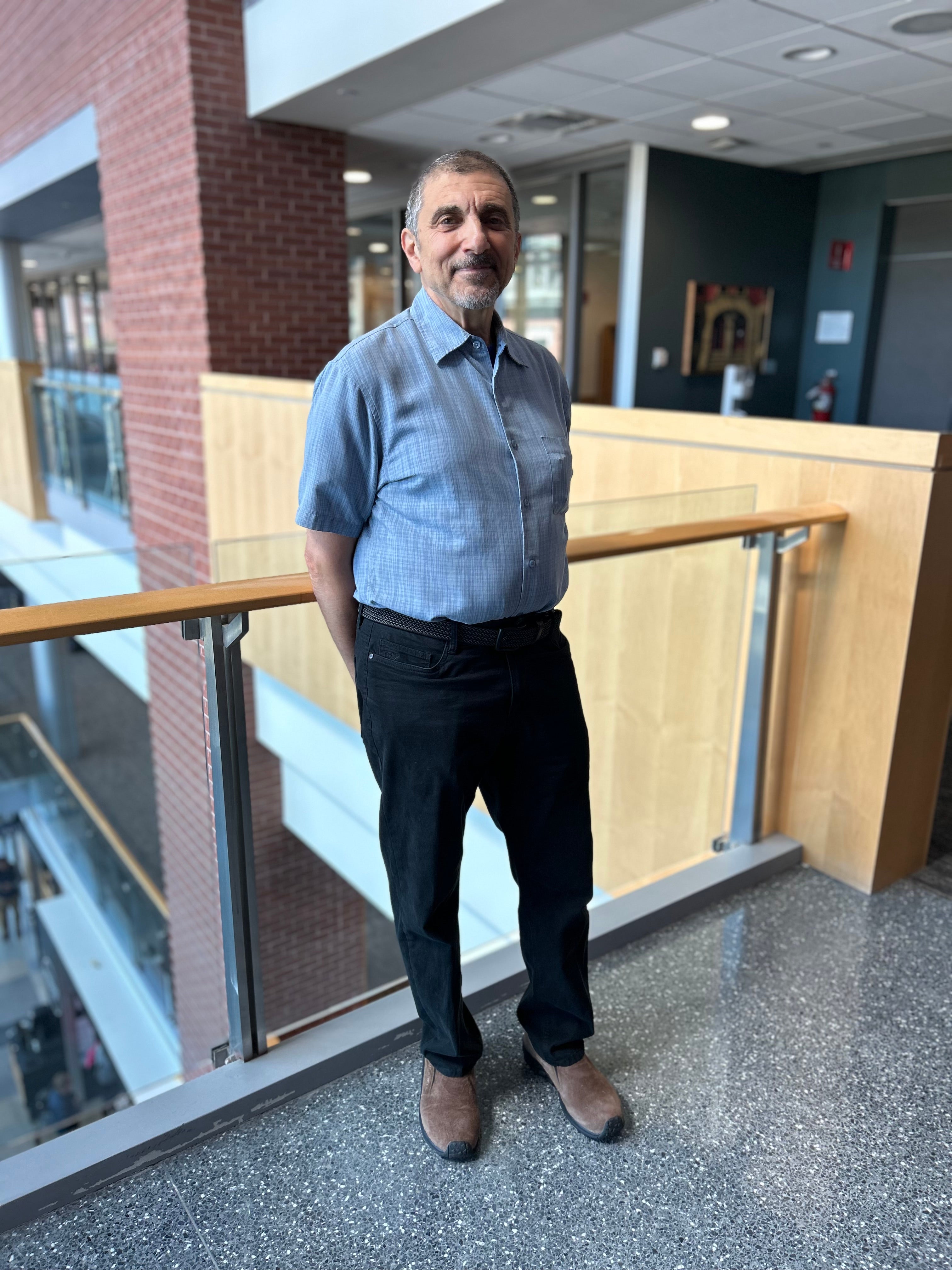
After 17 years, BMC’s Cancer and Sickle Cell Support Group Manager is Ready for his Next Chapter. Robert “Bob” David began his Boston Medical Center story 17 years ago when he joined as the Manager of Cancer and Sickle Cell Support Programs. While his journey started slowly, he quickly grew momentum and the trust of the former program leaders. With the support from his team, Bob laid out a foundation—creating a framework for connecting with patients and managing relationships—that stands today. Over nearly two decades, Bob has fostered a diverse, multilingual community that continues to grow and thrive. Now, as he prepares to retire, he concludes a remarkable chapter of service, leaving behind a lasting legacy.
The Support Groups Bob Built
Of all his accomplishments, it was in the support group sessions where Bob found his greatest purpose. What started as a handful of gatherings grew into more than 20 groups and activities, from open conversations to creative workshops. One of many wraparound services at BMC’s Cancer Center and Sickle Cell Disease Center, these spaces became safe havens where patients and survivors could share their stories, ask questions, and support one another in ways that clinical care alone could not provide.
For Bob, the real joy was not in leading the groups, but in witnessing the connections that formed within them. “I've really felt privileged to have had that opportunity to listen to patients talk about their struggles, their courage, their strength, their successes,” he reflects.
He firmly believes that patients who participate in these programs often fare better—not because the groups deliver treatment, but because they offer something equally powerful: the chance to process experiences together, find encouragement, and know they are not alone. That spirit of community and resilience is the legacy Bob leaves behind, one that will continue to uplift patients and families for years to come.
Bob’s Next Chapter
The decision to retire did not come easily for Bob. After wrestling with the idea for several years, he felt the time was finally right—confident that his longtime colleague, Cyrena Gasse, would continue the work he helped build. After 12 years of working side by side, Bob trusts that Cyrena, together with his successor, will carry the program forward with the same dedication and care.
“It’s hard for me to fathom BMC’s Support Programs for Cancer and for Sickle Cell Disorders without Bob David. He is warm, attentive, and, as the title of our program suggests, incredibly supportive. For as long as I’ve known him (over 12 years), he has always gone above and beyond for our patients and for those participating in our programs from surrounding hospitals. I’ve always been in awe of him on some level, often wondering if there was anything he couldn’t do. Many years ago, with the permission of those above us, my former co-worker and I taped a picture of his face onto a life-size cardboard standee of Superman that we then displayed at our annual Cancer Survivors Celebration. I still think it’s an apt comparison. While the program will continue to grow and build on it’s impact, the mark he leaves behind is indelible.”
Looking ahead, Bob is eager to spend more time writing, taking classes, and traveling to new places. While retirement can feel daunting, he approaches it with optimism. “As long as I stay open and want new things to come my way, then opportunities will arise. I'll meet people, I'll talk to people; things will come that will inspire me or involve me in good ways. And I trust that process.”
For Bob, this transition isn’t an ending—it’s a continuation. “I don't like using the word retirement that much. I use it only for convenience and for other people. But for me, it's closing this chapter so that I can open a new chapter.”
Congratulations, Bob, on this new chapter—and thank you for what you have done for BMC.