
All About Blood Glucose
Keeping your blood glucose (sugar) in your target range is one of the most important things you can do to feel your best and avoid future health problems. The good news is that most of what you need to do to take care of your diabetes is in your hands.
This includes following a meal plan, staying active, taking your medications, and doing your best to stay within your blood sugar target range.

Tracking Your Blood Sugar Numbers
To properly manage your diabetes, it’s important to keep track of your blood sugar numbers. You can do this in two ways:
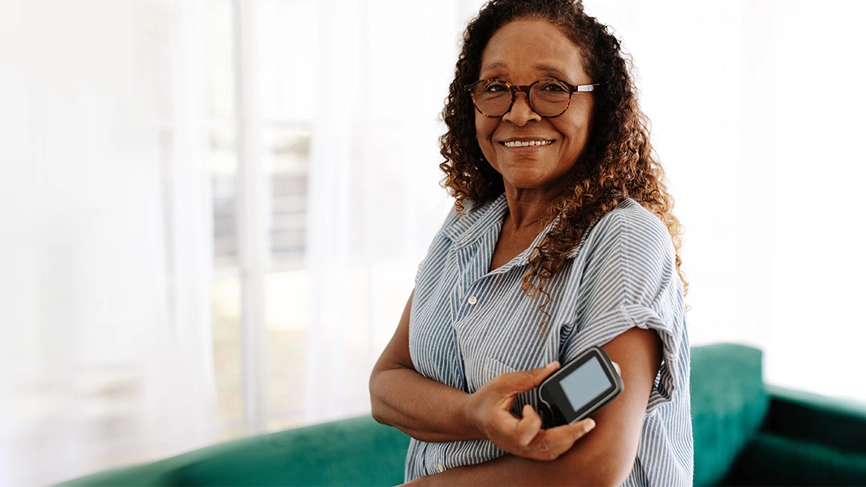
- Use a blood glucose meter to check your levels throughout the day. Ask your healthcare team whether a Continuous Glucose Monitor (CGM) might be a good option for you.
- Get an A1C test at least twice a year to see your average blood sugar over the past few months.
These tools can help you and your care team know if your current plan is working, or if it needs to be adjusted.
Making Sense of Your Numbers
Throughout the day, many factors can affect your blood glucose levels. Learning what influences these changes can help you better understand your body, make informed choices, and stay on track with your diabetes care.
Hypoglycemia
Low blood sugar, or hypoglycemia, can come on quickly, but you can take steps to feel better fast. Knowing the signs and how to treat them right away can help you stay safe and prevent more serious problems. If low blood glucose isn’t treated quickly, it can lead to fainting and may require emergency medical care.
Causes: Too little food or skipping a meal, too much insulin or diabetes medicine, or more activity than usual
Onset: Often starts suddenly
Possible signs and symptoms:
- Blurry vision
- Dizziness or headache
- Fast heartbeat
- Feeling anxious, irritable, or shaky
- Hunger
- Sweating
- Weakness and fatigue
What Can You Do?
- Check your blood glucose right away. A level of 70 or less is considered low and requires treatment.
- If you can’t check, treat it anyway:
Eat: three to four glucose tablets or three to five hard candies you can chew quickly (such as peppermints)
or
Drink: 4oz. (½ cup) of fruit juice or regular (not diet) soda - After 15 minutes, check your blood glucose again. If it is still under 80, treat again (take another round of one of the fast-acting glucose options from step 2).
- If symptoms don’t stop, call your healthcare provider.
Hyperglycemia
High blood sugar, or hyperglycemia, can happen for many reasons—and it’s important to catch it early. Recognizing the signs and knowing what to do can help you take action before it becomes a more serious problem. Very high blood glucose can become a medical emergency if not treated.
Causes: Too much food; too little physical inactivity; not enough insulin or diabetes medicine; illness; increased stress
Onset: Often starts slowly
Possible symptoms:
- Blurry vision
- Dry skin
- Feeling drowsy
- Increased hunger and thirst
- Urinating frequently
- Wounds that seem to be healing slowly
What Can You Do?
Keep checking your levels. If your blood sugar has been above your target for three days and you don’t know why, call your healthcare provider.
What Is Diabetic Ketoacidosis (DKA)?
Symptoms of DKA
- Breathing difficulty
- Drowsiness
- Extreme thirst
- Frequent need to urinate
- Fruity smell to the breath
- Nausea, stomach pain, and vomiting
Diabetic ketoacidosis (DKA) is a serious and potentially life-threatening complication of diabetes. It occurs when your blood becomes more acidic due to a buildup of ketones—acids that form when the body breaks down fat for fuel instead of glucose.
DKA can develop quickly, sometimes within hours. If left untreated, DKA can cause dehydration, trouble breathing, and in severe cases, coma. Fortunately, it can be prevented and treated when caught early.
While DKA is commonly associated with high blood glucose, it can also happen at normal glucose levels—especially if you’re sick or dehydrated.
Triggers, Diagnosis, and Prevention
Common Triggers
- Infection or illness: Your body needs more insulin when stressed.
- Missed insulin doses: Skipping insulin can lead to dangerously high blood sugar.
- Insulin delivery issues: Problems with insulin pumps or sets (like a kinked cannula).
- Spoiled insulin: Exposure to extreme temperatures can reduce insulin effectiveness.
- Undiagnosed diabetes: DKA may be the first sign of undiagnosed type 1 diabetes.
Diagnosing DKA
Home Testing
Your ketone level can be an early warning sign of DKA. Testing your urine for ketones is an important part of staying safe when you’re ill or your blood sugar is high, so you can take action before the situation becomes serious.
If you are experiencing symptoms associated with DKA, or if you have blood glucose levels of more than 240 mg/dL that are not decreasing even after taking insulin, it is a good idea to test your urine for the presence of ketones.
Clinical Diagnosis
Your healthcare provider can test your blood to confirm DKA. The test will typically show:
- High blood acidity (low pH)
- Presence of ketones
- Imbalances in electrolytes like sodium and potassium
How to Prevent It
- Even when you’re not eating, your body needs insulin. Always take your standard (basal) dose of insulin.
- Check your blood glucose regularly, or use a continuous glucose monitor (CGM).
- Go ahead and test for ketones if you have signs or symptoms of DKA, or your blood sugar stays over 240 mg/dL for longer than 3 hours even after taking insulin.
- Create a back-up plan with your diabetes team in case of insulin pump failure.
- Get your flu shot every year to reduce illness-related risk.

How Do You Test for Ketones?
You dip a special test strip in a sample of your urine and watch for a color change. The color result indicates a trace (close to zero), small, moderate, or large level of ketones.
If the Result Is “Trace” or “Small”
- Drink 8 oz. (1 cup) of water every hour.
- Avoid exercise if your glucose is over 240 mg/dL.
- Take fast-acting insulin if you have not done so in the past 3–4 hours.
- Test your glucose and ketones every 3–4 hours.
- Call your healthcare provider if your levels don’t improve after two rounds of testing.
If the Result Is “Moderate” or “Large”
- Call your healthcare provider or seek care immediately.
- Drink 8 oz. (1 cup) of water every hour.
- Take fast-acting insulin if you have not done so in the past 3–4 hours.
- Keep testing every two hours until you are cleared by your provider.
SGLT2 Inhibitors and DKA Risk
Diabetes medications in the family of SGLT2 inhibitors (like Farxiga, Invokana, Jardiance, or Steglatro) can increase your risk of ketoacidosis even when your glucose levels are normal. Talk to your healthcare provider about situations when you should avoid taking your SGLT2 medication—for example, if you’re dehydrated, ill, planning strenuous physical activity, or eating a very low-carb diet.
Be ready to test for ketones if you’re feeling unwell!

How Other Illnesses Impact Your Diabetes
A “sick day” can include anything from a case of the flu (or even a common cold) to a stomach bug, infection, or recovery from an injury or surgery. When you have diabetes, being unwell can affect your blood sugar and how your medications work, so it’s important to know how to manage it.
When you’re ill, your body releases stress hormones. These hormones can raise your blood sugar and make it harder for your diabetes medications to work.
At the same time, you may be eating or drinking less, or losing fluids through vomiting or diarrhea, which can lead to dehydration and affect how your medications are absorbed.
Sick Day Guidelines
Pause Certain Medications
Do not take metformin (Glucophage), SGLT2 inhibitors (such as Empagliflozin, Jardiance, or Canagliflozin/Invokana), or sulfonylureas (such as glipizide or glimepiride) if you are vomiting or unable to eat and drink normally.
Monitor Your Blood Sugar Frequently
Check your blood sugar every two to four hours—even during the night.
Adjust Insulin as Needed
It’s a good idea to work with your healthcare provider in advance on a “sick day plan” for how to adjust your medication doses when you are unwell.
You may need extra insulin. If your blood sugar is over 240 mg/dL and you have type 1 diabetes or ketosis-prone diabetes, check your urine for ketones.
Watch for signs of dehydration. If you are vomiting or have diarrhea, you may need less insulin.
Adjust your insulin with the guidance of a healthcare provider.

When Should You Call Your Provider?
Call your health care provider if:
- You have a fever over 100°F for more than 24 hours that doesn’t improve with acetaminophen (Tylenol®).
- You’ve been vomiting or had diarrhea for more than six hours.
- You experience stomach pain or trouble breathing.
- Your blood sugar stays above 240 mg/dl for more than 24 hours—even after extra insulin and fluids.
- You have type 1 diabetes and have moderate or large ketone levels in your urine.
- You are not sure which medications to take.
- You’re unsure about what to do.
If you can’t reach your provider, seek emergency care.
The American Diabetes Association recommends blood glucose targets of between 80 and 130 mg/dl before meals and below 180 mg/dl two hours after the start of a meal.
Explore the Resource Center
Diabetes information found on these pages should not replace education or instruction from your healthcare provider or certified diabetes educator. We encourage all patients to personalize their diabetes management in collaboration with their healthcare team.