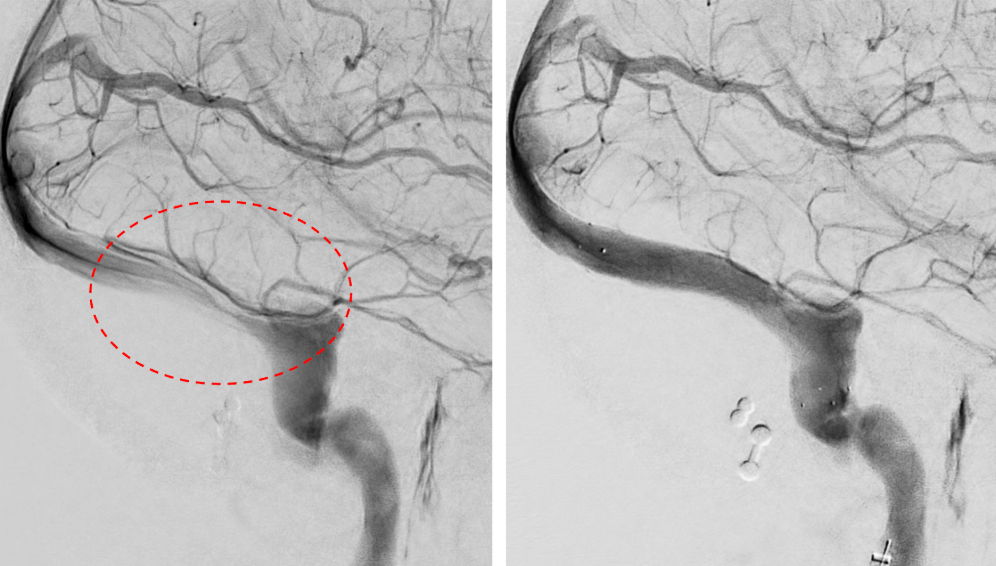
Venous stenting is performed via endovascular route, which means Dr. Mohamad Abdalkader or Dr. Thanh Nguyen will use a thin, flexible tube (catheter) that is guided through a blood vessel, usually starting from a small puncture in the groin or wrist. No open surgery or large incision is required. The catheter is guided to the narrowed vein next to your brain, and the stent is placed across the narrowed section to open it.
Why is this procedure done?
When the venous sinuses are narrowed, pressure inside the head can increase. This can cause symptoms such as headaches, ringing or whooshing sound in the ears (pulsatile tinnitus), or vision problems. By opening the narrowed vein, the stent helps reduce this pressure and improve symptoms.
What happens after the procedure?
Patients are admitted overnight for monitoring and most return home the next day.
Patients may return to work usually 3-5 days after the procedure, although recovery times vary from patient to patient.
Patients will need to take medications (blood thinners) to prevent clotting inside the stent. Most patients take two blood thinning medications for the first three months after the procedure before transitioning to one blood thinning medication for an additional year after the procedure.
Follow-up imaging and clinic visits are important to ensure the stent remains open and that your symptoms improve.