


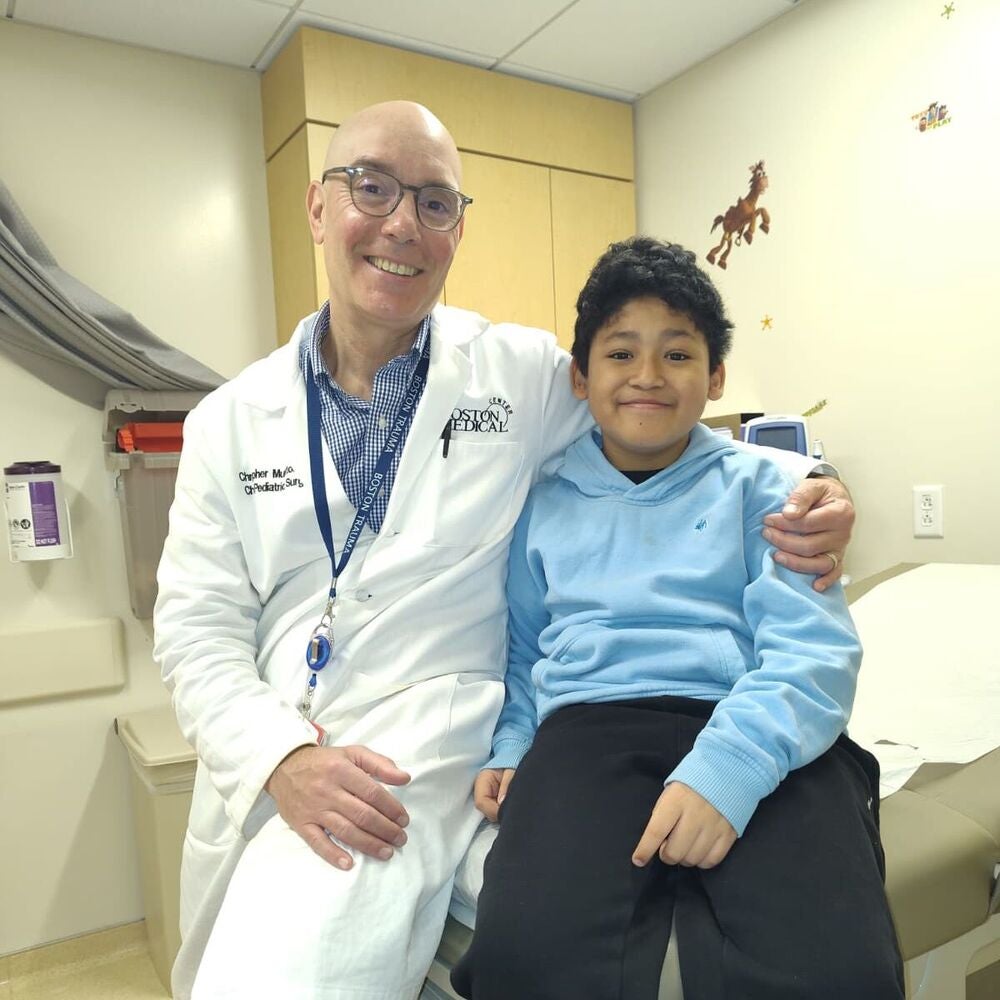
BMC pediatric patient Dylan with his surgeon, Dr. Christopher Muratore
Ten-year-old Dylan is spending his summer playing sports, making art, and enjoying the foods he loves. It's an ordinary, pain-free life that his parents once feared might never be possible.
"Sometimes my wife and I look at Dylan running and laughing, and we start thinking about how he was before," says his father, Leonard. "We are so happy."
Years without Answers
Dylan was born in Lima, Peru, with Hirschsprung's disease, a condition where a baby's nerve cells are missing from part of their bowel. Without these nerves, the colon can't properly move gas and stool through the body.
At 6 days old, Dylan had surgery to create a colostomy, an opening in the abdomen that allows stool to leave the body and collect in a bag. But as the months and years passed, he didn't improve. His stomach was often swollen and painful, he couldn't pass gas or stool, and he could eat only small amounts of food.
To ease the pressure in his abdomen, Dylan's mom, Lesly, would feed a rubber tube through his colostomy to release trapped gas and remove stool from his colon. For seven years, she performed this process at least twice a day. "I became an expert," she says. "But I was always worried. I couldn't sleep because I was thinking about what could happen. From the day Dylan was born, I honestly could not even smile."
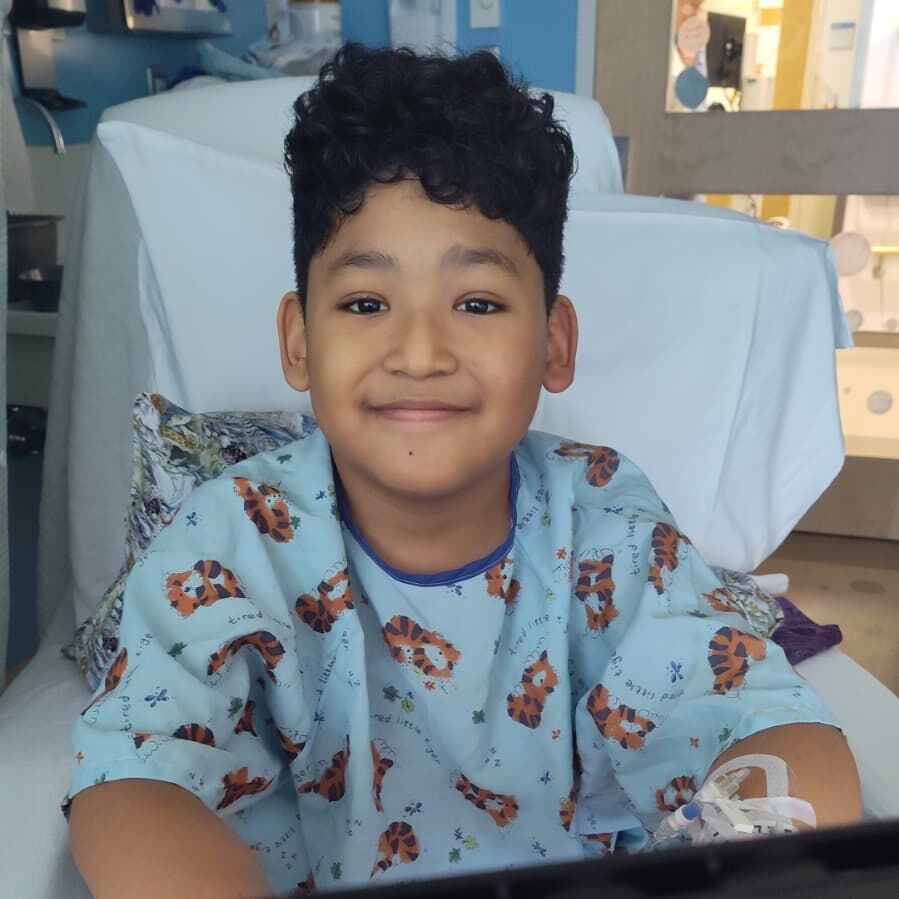
Though his parents were nervous, Dylan was excited by the prospect of a cure for his condition.
As Dylan grew older, he became more aware of his condition and his limitations. At a family gathering, he watched his cousins and his older brother, Thiago, swimming. He became upset that he couldn't swim like the other kids, without the plastic cover he needed over his colostomy. "It was terrible to see our son that way and not be able to find a way to fix it," says Leonard.
That moment convinced the couple that it was time to seek better care for their son. "We said to each other, 'We need to find a way to leave,'" Leonard recalls.
Leaving Everything Behind
Lesly and Leonard made the difficult decision to leave their life in Peru for the United States. They sold everything they owned, said goodbye to relatives, and traveled with Dylan and Thiago to Boston, where Lesly's sister lived. "We told Dylan that we were moving to the U.S. to find a cure," Leonard says. "He was the most excited of all of us. We were the ones who were nervous."
After reaching Boston, the family was referred to Christopher S. Muratore, MD, MS, FACS, FAAP, Chief of Pediatric Surgery at Boston Medical Center (BMC). No medical records were available from Peru. After evaluating Dylan, Dr. Muratore and his team discovered that Dylan’s colostomy had been placed in his diseased colon instead of in the healthy portion. That explained why he was still experiencing the symptoms of Hirschsprung’s disease and why he was so malnourished. “Lesly had kept her son alive,” explains Dr. Muratore.
Dylan would need a series of surgeries to first repair his colostomy and then to treat his Hirschsprung's. "Dr. Muratore explained everything to us in detail so we would know what procedures had to be done," says Lesly. "He was always kind and attentive. He is an extraordinary person."
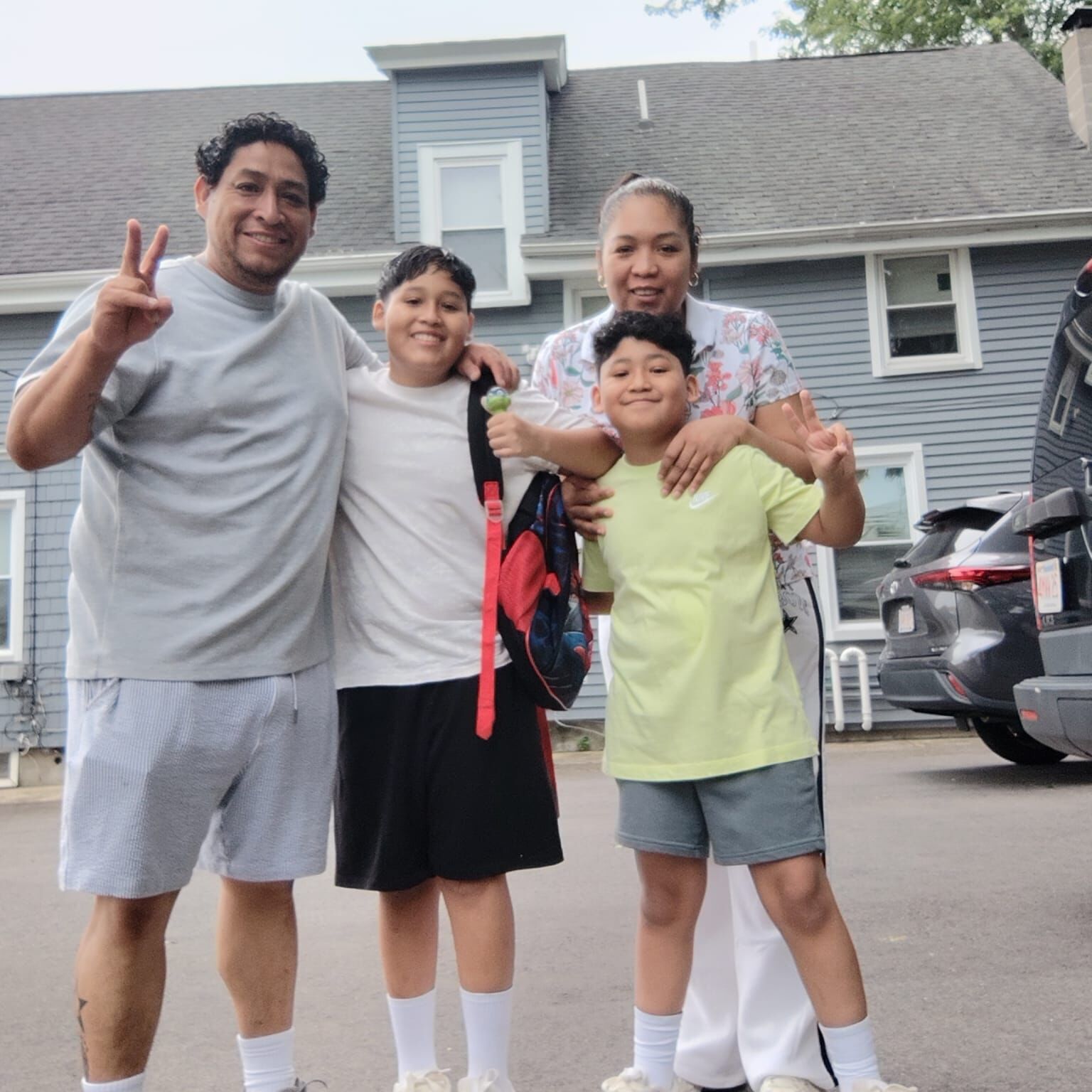
Dylan’s family is grateful to Dr. Muratore and BMC for giving their son the gift of a pain-free childhood.
A New Plan of Care
During Dylan's first operation at BMC, Dr. Muratore removed the diseased colostomy and identified healthy colon farther upstream. He then created a new, properly functioning colostomy.
Once Dylan's health and colon function had improved, he was ready for another long operation. Dr. Muratore removed the remaining diseased colon down to the anus. He then brought the healthy, rehabilitated colon through the pelvis and connected it to the anus. To protect the new connection while it healed, Dr. Muratore created a temporary ileostomy that redirected stool away from the colon.
In November of 2025, Dylan had a final operation to close the ileostomy and restore the pathway for normal bowel movements. He has been eating well and gaining weight ever since. "I am so grateful to Boston Medical Center, to Dr. Muratore, and to the entire team for the way they treated us and for everything they did for my son," says Lesly.
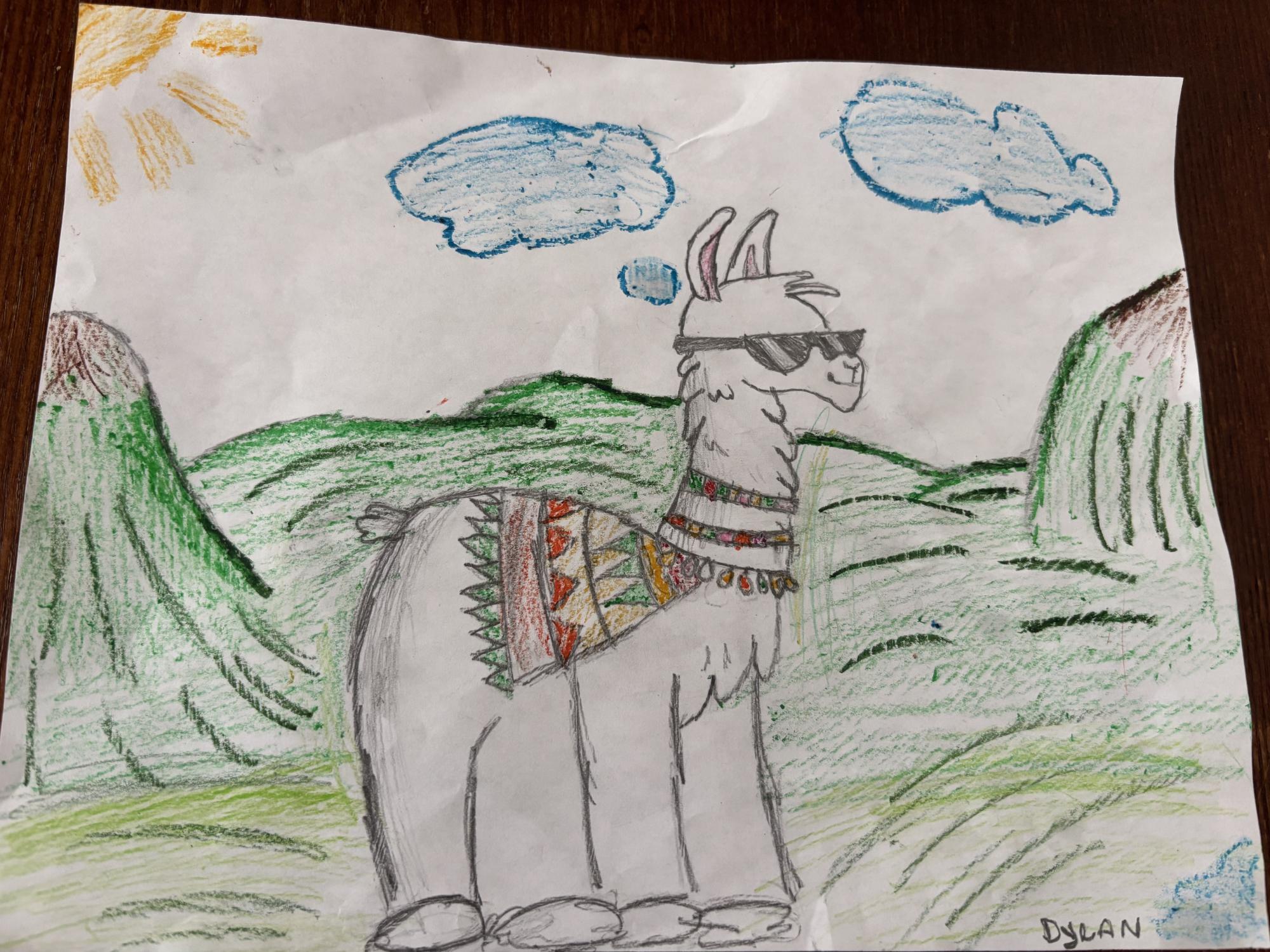
Since his recovery, Dylan has been able to enjoy playing sports, making art, and eating favorite foods.
Finally Free to Be a Kid
Today, Dylan is full of energy, participating fully in school, sports, and social activities without a colostomy. He returns to BMC for close follow-up. "My son's life has changed completely-100 percent," says Leonard.
Lesly says that Dylan's recovery has also brought an end to years of constant fear. "The stress, the anxiety, everything we went through," she says. "Now all of that has passed. When our children are well, we are well too." Leonard adds that although they miss their home and family in Peru, every sacrifice they made was worth seeing Dylan healthy. "It did not matter to us if we were left with nothing," he says. "All we wanted was for Dylan to be well."