
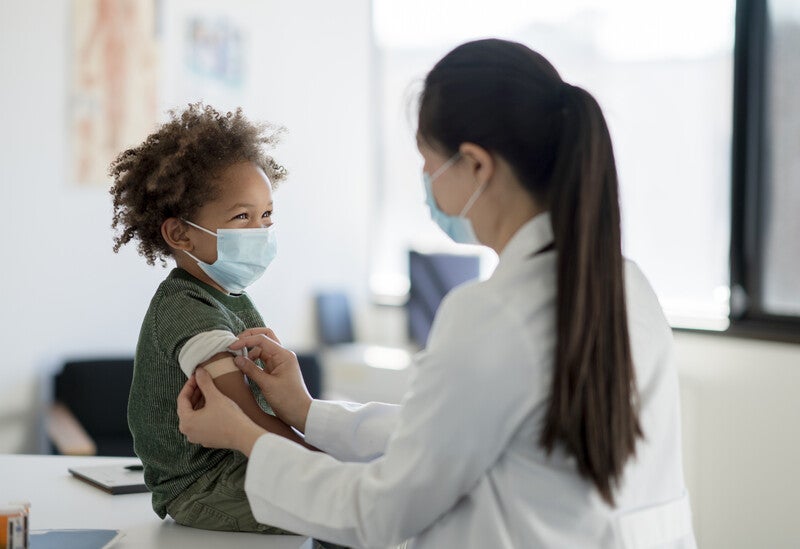
As you check off the final items on your back-to-school list, make vaccinations part of your student's preparation. Staying current on immunizations protects your child, your child's classmates, and the broader community-helping ensure that the school year begins with learning and not sick days.
Why Immunization Is Important
August is National Immunization Awareness Month (NIAM), which the Centers for Disease Control & Prevention (CDC) describes as a time to emphasize how vaccines protect people of all ages by reducing both the risk of infection and the severity of illness.
“Now more than ever, it is important to remember one of the critical roles of vaccines: to decrease the severity of infections,” says Dr. Sabrina A. Assoumou, an infectious disease specialist at Boston Medical Center (BMC). “We recommend vaccination not only to decrease the chances of getting infected, but also to lower the chances that an infection would lead to hospitalization.”
How Vaccines Keep Communities Healthy
Vaccines can do a lot for all of us. They protect against:
- Individual illness: Vaccines help your body build immunity, lowering your chances of getting sick or dealing with more severe symptoms. They also help protect against future diseases.
- Serious health complications: Vaccines help prevent many diseases that have the potential to cause lasting harm. Vaccination significantly lowers the chance of these severe complications.
- Community spread: When enough people are vaccinated, it’s harder for diseases to spread. This protects those who can’t receive vaccines, such as newborns or people with weakened immune systems.
- Ongoing threats: Widespread vaccination can stop outbreaks before they start, and move us closer to eradicating (getting rid of) certain diseases altogether.
Required Vaccinations for Massachusetts Students
It’s okay if you don’t have the required vaccinations memorized. The Massachusetts Department of Public Health has outlined the vaccines and dosages students must have to attend school.
Standard required vaccinations include:
- Diphtheria, tetanus, and pertussis (DTaP/Tdap)
- Hepatitis B
- Measles
- Mumps
- Polio
- Rubella
- Varicella (chickenpox)
Dr. Assoumou advises, “Adding ‘staying up to date with vaccines’ to your back-to-school checklist contributes to getting all of us ready for a healthy start to the new academic year.”
If you’re unsure how up-to-date your student’s vaccinations are, talk to your healthcare provider. The CDC recommends an annual flu shot for everyone six months and older, as well as a COVID-19 vaccination for all eligible age groups.
Both vaccines help prevent illness, decrease the severity of infections, and ultimately keep students in the classroom.
If your student is starting college, be aware that universities set their own immunization requirements and require proof of vaccination before allowing students on campus. Check your child's school or university health services website for the most up-to-date list.
And don’t forget yourself—parents, guardians, and caregivers also benefit from staying up to date on recommended vaccines, which helps protect both you and your family.