
Immigrant and Refugee Health Program
Forensic Medical Evaluation
The act of torture is a critical public health issue in the international community. Torture victims and their communities experience serious medical conditions and trauma. The Boston University Forensic Medical Evaluation Group (FMEG) has built medical-legal collaborations to document the effects of torture-documentation that can be used to seek justice for the client.
The Forensic Medical Evaluation group aims to:
- Provide independent forensic medical evaluations that are consistent with international best practices.
- Increase accountability to perpetrators through documentation.
- Prevent future ill-treatment and therefore improve the public health.
Our Story
The Boston University Forensic Medical Evaluation Group (FMEG), founded by Sondra S. Crosby, MD, and Elizabeth Burke, MD, is a service for asylum seekers who require documentation of prior ill treatment. Part of the Department of Medicine at the Boston University Chobanian & Avedisian School of Medicine, the Boston University School of Public Health, and Global Lawyers and Physicians, FMEG offers evaluation and documentation of physical and psychological evidence of torture and abuse in a supportive and collaborative environment while working closely with attorneys.
In addition to performing medical evaluations, FMEG is actively engaged in advancing the field of torture documentation through academic research, including through publication in scholarly journals, holding regular didactic sessions on all aspects of medical forensics, and teaching students (medical, law, and public health), medical residents, physicians, lawyers, and judges.
Our Clinicians
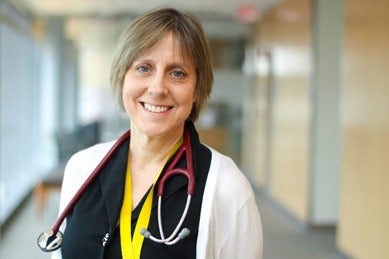 Sondra S. Crosby, MD, has investigated torture around the world and served as an international expert in the field of torture documentation. She has written over 500 medical affidavits and her testimony has been accepted domestically in the Boston Immigration Court, Federal District Court, and Military Commissions Court, as well as in international courts.
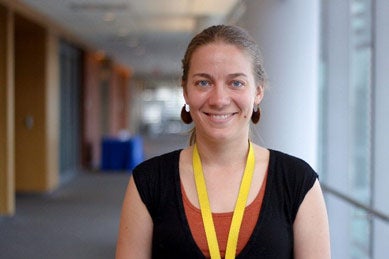 Sarah L. Kimball, MD, initially trained in the care of asylum seekers and writing medical affidavits during a medical school rotation at the Program for Survivors of Torture at New York University. Since then, she has worked with clients as an asylum network volunteer through Physicians for Human Rights and has lectured nationally on the medical sequelae of torture.