Dieta vegetariana en el embarazo

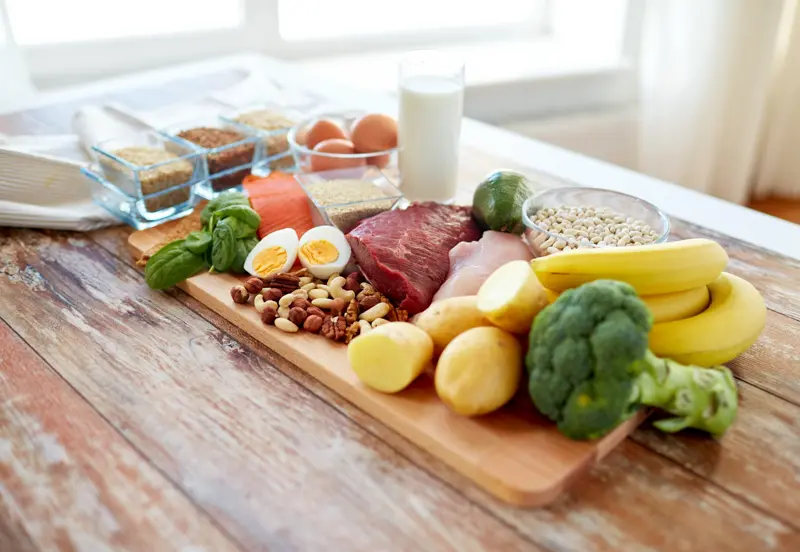
Si usted siguió una dieta vegetariana antes del embarazo y le gustaría continuar, este artículo es para usted. Comer una dieta vegetariana puede ser una forma saludable de proporcionarle a usted y a su bebé mucha fibra y una nutrición importante.
Deberá asegurarse de obtener toda la nutrición que necesita para el embarazo, incluidas vitaminas y muchas proteínas, de su dieta. Una consulta con un dietista registrado puede ayudarle a elegir alimentos saludables.
Hay partes específicas de los alimentos conocidas como "nutrientes" en las que es importante concentrarse durante su embarazo:
| Nutriente | ¿Cómo ayuda? | ¿Qué comida tiene? |
|---|---|---|
Calcio (1,000-1,300 mg/día) | Ayuda a desarrollar huesos y dientes fuertes | Leche, queso, yogur, sardinas, leche de soja con calcio, verduras verdes, zumo de naranja con calcio |
| Hierro | Ayuda a crear glóbulos rojos que suministran oxígeno a su bebé y evita que se sienta demasiado cansado | Todos los frijoles y guisantes, productos de soya, cereales fortificados con hierro, jugo de ciruelas pasas |
| Vitamina A | Forma una piel sana y ayuda a la vista y al crecimiento óseo | Zanahorias, verduras de hojas verdes oscuras, batatas |
| Vitaminas B | Ayuda a formar glóbulos rojos, ayuda al cuerpo a utilizar proteínas, grasas y carbohidratos. Mantiene el sistema nervioso. | Pescado, cereales integrales, plátanos, levadura nutricional, hamburguesas vegetarianas |
| Vitamina C | Promueve la salud de las encías, los dientes y los huesos. Ayuda a Su cuerpo a absorber el hierro | Frutas cítricas, brócoli, tomates, fresas |
| Vitamina D | Trabaja con el calcio para construir huesos y dientes. También es importante para su sistema inmunológico | Pescados grasos como el salmón, la leche, los huevos con yema, el zumo de naranja con vitamina D añadida |
| Folato/Ácido fólico | Necesario para producir sangre y proteínas. Previene defectos en el cerebro y la columna vertebral de su bebé. | Verduras de hojas verdes, jugo de naranja, frijoles y nueces |
| Fibra | Previene el estreñimiento, ayuda a regular los niveles de azúcar en la sangre | Frutas y verduras, especialmente con piel, cereales integrales, frijoles, lentejas |
Vitaminas prenatales
Las vitaminas prenatales pueden ayudarle a asegurarse de que está recibiendo todos los nutrientes necesarios para un embarazo saludable. Es posible que usted comience a tomarlos meses antes de intentar quedar embarazada o cuando quede embarazada.
Incluso si lleva una dieta equilibrada, se recomienda que tome una vitamina prenatal para su salud y la del bebé. Sus necesidades nutricionales aumentan Durante el embarazo, por lo que el suplemento, junto con sus elecciones de alimentos, pueden ayudarle a satisfacer esas necesidades.
Proteína
Un dietista registrado puede ayudarle a calcular cuánta proteína necesita. La recomendación general es comer al menos 71 gramos todos los días. Puede buscar las cantidades de proteínas en aplicaciones/sitios web como Calorie King o mirar las etiquetas nutricionales.
La lista a continuación tiene muchas fuentes de proteínas. Si no consume pescado ni lácteos, elija otras opciones. Si consume yogur no lácteo como fuente de proteína, lea la etiqueta nutricional para ver cuánto tiene.
| Fuente de proteína | Gramos de proteína |
|---|---|
| Un huevo entero | 6 |
| Pescado, de tres onzas o del tamaño de la palma de la mano (Verifique que el pescado que está comiendo sea bajo en mercurio) | 20-25 |
| Tofu, tamaño de la palma de la mano | 14 |
| Quinua, media (½) taza cocida | 4 |
| Espinacas, media (1/2) taza cocida | 3 |
| Nueces de soja, un cuarto (1/4) de taza | 12 |
| Nueces, un cuarto (¼) de taza | 4-7 |
| Semillas de lino y chía, de dos a tres cucharadas | 6 |
| Corazones de cáñamo, una cucharada | 3 |
| Yogur griego o islandés, envase de 6 oz | 15-18 |
| Requesón, media taza (½) | 14 |
| Yogur normal, una taza | 11 |
| Leche de vaca o de soya, una taza | 8 |
| Tira o rebanada de queso | 6 |
| Pan integral, una rebanada | 4-6 |
| Avena cocida, una taza | 8 |
| Frijoles, media (½) taza | 7-11 |
Al preparar una comida, elija más de una fuente de proteína, junto con una verdura y un grano integral. Esto aumentará la nutrición de la comida y hará que la proteína, el hierro y otros nutrientes sean más fáciles de usar para Su cuerpo.
Ideas de comidas y meriendas vegetarianas
Puede encontrar más ideas sobre comidas vegetarianas y saludables durante el embarazo en la Biblioteca de Recetas de BMC cocina de enseñanza.
Desayuno con más de 20 gramos de proteína:
- Dos huevos o tofu revuelto, dos rebanadas de pan integral, 1/4 de aguacate, rodaja de tomate
- Un yogur estilo griego, una taza de bayas, una cucharada de semillas de chía y lino, un puñado de nueces picadas
- Una taza de avena cocida, un chorrito de leche de soja o de vaca, una cucharada de corazones de cáñamo, un puñado de nueces picadas, 1/2 taza de frutas frescas o 1/4 taza de frutas secas
- Dos rebanadas de pan integral, una o dos cucharadas de mantequilla de nueces, 1/2 plátano o bayas
Almuerzo o cena con más de 20 gramos de proteína:
- ½ Taza de arroz integral, una taza de frijoles, 1/4 de aguacate, salsa o tomates picados, cebollas, pimientos
- Quesadilla o burrito de queso y frijoles con verduras picadas
- Salmón a la parrilla, calabacín, pimientos y 1/2 taza de quinua, arroz integral o fideos integrales
- Sándwich de atún claro en trozos enlatados, dos rebanadas de pan integral, verduras, tomate
- Una o dos tazas de sopa hecha con frijoles mixtos, lentejas, verduras oscuras y cebollas
Snacks con al menos 7 gramos de proteína:
- Tira o pedazo de queso, 10 galletas integrales
- 10 galletas integrales, una o dos cucharadas de mantequilla de nueces
- Cuatro tazas de palomitas de maíz, un puñado de nueces
- Pequeño trozo de fruta, tira o trozo de queso
- Yogur al estilo griego, dos cuadrados de galletas Graham
- ¼ Taza de nueces mixtas, 1/4 taza de frutos secos, 1/4 taza de semillas de calabaza o girasol
 Nutrición y ejercicio