

The Autism Program at Boston Medical Center assists and empowers autistic individuals and their families through direct patient support, provider education, and community-based outreach. We strive to meet the needs of the community in Boston and its surrounding areas in a culturally competent manner by offering high quality and comprehensive care to all.
Please note: The Autism Program at Boston Medical Center is a family resource and support program. If you are looking for an autism evaluation or other information about clinical care, including making an appointment with one of our clinicians, wait times, or referrals, please contact Developmental and Behavioral Pediatrics at 617.414.4841.
Resources
Summer Guide

Annual Report

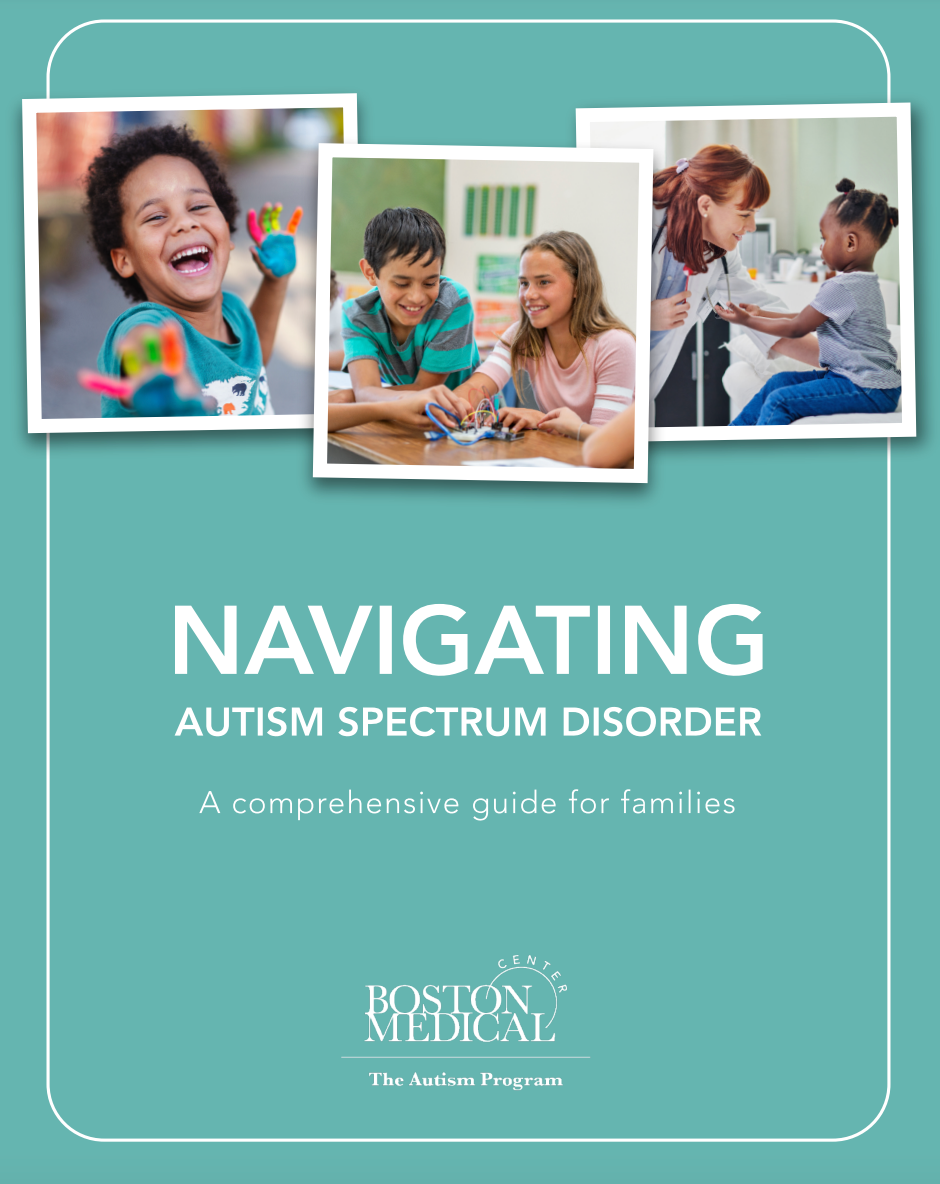
Guide for Families
Contact Us
Phone: 617.414.3842
Fax: 617.414.3693
Email: autismprogram@bmc.org
Mailing Address:
801 Albany Street, Floor 2N, Boston, MA 02119
The Autism Program at Boston Medical Center is located administratively
within the Department of Developmental and Behavioral Pediatrics.
Newsletter Signup
Donate
To designate your donation to the Autism Program:
- Under “Designation,” choose “Other.”
- Click “Add comment.”
- Type in “Autism Program.“
Our Team
Shari Krauss, MA, MPH | Program Director
617.414.3666 • shari.krauss@bmc.org
Shari conducts clinical oversight, personnel management, and public relations for the Autism Program in addition to leading strategic planning and program implementation. She actively participates in the delivery of trainings, clinical consultation, advocacy, and outreach efforts, as well as community networking and initiatives. Shari has an extensive background working in the fields of education and health care by providing direct service to children and families and managing programs that serve to promote their resiliency through psychosocial support, enhanced provider education and community collaborations. She sits on the MA Governor’s Autism Commission Birth to Fourteen and Healthcare Subcommittees and the Steering Committee for the Boston Disability Task Force. She has worked closely with community partners such to strengthen and empower the city's most marginalized families, most especially those representing cultural, religious and ethnic minorities.
Alexander Friedman, MPH | Program Manager
617.414.4247 • alex.friedman@bmc.org
As Program Manager for the Autism Program, Alexander is responsible for overseeing all aspects of the Autism Friendly Initiative at BMC, which aims to improve the hospital experience for patients with autism spectrum disorders (ASD). In doing so, Alexander supervises hospital-wide projects related to staff training, systems improvement, and resource development to ultimately address barriers in caring for patients with ASD. Alexander also manages the Autism Program’s wide-reaching internship and volunteer program in order to provide students with a meaningful, productive, and applied learning experience.
Liz Ferriero, BA, CEIS | Program Lead
781.923.0801 • elizabeth.ferriero@bmc.org
As Program Lead, Liz provides supervision and guidance to staff, supports families navigating diagnoses, and builds strong partnerships across schools, healthcare providers, and community agencies.
She works closely with BMC’s Parent Leadership in Autism Network, a diverse network of empowered caregivers who assist with the delivery of trainings and help guide the development of interventions. Dedicated to reducing barriers and strengthening systems of care, Liz brings a collaborative and compassionate approach to improving outcomes for children and families.
Hillary Hollis, BA | Program Lead
857.310.0976 • hillary.hollis@bmc.org
Hillary is a highly skilled pediatric and family support professional with extensive experience in autism care and resource navigation. As Program Lead, she supervises staff in managing patient referrals, case assignments, and provider communications while fostering best practices across care teams. Dedicated to empowering families from birth through young adulthood, Hillary provides tailored guidance around autism diagnoses, educational planning, and service access. She has a passion for supporting families around a new autism diagnosis and empowering them to advocate for their child’s unique needs. Hillary partners closely with schools, community agencies, and healthcare providers to ensure families have access to comprehensive and culturally responsive supports.
Jacqueline McKendry, MS, BCBA, LABA | Behavior Specialist
617.414.3662 • jacqueline.mckendry@bmc.org
Jacqueline is a board-certified and licensed behavior analyst as well as a PhD candidate, with over a decade of experience in providing and supervising ABA therapy across schools, homes, communities, and medical settings. She offers behavioral support, resources, and consultation to patients, families, and healthcare providers throughout the entire hospital campus. Jacqueline empowers patients and their families to advocate for themselves and their child’s specific needs while navigating complex medical systems. In addition to her clinical consultation work, she actively participates in delivering trainings, supporting research projects, and engaging in community advocacy and outreach efforts.
Katie Bristol, MA | Transition Specialist
617.545.3235 • katherine.bristol@bmc.org
Katie holds an M.A. in Child Studies and Human Development from Tufts University and a B.S. in Neuroscience from the College of William & Mary. At The Autism Program, she supports youth ages 14–22 with ASD and their families in preparing for and undergoing the transition from childhood to adulthood. Katie brings experience working with neurodiverse middle and high school students to build executive functioning skills, foster independence, and manage school-based challenges. Katie is passionate about helping individuals and families understand, access, and navigate the often complicated and confusing educational and healthcare systems, and she is dedicated to empowering neurodiverse individuals to advocate for themselves and access the supports and resources available to help them thrive as they and their families navigate the transition to adulthood.