
At BMC, we’re committed to lowering your risk of heart and vascular disease with preventive cardiology. Through our Cardiac Rehabilitation Program, Lipid Clinic, and Vascular Exercise Program, we provide comprehensive evaluation and services for people with heart disease, including a variety of medically supervised exercise and lifestyle modification programs and appropriate medications when necessary.
Locations and Contact
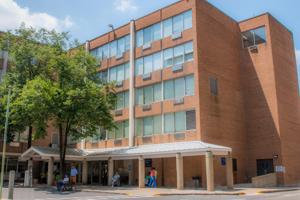
Cardiovascular Center
Monday – Friday, 8 a.m. to 5 p.m.
Lipid Clinic
Monday – Friday, 8 a.m. to 5 p.m.
Related Departments and Programs
Cardiovascular Center
A department providing cardiology care for heart and vascular conditions to support long-term heart health and general wellbeing.
Arrhythmia Center
A center providing diagnosis and treatment for cardiac arrhythmias, including evaluation and management of abnormal heart rhythms.
Cardiac Surgery
A cardiac surgery program for conditions such as coronary artery disease, valve disorders, and structural heart disease.
Hypertrophic Cardiomyopathy Clinic
A clinic providing diagnosis and treatment for hypertrophic cardiomyopathy, including care for cardiac arrhythmias and heart failure.
Vascular Medicine Center
A center providing diagnosis and treatment for vascular conditions such as peripheral artery disease and aneurysms.
Cardiology (Pediatrics)

General Cardiology Fellowship
The cardiology fellowship program at BMC, in conjunction with the Boston University Chobanian & Avedisian School of Medicine, aims to develop the next generation of leaders in cardiovascular medicine by providing comprehensive training in clinical care, research, and academic excellence.
The program is designed to foster expertise in the evaluation, diagnosis, and management of a wide spectrum of cardiovascular diseases, including coronary artery disease, heart failure, valvular heart disease, arrhythmias, and vascular disorders. Fellows will gain hands-on experience in advanced diagnostic and therapeutic modalities, including echocardiology, cardiac catheterization, cardiac MRI, and electrophysiology.

The Framingham Heart Study
The Framingham Heart Study, run by the Boston University (BU) and the National Heart, Lung, and Blood Institute (NHLBI), is the nation’s longest-running study of heart disease, credited with improving and saving countless lives since its inception in 1948. BU administers the Framingham Heart Study, which includes researchers from the Chobanian & Avedisian School of Medicine, the School of Public Health, and the College of Arts & Sciences. It has accumulated an astonishing record of helping both patients and doctors better understand the risk factors associated with heart disease and has published close to 3,000 research papers over seven-plus decades.
Some of the most prominent findings from the study have included the basic risk factors of heart disease (1961), the heightened heart disease risk of smoking, the heart benefits of exercise and the heart risk of obesity, and the impact of hypertension in increasing the risk of stroke.