

BMC Adult Primary Care providers offer comprehensive primary care, as well as care coordination across BMC and clinics for women's health, substance abuse disorder, and immigrant and refugee health. Our diverse staff speaks several languages, and interpretation services are available in over 200 languages.
Leading Expertise
Leadership in Care for All
Our Immigrant and Refugee Health Center and OBAT Program are renowned models of care in their fields.
Pioneering Excellence
Our Women’s Health Group has been a national pioneer in exceptional primary care tailored to the needs of people who identify as women.
Award-Winning Doctors
Our doctors have been recognized as some of the city’s best on Boston Magazine’s “Top Docs” list.
Location and Contact
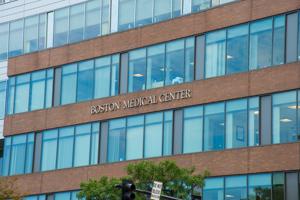
Adult Primary Care
Monday, Tuesday, Thursday 8 a.m. to 8 p.m.; Wednesday 9 a.m. to 8 p.m.; Friday 9 a.m. to 5 p.m.; Saturday 8:30 a.m. to 12:30 p.m.
Programs and Clinics
Immigrant and Refugee Health Program
Integrated Behavioral Health
Office Based Addiction Treatment (OBAT)
A primary care-based program that provides substance use disorder treatment while also addressing medical needs.
Women’s Health Group
A program providing women’s services and female healthcare for adults, including exams, screenings, and reproductive care.
Education and Training
Primary Care/Health Services Research Fellowship
The primary care/health services research fellowship prepares physician and pre- and postdoctoral fellows, including DNP and PhD-level nurses, for careers as leaders in health services research, epidemiology, public health practice, and medical education. The program offers a diversity of learning opportunities, including mentored scholarly projects, academic seminars of key topics, and a Master of Science in Population Health or advanced coursework from the BU School of Public Health.
Preventive Medicine Fellowship
The preventive medicine fellowship aims to create a pipeline of physicians trained in population-based research, public health practice, and medical education, who will lead system-level changes to prevent disease and improve health across diverse populations. The program has two training tracks: a community prevention and maternal health track and an immigrant and refugee health track. The fellowship also offers mentorship and community partnerships, supporting fellows to become dynamic preventive medicine physicians and advocates.
Grayken Addiction Medicine Fellowship
The Grayken addiction medicine fellowship, a leader in the field, prepares physicians to improve the health and wellness of people who use substances through clinical care, research, education, advocacy, and public health. The fellowship offers overdose response training, research resources, rotations on the addiction consult service, and education through CARE case conferences. The program is one or two years, with options for a three-year infectious disease/addiction medicine fellowship and a two-year fellowship in maternal health addiction.

Internal Medicine Research
Within Adult Primary Care and the Section of General Internal Medicine, we have a robust research portfolio reflecting the mission of BMC, where our practice- and policy-relevant research seeks to improve the lives of the communities that we serve. Our research spans a wide range of topics, including substance use and addiction, sexual and gender minority health, nonpharmacologic treatment of pain, social determinants of health and health equity, systems science, and more.